What Is the Portuguese Cut
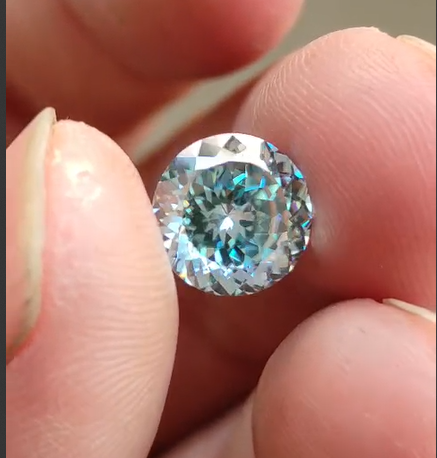
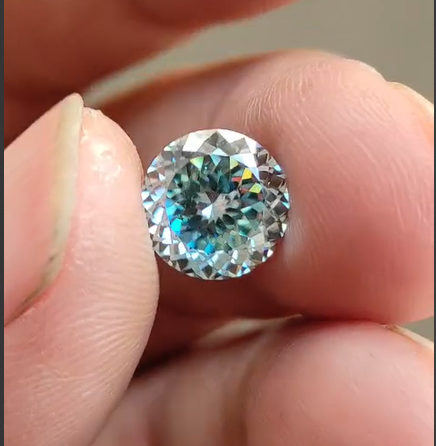
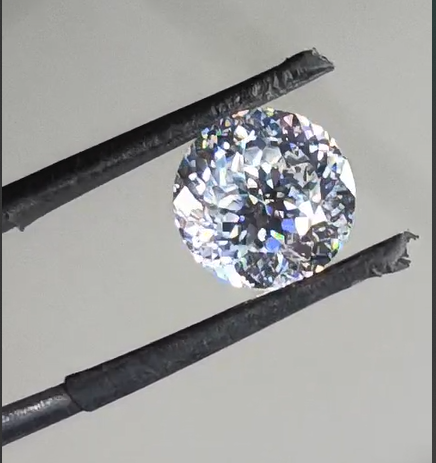
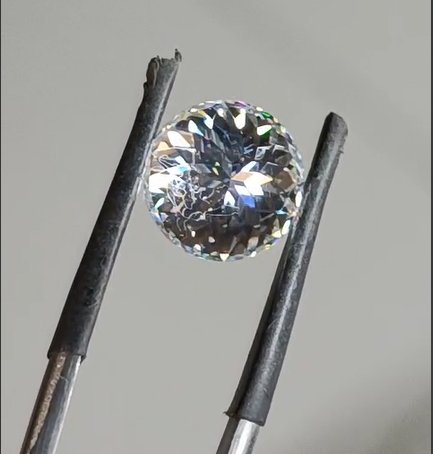
The Portuguese cut is an ultra-faceted gemstone shape featuring multiple concentric rows of facets — typically five or more tiers on both the crown and pavilion — arranged in a round or near-round outline. Where a standard round brilliant uses 58 facets, the Portuguese cut uses 161 or more, making it one of the most heavily faceted gemstone shapes ever developed.
The cut originated in Portugal's gemstone cutting tradition — a heritage of precision craftsmanship that prioritized optical intensity over rough material conservation. The Portuguese approach was simple in philosophy and extraordinarily complex in execution: add more facets, arrange them in concentric rings, angle each tier to return light independently, and let the cumulative effect of all those surfaces create a sparkle that no standard cut can match.
The result is a stone where light doesn't just bounce — it cascades. Each concentric tier captures light from a slightly different angle and returns it independently, creating a layered sparkle effect where multiple rings of fire appear to radiate outward from the stone's center simultaneously. The eye perceives not a single surface of sparkle but a depth of sparkle — light returning from multiple levels within the stone at once.
In moissanite, the Portuguese cut reaches a level of optical intensity that's genuinely difficult to describe without seeing it. Moissanite's refractive index of 2.65 means each of the 161+ facets returns more light than a diamond facet would. Its dispersion of 0.104 means each returning ray carries more spectral fire. Multiply those advantages across 161 surfaces arranged in concentric precision, and the result is arguably the most brilliant single gemstone configuration possible — a cut-and-stone combination engineered for maximum light output at every level.
Benefits of Portuguese Cut Moissanite
The Highest Facet Count of Any Standard Cut
At 161+ facets, the Portuguese cut contains nearly three times the faceting of a round brilliant. More facets mean more individual surfaces interacting with light — more entry points, more internal reflections, more exit angles, and more individual flashes of fire visible to the eye at any given moment. The sparkle isn't just brighter. It's denser. The stone appears to contain more light per square millimeter than any other shape because, structurally, it does.
Concentric Sparkle Depth
Standard cuts produce sparkle from a single optical plane — light enters through the crown, bounces off the pavilion, and exits through the crown. The Portuguese cut's tiered architecture creates sparkle from multiple planes simultaneously. Each concentric row of facets operates as its own ring of light return, and the eye perceives these rings as layered depth — sparkle that appears to radiate from different levels within the stone rather than from a single surface. This depth illusion is the Portuguese cut's most distinctive visual quality and the characteristic that makes it immediately recognizable.
Sparkle from Every Angle
Standard brilliant cuts are optimized for face-up viewing — they perform best when you look straight down into the stone. The Portuguese cut's multiple tiers ensure that light is being returned from so many different angles that the stone sparkles intensely from virtually every viewing position — face-up, side-on, tilted, inverted. There is no "dead angle" on a well-cut Portuguese moissanite. The concentric tiers guarantee that some ring of facets is always catching and returning light, regardless of orientation.
The Ultimate Expression of Moissanite's Optical Advantage
Moissanite already outperforms diamond in refractive index and dispersion. The Portuguese cut amplifies this advantage more aggressively than any other shape — because it puts more facets to work exploiting those superior optical properties. If a round brilliant moissanite outperforms a round brilliant diamond by a meaningful margin, a Portuguese cut moissanite outperforms a Portuguese cut diamond by a dramatic one. The cut is essentially an optical multiplier, and moissanite gives it more to multiply.
A Collector's Cut
The Portuguese cut is not a mass-market shape. It requires specialized cutting expertise, significantly more time per stone than standard shapes, and a cutter willing to sacrifice rough material for optical perfection. This makes Portuguese cut stones inherently less common than rounds, ovals, or cushions — and more prized by those who know what they're looking at. Owning a Portuguese cut moissanite puts you in a category of gemstone appreciation that most people don't know exists.
Portuguese Cut vs Standard Brilliant Cuts
Understanding how the Portuguese cut compares to conventional shapes helps clarify what makes it exceptional — and what trade-offs, if any, come with choosing it.
Compared to the round brilliant (58 facets), the Portuguese cut produces denser, more layered sparkle with visible depth — but the round produces slightly more uniform, concentrated light return per individual facet. The round is the more optically efficient shape. The Portuguese is the more optically intense one. Efficiency and intensity aren't the same thing — and for those who prioritize raw visual impact over mathematical optimization, the Portuguese wins.
Compared to the radiant cut, the Portuguese cut produces a rounder sparkle profile with concentric depth rather than the radiant's rectangular crushed-ice density. Both are high-facet shapes that maximize sparkle, but they distribute it through fundamentally different geometries.
Compared to the oval and cushion, the Portuguese cut produces more total sparkle from a comparable surface area — but its round outline means it doesn't offer the elongated finger coverage that ovals and cushions provide. If maximum sparkle is the goal, the Portuguese cut delivers. If finger coverage or a specific silhouette matters, a modified brilliant may serve better.
The Portuguese cut's primary trade-off is carat retention. The extensive faceting removes more rough material during cutting, which means a Portuguese cut stone yields fewer finished carats per unit of rough than a standard brilliant. This is part of what makes the cut less common and more specialized — it's a cut that prioritizes optical performance over material economy.
Portuguese Cut in Colored Moissanite
The Portuguese cut's extreme faceting creates a particularly compelling interaction with colored moissanite — and this is where the cut enters genuinely extraordinary territory.
In colorless moissanite, the Portuguese cut maximizes white brilliance and rainbow fire. In colored moissanite, it maximizes those same properties while filtering every flash through the stone's body color — producing tinted fire of extraordinary density and vibrancy.
A Portuguese cut in pink colored loose moissanite produces a cascade of pink-tinted sparkle so dense it appears to glow from within — every one of the 161+ facets returning warm, rose-toned fire from multiple concentric tiers. The effect is mesmerizing.
In blue colored loose moissanite, the Portuguese cut channels cool, sapphire-toned light through dozens of layered facets — creating a depth of blue sparkle that no standard cut can replicate. The concentric rings of fire appear to recede into oceanic depth.
In red colored loose moissanite, the Portuguese cut amplifies red's natural intensity to almost overwhelming levels — 161 facets of ruby-toned fire cascading outward in concentric rings. It's the most visually powerful expression of red available in any gemstone format.
In yellow colored loose moissanite, the Portuguese cut produces golden sparkle density that makes the stone appear to radiate its own sunlight — warm, layered, and relentlessly brilliant. Yellow's natural harmony with moissanite's fire becomes extraordinary at 161 facets.
The Portuguese cut transforms every color in the spectrum into a more intense, more layered, more immersive version of itself — making it the connoisseur's choice for colored moissanite.
Available Sizes
The Portuguese cut is available across a meaningful carat range, though its extreme faceting requirements influence optimal sizing.
Smaller stones (0.50–1.00 carats) display the concentric sparkle pattern clearly but at a more intimate scale. At these sizes, the Portuguese cut's density is visible but the individual tiers are closely spaced — producing a tight, concentrated brilliance that reads as "this stone is unreasonably sparkly for its size." This range is ideal for stud earrings, accent pendants, and delicate ring designs.
Mid-range stones (1.00–2.00 carats) are the sweet spot for the Portuguese cut. At this scale, the concentric tiers are spaced widely enough to be individually perceptible — the eye can distinguish the layered rings of fire that define the cut's signature depth effect. A 1.5 carat Portuguese cut moissanite in a solitaire setting is one of the most optically dramatic pieces in all of fine jewelry.
Large stones (2.00–3.00+ carats) are where the Portuguese cut becomes transcendent. The concentric tiers are fully expressed, the layered sparkle depth becomes immersive, and the sheer volume of light returning from 161+ facets fills the stone's entire surface with cascading, multi-tiered fire. A 3 carat Portuguese cut moissanite is not a stone you wear. It's a stone that wears the room.
What You Can Build with Portuguese Cut Moissanite
The Portuguese cut's round outline provides versatile setting compatibility, while its extraordinary sparkle intensity demands settings that let the stone perform without obstruction.
In an engagement ring, a Portuguese cut center stone delivers the most optically intense solitaire possible. A simple four-prong or six-prong setting that lifts the stone above the band is ideal — allowing light to enter from the sides and feed the concentric tiers. Cathedral settings work beautifully, providing structural elegance while keeping the stone exposed to ambient light. Bezel settings are possible but reduce side-light entry, which slightly diminishes the tiered sparkle depth. For maximum Portuguese cut performance in a ring, less metalwork around the stone is more.
In a pendant, the Portuguese cut hangs with extraordinary brilliance — the stone catches light from every direction as it moves against the chest, and the concentric tiers ensure sparkle is returned regardless of the pendant's orientation. A simple bail and chain let the cut speak for itself.
In earrings, Portuguese cut studs produce a sparkle density that's immediately noticeable — the 161+ facets create more visible fire per square millimeter than any other stud shape. They're the choice for those who want their studs to be the most brilliant thing at face level.
For collectors and gemstone enthusiasts, Portuguese cut loose stones are display pieces in their own right — the cut's technical complexity and optical performance make it an object of appreciation independent of any setting.
Craftsmanship and Quality at Grown Leo
The Portuguese cut is the most technically demanding shape in our catalog. Each of the 161+ facets must be cut to precise angles, each concentric tier must align with the tiers above and below it, and the overall symmetry must maintain a perfectly round outline despite the complexity of the tiered architecture.
Facet alignment is evaluated tier by tier — every concentric row is checked for consistent angle, uniform facet size, and smooth transitions to the adjacent rows. A single misaligned tier disrupts the cascading sparkle effect that defines the cut.
Symmetry is assessed for roundness (the outline must be circular, not oval or irregular) and for concentric centering (the tiers must radiate outward from the stone's exact center, not from an off-center point).
Light performance is evaluated holistically — the stone must produce the characteristic multi-layered sparkle depth with no dead zones, no dark tiers, and no areas where light fails to return. The Portuguese cut should sparkle from every angle with visible concentric depth. Anything less doesn't meet our threshold.
Each stone ships with a certificate of authenticity confirming carat weight, facet count, cut grade, color grade (if colored), and quality specifications. Packaging is designed for secure transit. Every U.S. order ships free with full insurance.