What Is White Moissanite
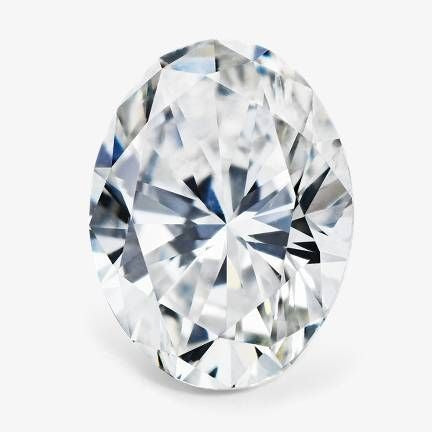
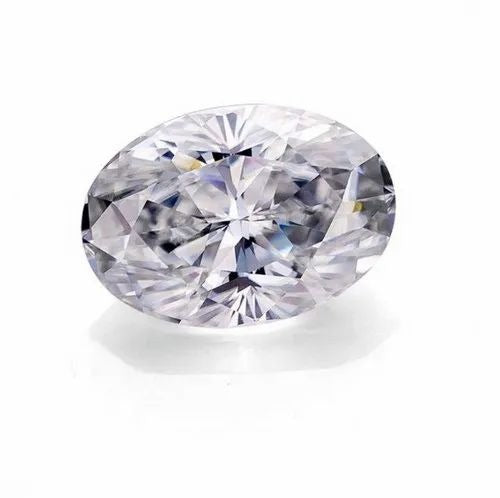
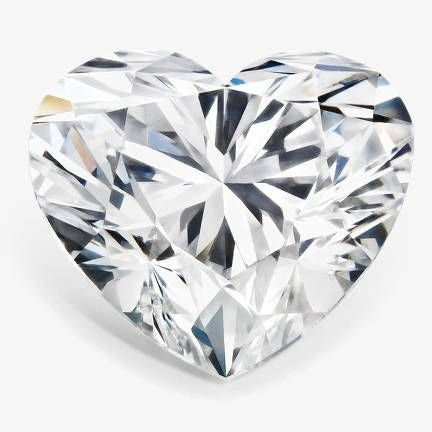
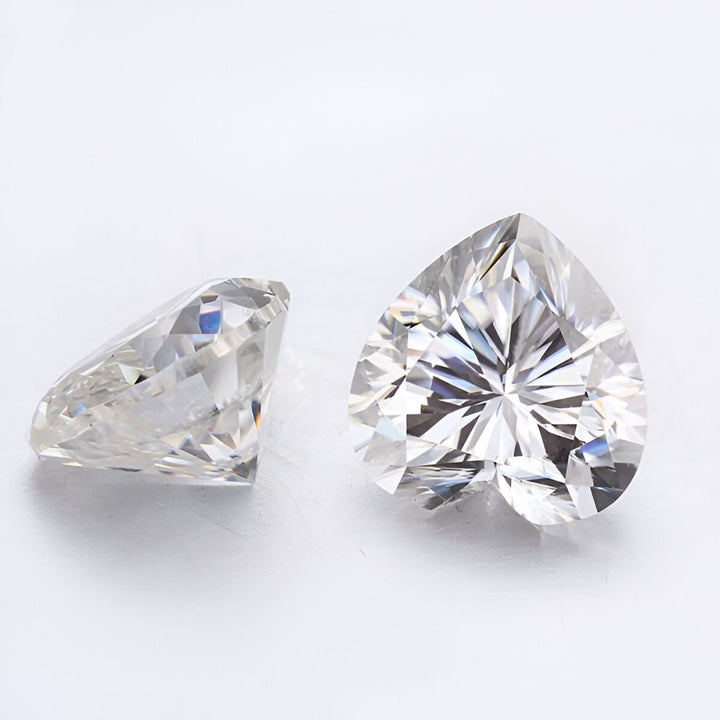
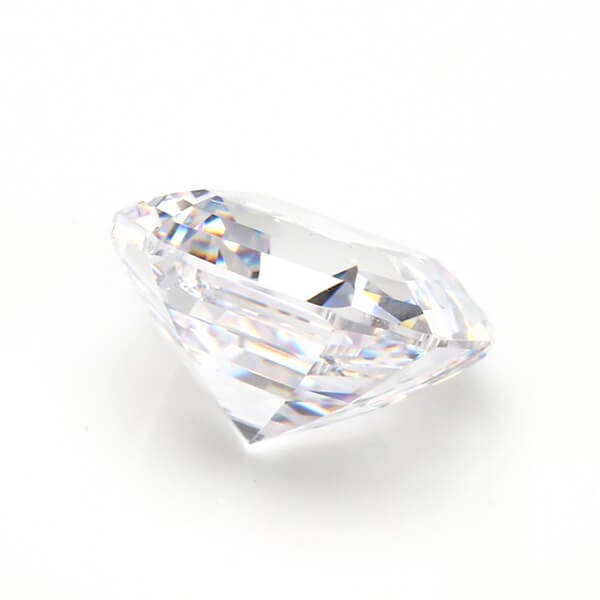
White moissanite refers to colorless or near-colorless lab grown moissanite — gemstones that display no visible body color, allowing the stone's optical properties to express themselves without tonal influence. This is the format most directly comparable to white diamond, and it's the format where moissanite's optical superiority becomes most measurable and most visible.
Moissanite's refractive index of 2.65 exceeds diamond's 2.42. Its dispersion of 0.104 more than doubles diamond's 0.044. Its luster, measured by surface light return, is higher as well. In a colorless stone — where no tint competes for the viewer's attention — these advantages translate directly into more white brilliance, more rainbow fire, and more overall visual energy than a diamond of comparable size and cut. The comparison isn't subjective. It's optical physics.
White moissanite has become the cornerstone of the lab grown jewelry movement precisely because it makes the case for itself so clearly. Hold a well-cut white moissanite next to a well-cut white diamond under the same lighting, and most people — including trained jewelers in casual observation — cannot tell the difference. Many pick the moissanite as the more brilliant stone. The difference in price between the two makes the conversation even more straightforward.
Benefits of White Moissanite
The Most Brilliant Colorless Gemstone Available
No colorless gemstone returns more light than moissanite. Not diamond. Not white sapphire. Not cubic zirconia. The combination of a 2.65 refractive index and 0.104 dispersion makes white moissanite the most optically powerful colorless stone a person can wear. In direct comparison, a white moissanite produces more white brilliance from its table and crown, and more spectral fire from its pavilion, than a diamond of identical cut quality and carat weight. This isn't marketing. It's measurable optical performance.
Indistinguishable from Diamond to the Naked Eye
In everyday settings — on the hand, at conversation distance, under ambient lighting — white moissanite and white diamond are virtually identical to the naked eye. The only visible difference is that moissanite tends to produce slightly more rainbow fire, which most observers register as "that stone is incredibly sparkly" rather than "that stone isn't diamond." Without professional gemological equipment and deliberate testing, the two are indistinguishable.
Value That Redefines the Category
A 1 carat white diamond of decent quality costs $3,000 to $10,000. A 2 carat runs $8,000 to $25,000. A 3 carat reaches $20,000 to $50,000 or more. Premium white moissanite from Grown Leo costs a small fraction of these ranges at every size — with optical performance that matches or exceeds diamond. The savings aren't marginal. They're transformative — potentially redirecting tens of thousands of dollars toward your life rather than a single stone.
Permanent, Unchanging Beauty
White moissanite doesn't cloud, yellow, fade, or lose brilliance over time. Its optical properties are structurally permanent — inherent to the crystal's molecular composition rather than dependent on coatings, treatments, or conditions. The stone you buy today will look identical in fifty years. No maintenance. No re-polishing. No gradual loss of sparkle. Just permanent, effortless brilliance.
Ethically and Environmentally Clean
Every white moissanite in this collection is lab created — grown in controlled environments without mining, without conflict supply chains, and without the significant environmental impact of diamond extraction. For those who care about what their jewelry costs the world — not just what it costs them — white moissanite offers the clearest conscience available in a colorless gemstone.
White Moissanite vs White Diamond — The Complete Comparison
Optical Performance
Moissanite wins on every measurable optical metric. Higher refractive index (2.65 vs 2.42) means more light enters and exits as brilliance. Higher dispersion (0.104 vs 0.044) means more spectral fire — over twice as much. Higher luster means more surface-level light return. In a well-cut white stone, these advantages are visible and undeniable.
Hardness
Diamond is harder — 10 on the Mohs scale versus moissanite's 9.25. In practical terms, this difference is negligible for jewelry wear. Moissanite doesn't scratch from daily contact, doesn't chip from normal bumps, and doesn't degrade from environmental exposure. Both stones are permanent for all practical purposes. Diamond's hardness advantage matters for industrial cutting tools. For a ring on your finger, it doesn't.
Visual Distinction
In blind tests, most people — including jewelry professionals — cannot consistently distinguish white moissanite from white diamond without specialized equipment. The only visual clue is moissanite's slightly higher fire, which presents as more vivid rainbow flashes. Most observers interpret this as superior sparkle rather than a species identification.
Price
This is where the comparison becomes decisive. White moissanite costs 80–90% less than white diamond at every carat weight. The visual difference is negligible. The financial difference is enormous. For buyers who prioritize what they can see over what a grading report says, white moissanite represents the most rational decision in the jewelry market.
White Moissanite vs Other Colorless Alternatives
vs White Sapphire
White sapphire (colorless corundum) is sometimes suggested as a diamond alternative, but its optical performance is poor by comparison. At a refractive index of 1.76 and dispersion of 0.018, white sapphire produces minimal sparkle and essentially no fire. It looks more like glass than diamond. White moissanite outperforms it so dramatically that the two aren't in the same category visually.
vs Cubic Zirconia
CZ is cheap and initially sparkly, but it's soft (8.0 Mohs), scratches easily, clouds within months of daily wear, and develops a hazy surface that makes it look obviously fake. White moissanite is permanently brilliant, dramatically harder, and maintains its appearance indefinitely. CZ is costume jewelry. Moissanite is fine jewelry. The distinction becomes visible within weeks of daily wear.
Available Shapes
White moissanite is available across every major gemstone cut — each producing its own sparkle character while showcasing the stone's colorless brilliance to its fullest potential.
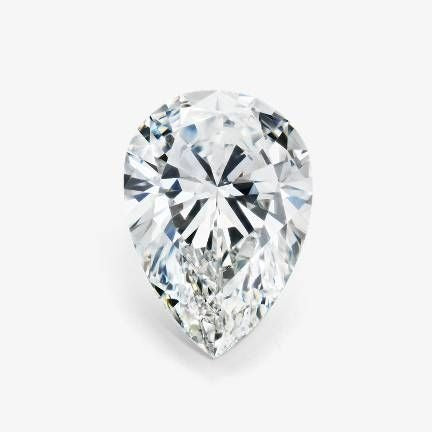
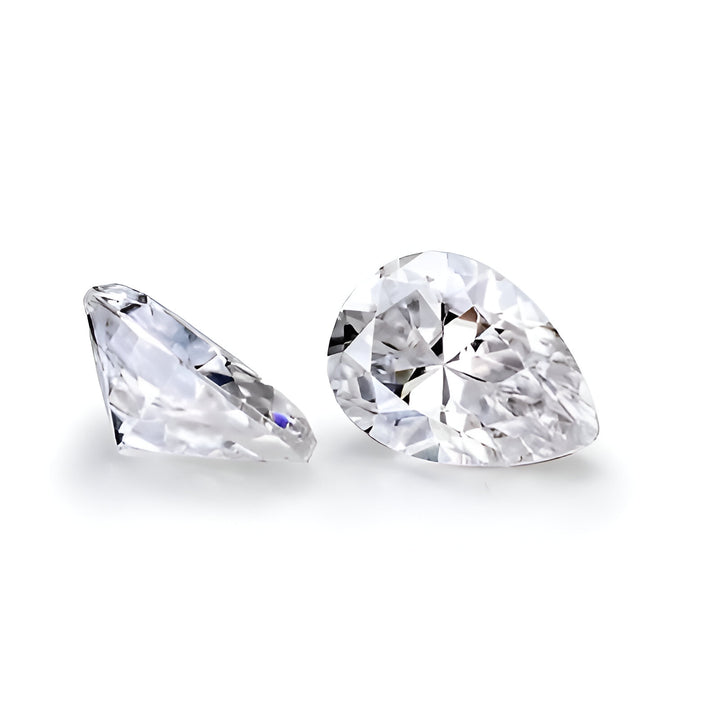
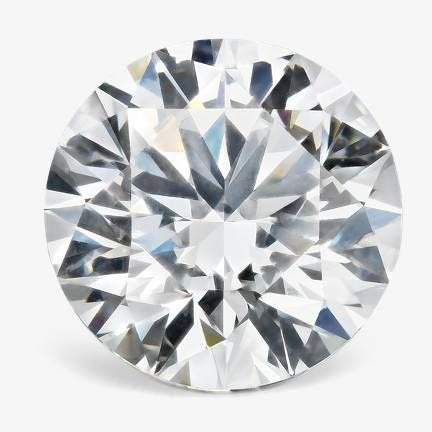
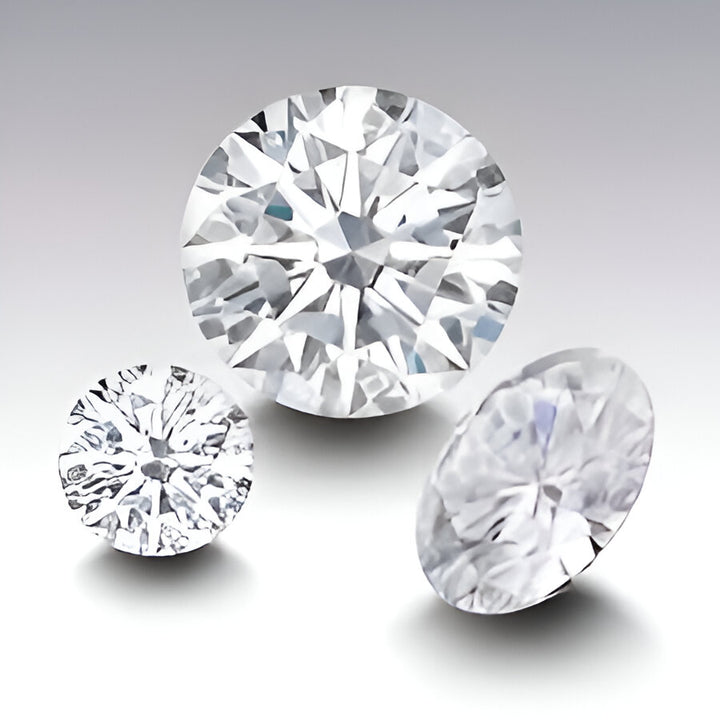
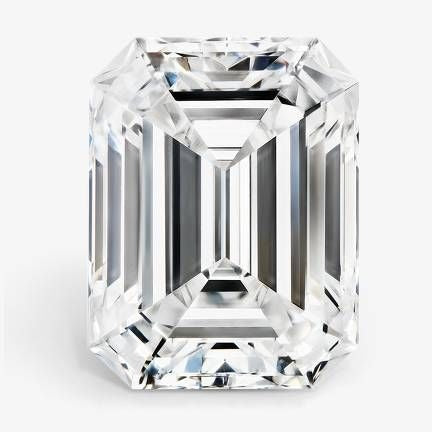
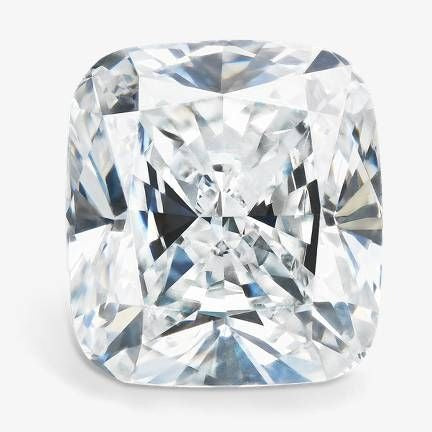
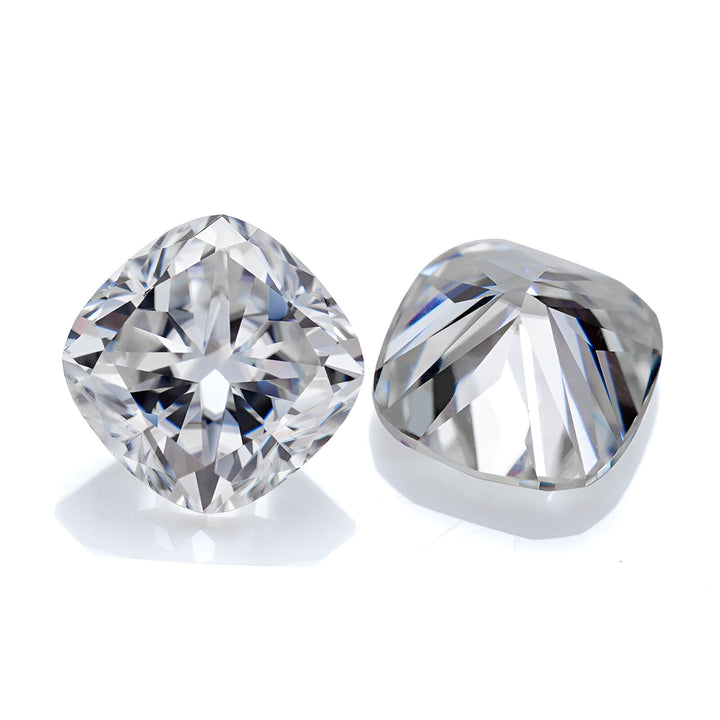
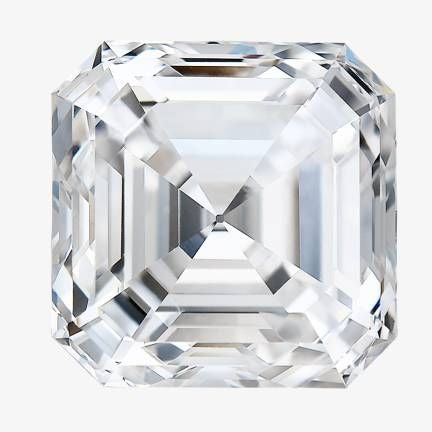
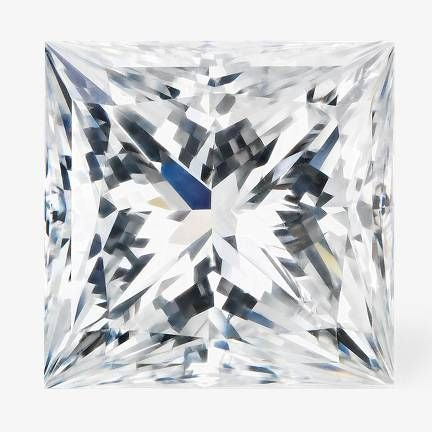
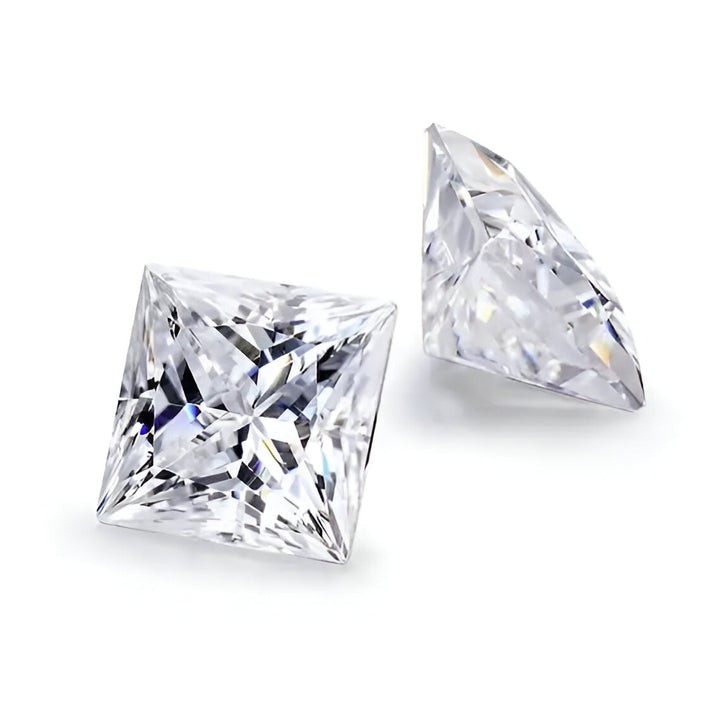
Round brilliant is the most popular and optically efficient shape — 58 facets engineered for maximum light return. Oval creates an elongated, modern presence that appears larger per carat. Cushion delivers warm, expressive flashes with vintage character. Emerald produces calm, transparent depth through step-cut facets. Radiant combines rectangular geometry with crushed-ice brilliance. Princess delivers geometric, modern sparkle. Pear creates directional drama in a teardrop silhouette. Marquise maximizes visual size. Asscher produces hypnotic, concentric depth.
Every shape is available from small calibrated accent stones through substantial center gems of 3 carats and beyond. Whether you're building a single-stone piece or sourcing matched sets for multi-stone jewelry, this collection covers the full range.
What You Can Build with White Moissanite
White moissanite is the most universally applicable loose stone in our catalog — compatible with every jewelry format, every metal, and every design aesthetic.
Engagement rings are the most popular application. A white moissanite center stone — in any shape, in any setting — delivers the colorless brilliance that engagement rings are built around. Solitaires, halos, vintage designs, three-stone settings, pavé bands — white moissanite performs at the highest level in all of them.
Earrings — studs, drops, huggies, chandeliers — benefit from white moissanite's face-level brilliance. The colorless stone catches ambient light constantly, producing sparkle that's visible in every conversation and every photograph.
Pendants showcase white moissanite at the collarbone, where the stone's fire and brilliance add luminosity to the neckline in a format that works from casual to formal.
Tennis bracelets and eternity bands are where white moissanite's value advantage becomes most dramatic. Dozens of matched stones at a fraction of diamond pricing create continuous ribbons of brilliance that diamond would price into five-figure territory.
For those exploring colored alternatives alongside their white stone collection, our pink loose moissanite adds romantic warmth that pairs beautifully as accent stones around a white center. Our red colored loose moissanite offers bold, dramatic accent options for those who want vivid color contrast. And our black colored loose moissanite creates striking, high-contrast designs when paired with white — a black-and-white composition that's simultaneously modern and timeless.
Choosing the Right Color Grade
White moissanite is graded on a color scale similar to diamond — from perfectly colorless (D-E-F equivalent) through near-colorless (G-H-I equivalent) to faintly tinted.
Colorless (D-E-F equivalent) stones show absolutely no visible body color — pure, icy white brilliance with no warmth. These are the premium tier and the most diamond-like in visual character. Colorless stones are ideal for white gold and platinum settings, where the cool metal complements the stone's absolute neutrality.
Near-colorless (G-H-I equivalent) stones show no color visible to the casual observer but may carry the faintest warm undertone under specific lighting conditions. In practice, near-colorless moissanite is indistinguishable from colorless when set in jewelry — the setting and ambient lighting mask any trace warmth. Near-colorless offers the best value for those who want premium quality without paying for differences only a gemologist can detect. These stones pair particularly well with yellow and rose gold, where any trace warmth actually harmonizes with the metal.
At Grown Leo, both grades deliver exceptional beauty. The choice depends on whether you want absolute optical purity or whether you prioritize value in a stone that looks identical to the naked eye once it's set and on your hand.
Quality Standards at Grown Leo
White moissanite is the product category where cut quality is the single most consequential variable. Without color to contribute visual interest, the stone's entire performance depends on how precisely its facets are cut, how effectively they capture light, and how completely they return it as brilliance and fire. A well-cut white moissanite is extraordinary. A poorly cut one is forgettable. The margin between the two is entirely in the geometry of the facets.
Every white moissanite in this collection is individually graded for cut symmetry, facet precision, table proportion, crown angle, pavilion depth, polish, and overall light performance. We evaluate each stone under standardized lighting for brilliance (white light return), fire (spectral dispersion), and scintillation (the pattern of light and dark areas as the stone moves). Only stones that achieve ideal-to-excellent grades across all three metrics are approved.
Color grading is performed under controlled conditions to accurately classify each stone as colorless or near-colorless. Clarity grading confirms the stone is clean to the naked eye.
Each stone ships with a certificate of authenticity confirming carat weight, shape, color grade, cut grade, clarity grade, and quality specifications. Packaging is designed for secure transit. Every U.S. order ships free with full insurance.