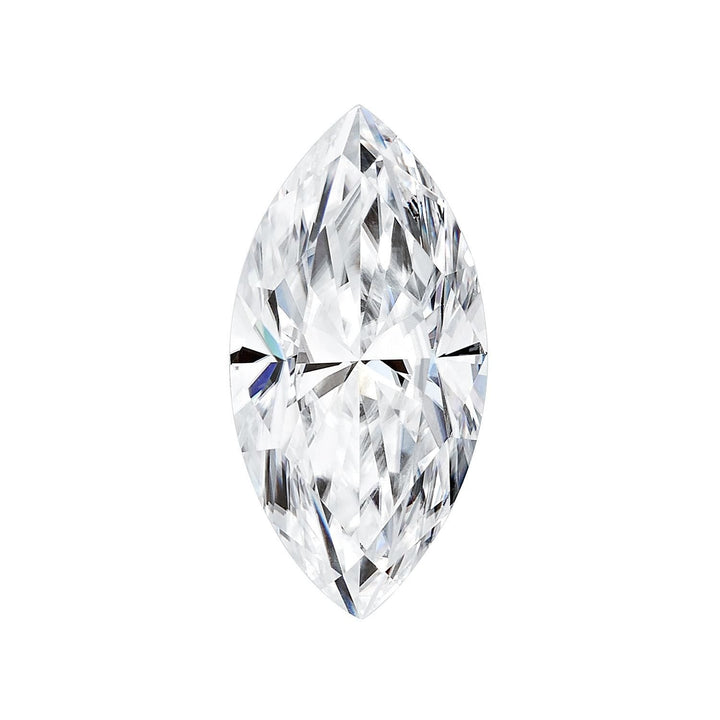
The Marquise Cut's Origins and Why They Still Matter
The marquise diamond's history is specific enough to be worth knowing. The cut is widely attributed to a commission by King Louis XV of France, who reputedly requested a diamond cut to echo the shape of the lips of his companion, the Marquise de Pompadour. Whether this origin story is precisely accurate or partially mythologized — and jewelry history contains both — the marquise cut emerged from the French court of the eighteenth century as a shape associated with aristocratic refinement and deliberate aesthetic choice.
That heritage is not merely decorative trivia. It explains something about why the marquise has maintained its specific cultural position in fine jewelry across three centuries of changing tastes: it was never conceived as a neutral or universal shape. It was conceived as a specific statement — an expression of sophistication and intentionality that distinguished its wearer from those who defaulted to more conventional choices. The round brilliant achieved its dominance through optical optimization. The marquise achieved its endurance through aesthetic authority. Buyers who choose it today are making the same kind of considered choice that has always characterized the shape's most devoted admirers.
The practical relevance of this heritage for contemporary buyers is simple: the marquise is not a shape that follows trends, and it does not look like a trend choice. A marquise cut lab grown diamond engagement ring reads as knowing rather than current — as a decision made from genuine preference rather than from what was popular at the moment of purchase. In a market flooded with oval and round solitaires, a marquise is immediately distinctive without requiring any departure from timeless fine jewelry standards.
The Marquise's Optical Advantages: Face-Up Size and Finger Impact
The marquise cut's most immediately practical advantage is geometric: it delivers more face-up surface area per carat than virtually any other diamond shape, making it among the most optically efficient choices for buyers who want maximum apparent size from a given carat weight.
The reason is the shape's distribution of mass. A round brilliant stone concentrates its mass relatively evenly across a circular footprint. The marquise's elongated form extends its surface area along a single axis, covering more of the finger's length with the same amount of diamond material. A 1 carat round brilliant measures approximately 6.5mm in diameter. A 1 carat marquise in typical proportions measures approximately 10 x 5mm — a surface area meaningfully larger than the round, achieved with identical carat weight.
This face-up size advantage compounds with a second optical effect unique to elongated shapes worn along the finger's length: the visual lengthening of the finger itself. The marquise, worn with its long axis aligned with the finger, creates a continuous line from tip to knuckle that makes the finger appear longer and more slender. This effect is most pronounced in the marquise relative to any other shape because the marquise's pointed ends extend the visual line beyond the stone's actual dimensions, creating directional arrows that guide the eye along the finger's length. No other shape creates this effect as completely.
For buyers who want maximum visual return from their diamond investment — maximum apparent size, maximum finger flattery, maximum immediate presence — the marquise cut lab grown diamond ring is the shape that delivers all three simultaneously more effectively than any alternative.
Understanding Marquise Proportions: The Specifications That Govern Performance
The marquise cut has no universally standardized cut grade from GIA or IGI equivalent to the round brilliant's comprehensive proportional evaluation. This means that for marquise lab grown diamond rings, the buyer bears more responsibility for evaluating cut quality than for round brilliants, whose Excellent cut grade carries verified proportional meaning. Understanding which specifications govern the marquise's performance helps buyers evaluate individual stones accurately.
Length-to-Width Ratio
The length-to-width ratio is the specification that most immediately determines the marquise's visual character. It describes how elongated the stone is relative to its width — a ratio of 1.75:1 produces a relatively compact marquise; a ratio of 2.25:1 or above produces a dramatically elongated one. The most widely flattering range for marquise engagement rings is between 1.85:1 and 2.10:1 — elongated enough to create meaningful finger lengthening without reaching the extreme proportions that can make the stone appear narrow or fragile.
Ratios outside this range are not defective, but they produce specific aesthetic results that suit specific hands and preferences. More elongated marquise stones (above 2.10:1) suit longer fingers where the additional length creates a striking effect without appearing to overwhelm the finger's proportions. More compact ratios (below 1.85:1) suit shorter fingers where extreme elongation can emphasize length differences rather than flatter them.
Belly Width and Curvature
The marquise's belly — the curved sides between the two pointed ends — determines how full and generous the stone's silhouette appears. A marquise with a wide, generously curved belly produces a stone whose middle has substantial presence; a narrow belly creates a more austere, sword-like silhouette. Belly width interacts with the length-to-width ratio to determine the stone's total face-up area — a given carat weight can produce dramatically different face-up impressions depending on how the belly curvature distributes the stone's mass.
Point Symmetry
Both pointed ends of the marquise must be precisely aligned along the stone's central axis for the shape to present its characteristic bilateral symmetry correctly. A marquise whose points are misaligned — one tip higher or lower than the other when the stone is oriented face-up — will appear off-kilter in its setting regardless of how well the stone performs optically. Point symmetry is the most critical symmetry specification for the marquise specifically, and it should be assessed through direct examination of the stone or through careful photography rather than assumed from the symmetry grade on the certificate.
The Bow-Tie Assessment
The marquise, like all elongated brilliant cut shapes, is subject to the bow-tie effect — a darkened region across the stone's center, shaped like a bow-tie, visible when the stone is viewed face-up in certain lighting conditions. The bow-tie occurs when the center facets of an elongated stone reflect the viewer's shadow rather than available light. Its visibility ranges from negligible to severe, and its presence cannot be predicted from the certificate grade — it must be assessed through photography and direct examination.
A mild bow-tie in a marquise is generally acceptable and in some cases adds depth and character to the stone's face. A severe bow-tie creates a dark band across the stone's center that significantly reduces its apparent brilliance and undermines the visual impact that the marquise's large face-up surface should provide. Every marquise in our collection is assessed for bow-tie intensity before it is listed, and our team provides natural light photography that shows each stone's bow-tie character accurately.
Cut Quality Evaluation for Marquise Lab Grown Diamonds
Because standardized comprehensive cut grades do not exist for marquise lab grown diamonds in the way they do for round brilliants, buyers need alternative frameworks for evaluating whether a marquise has been cut to perform at its potential. The following specifications provide that framework.
Table Percentage: The table facet — the large flat facet at the top of the stone — as a percentage of the stone's total width. For marquise diamonds, a table percentage between 53 and 63 percent produces the best balance between light entry and dispersion. Tables above 65 percent admit excessive light that reduces fire; tables below 50 percent restrict light entry in a way that reduces overall brilliance.
Depth Percentage: The stone's total depth as a percentage of its width. For marquise diamonds, a depth between 58 and 68 percent is the range within which light return is optimized. Stones below 58 percent depth tend to be shallow, allowing light to escape through the pavilion rather than reflecting back upward. Stones above 70 percent depth tend to appear smaller face-up than their carat weight suggests because mass is distributed into depth rather than surface area.
Girdle Thickness: The girdle of a marquise — the boundary between the crown and pavilion — should be thin to medium at the belly and may be slightly thicker at the points, where the geometry requires additional material for durability. An excessively thick girdle at the belly adds weight without adding face-up dimensions. At the points, an excessively thin girdle creates vulnerability to chipping. Assessing girdle thickness at both locations is part of evaluating any marquise stone's proportional quality.
Polish and Symmetry: Both should be Very Good or Excellent on the certificate. Symmetry for marquise specifically must be assessed for point alignment as described above — the certificate grade reflects overall facet symmetry, not specifically the alignment of the two tips, which requires visual assessment.
Color and Clarity at the Marquise Shape
Color in Marquise Lab Grown Diamonds
The marquise's brilliant facet structure scatters light in a way that distributes subtle color tints comparably to other brilliant cuts — round, oval, and cushion. The elongated form creates slightly more visible color at the pointed ends than at the belly, because the tips receive less light from above and any body color is therefore more apparent. This tip color concentration is subtle in most cases but is worth factoring into color grade selection.
For marquise lab grown diamond rings in white or platinum settings, G color is the practical minimum for a stone that reads as genuinely near-colorless. F color provides additional margin, particularly for larger carat weights and for stones with more extreme length-to-width ratios where the tips are more exposed. In yellow or rose gold settings, H and I color perform well across most marquise proportions — the warm metal absorbs the stone's subtle warmth in a way that produces visual coherence rather than perceptible color contrast.
Clarity in Marquise Lab Grown Diamonds
The marquise's brilliant facet structure is more forgiving of inclusions than step cuts but slightly less forgiving than the round brilliant, because the elongated face-up area means the center of the stone is closer to the observer's field of attention than in a round. VS2 clarity delivers reliable eye-clean performance in most marquise stones, though the specific inclusion type and position matter more at this shape than in rounds. An inclusion positioned at the belly's center — directly under the table facet and in the stone's primary field of view — has more visual impact than an inclusion positioned near the girdle at the points.
When evaluating clarity in a marquise, position is as important as grade. A VS2 stone with inclusions positioned toward the girdle near the tips can be more eye-clean in face-up position than a VS1 stone with a single inclusion under the table. This is why direct assessment of the clarity plot on the certificate, combined with natural light photography, produces better outcomes than grade selection alone at this shape.
Setting Configurations for Marquise Lab Grown Diamond Rings
The marquise's two pointed ends create a specific setting requirement that does not apply to other shapes: the tips must be protected without restricting light admission so severely that the stone's brilliance is compromised at its most vulnerable points.
V-Prong Solitaire
The standard setting for marquise diamonds uses V-shaped prongs at both pointed ends, specifically designed to cradle the tip geometry while providing protection against the chipping that an unprotected pointed end risks from direct lateral impact. Two additional prongs at the belly on each side of the stone hold the girdle securely. The V-prong solitaire is the most common marquise setting for good reason — it presents the shape completely, protects the tips appropriately, and allows maximum light admission across the stone's entire face-up surface. A well-made V-prong solitaire is the setting that most fully honors the marquise's defining geometry.
Bezel-Set Marquise
A full bezel enclosing the marquise within a continuous metal rim provides complete protection for both tips and eliminates the chipping risk that pointed ends present under lateral impact conditions. The bezel-set marquise creates a ring of clean, graphic authority — the stone's distinctive silhouette echoed by the metal frame surrounding it, the combination creating a shape-within-shape composition whose visual resolution is particularly complete. The trade-off is a slight reduction in lateral light admission compared to prong settings — for most buyers in most lighting conditions, this difference is not perceptible, and the protection and aesthetic advantages of the bezel are worth it for the right wearer.
East-West Marquise Setting
Orienting the marquise perpendicular to the band — the stone's long axis running east-west across the finger rather than north-south along it — creates a contemporary ring whose visual logic inverts the traditional marquise presentation. Where the traditionally oriented marquise maximizes finger lengthening, the east-west marquise maximizes width at the setting, creating a bold, horizontal presence that reads as fashion-forward and deliberately unconventional. The east-west setting suits buyers who love the marquise's shape but want to wear it in a way that signals awareness of current jewelry design conversation. It also creates a different relationship with the setting's V-prongs — in an east-west orientation, the V-prongs point toward the sides rather than along the finger, creating a different visual dynamic at the stone's tips. Our east-west marquise lab diamond rings include several setting configurations designed specifically for this orientation.
Halo Setting With Marquise Center
A ring of small round brilliant accent diamonds following the marquise's outline — a halo that traces the elongated shape rather than creating a circle around it — amplifies the marquise's already generous face-up dimensions into something genuinely spectacular. The elongated halo emphasizes the marquise's most distinctive characteristic — its length — by extending the diamond-set area along the same axis. At carat weights above 1 carat, the halo adds visual mass to a stone that already commands attention; at smaller carat weights, the halo allows the marquise's face-up impact to exceed what the center stone alone would provide. The halo setting is the configuration that maximizes total visual presence for the marquise shape at any carat weight.
Three-Stone With Marquise Center
A marquise center stone flanked by two smaller companion stones — typically rounds, tapered baguettes, or smaller marquises — creates a ring whose composition reinforces the center stone's directional character while adding the symbolic dimension of the three-stone format. Tapered baguette side stones in particular create a cohesive architectural composition with a marquise center — the baguettes' narrow rectangular forms pointing inward toward the marquise's belly from both sides, creating a deliberate visual convergence on the center stone's most prominent feature. Round side stones create a more conventional three-stone composition where the circular outlines of the side stones contrast pleasantly with the marquise's pointed geometry.
Solitaire With Diamond-Set Band
A marquise solitaire on a pavé-set or channel-set band creates a ring that maintains the stone's visual primacy while adding continuous brilliance along the finger. The pavé or channel diamonds run along the band on both sides of the setting, creating a field of brilliance that the marquise center stone emerges from at its peak. At marquise-specific proportions — particularly wider belly ratios — this setting creates a composition where the stone's generous face-up surface reads as the natural culmination of the band's accumulated brilliance.
Wearing a Marquise: Orientation, Rotation, and Practical Considerations
The marquise's bilateral symmetry creates specific wearing considerations that other shapes do not share, and understanding them helps buyers get the most from the shape in daily life.
Orientation on the finger: The traditional orientation — long axis aligned with the finger, points toward the knuckle and nail — is traditional for reasons that are purely practical: this is the orientation that maximizes the finger-lengthening effect and presents the stone's maximum dimension to a viewer facing the hand. It is the orientation that most directly displays the marquise's defining characteristics. Alternative orientations are valid aesthetic choices, but buyers should understand that the traditional orientation was established because it is the most flattering to both the stone and the hand.
Ring rotation: The marquise's elongated form makes it more susceptible to rotating on the finger than round stones of equivalent weight — the asymmetric weight distribution around a circular band creates a torque effect that tends to pull the stone toward the palm side of the finger. Most marquise settings address this with a tighter-fitting band or with specific design elements that prevent rotation, but it is a consideration worth discussing with our team when selecting a setting if rotation is a concern. Rings that fit more snugly tend to rotate less; rings with very thin bands or very loose fits allow more rotation.
Tip protection in daily wear: The marquise's pointed ends are its most vulnerable points in terms of chipping risk from direct lateral impact. In normal daily wear this risk is low — the V-prong setting's primary purpose is specifically to shield the tips from impact, and most people's daily activities do not involve the kind of direct pointed-end contact that would cause damage. High-impact activities — certain sports, gardening with stone contact, metalwork — are the contexts where removing the ring is advisable. The risk is not high enough to discourage daily wear; it is specific enough that awareness of high-impact contexts is worthwhile.
Visual rotation effect: When a marquise stone is viewed from slightly above at different angles — as it is during normal hand movement — the stone's elongated shape creates a dramatic visual transformation between its narrow profile view and its full face-up view. This movement effect is among the marquise's most distinctive characteristics in daily wear: the stone appears to change shape dramatically as the hand moves, catching the eye with each transition. Buyers who first see this effect on their hand typically find it one of the shape's most compelling qualities.
The Lab Grown Advantage for Marquise Diamonds Specifically
Marquise cut diamonds occupy a specific market position in the mined stone world: they are not among the most demanded shapes, which means they do not carry the same demand-premium over production cost that round brilliants attract. In the mined diamond market, this gives marquise stones a relative price advantage over rounds at equivalent grades.
In the lab grown market, this dynamic plays out differently — lab grown pricing is governed by production cost and overall market demand rather than shape-specific demand premiums, and the relative pricing relationship between shapes is less pronounced. What the lab grown market does offer for marquise buyers is the same fundamental advantage it offers for every shape: a stone that is chemically and physically identical to its mined equivalent at a fraction of the mined stone's price.
For marquise buyers specifically, the lab grown price advantage means that the shape's defining characteristic — its extraordinary face-up size efficiency — can be accessed at carat weights that deliver its full impact without the financial stretch that mined stones at those weights would require. A 2 carat marquise lab grown diamond ring, covering approximately 11.5 x 5.8mm of finger surface, creates a face-up presence that rivals much larger round stones — at lab grown pricing that makes the 2 carat marquise genuinely accessible rather than aspirational.
Every marquise lab grown diamond in our collection is independently certified by GIA or IGI. The cut quality assessment that the certificate does not fully capture for this shape — proportional evaluation, bow-tie assessment, tip symmetry — is performed by our team before any stone enters the collection.
Grown Leo and the Marquise Customer
Buyers who choose marquise cut lab grown diamond rings tend to be buyers who have done their research — who understand the shape's specific characteristics, who have looked at the alternatives, and who have decided that the marquise's combination of face-up efficiency, finger-flattering elongation, and historical authority is what they specifically want. These are not accidental purchases.
We build our marquise collection around that deliberateness. The stones are individually assessed for the specifications that the certificate grade does not capture — bow-tie, tip symmetry, belly curvature — and the results of that assessment are documented and available to buyers before purchase. The settings are designed for the marquise's specific geometry rather than adapted from round settings. The photography is individual and in natural light.
Every purchase ships insured and tracked, with a lifetime craftsmanship warranty on the setting, a 30-day return window for unmodified rings, and a complimentary first-year resize. Our team is available to discuss specific stones in specific settings — their proportional characteristics, their behavior in different lighting, their comparison to alternative specifications — before the purchase decision is made.
Caring for a Marquise Cut Lab Grown Diamond Ring
The marquise's care requirements are largely the same as for any diamond ring, with specific attention to the pointed ends that are the shape's most distinctive and most structurally demanding feature.
Routine cleaning: Warm water and mild dish soap, applied with a soft brush and rinsed thoroughly, removes the residue accumulation from skin, products, and environment that reduces any diamond's optical performance. Pay particular attention to the areas beneath the V-prongs at both tips — the recessed areas where the prong meets the stone's tip are the most difficult to clean and the most likely to accumulate residue. A brush tip worked carefully into the V-prong recess from both the top and the side dislodges accumulation that a more general cleaning approach misses.
Tip inspection: The V-prongs protecting the marquise's pointed ends should be included in the annual prong inspection that all prong-set diamond rings require. V-prongs that have worn or shifted can expose the stone's tip to lateral impact — catching and correcting this wear before it creates an unprotected tip is the most consequential maintenance action specific to the marquise shape. A qualified jeweler assesses V-prong position and tip engagement in a few minutes and re-tips worn prongs as needed.
Impact awareness: Direct perpendicular impact on either pointed tip is the specific risk profile of the marquise. In the V-prong setting, this risk is managed by the metal shield over each tip. Activities that would specifically direct force at the stone's ends — certain sports, heavy manual work, activities where the back of the hand contacts hard surfaces repeatedly — are the contexts where removal is most advisable. Normal daily wear presents no meaningful risk to a well-protected marquise.
Storage: The marquise's pointed ends can scratch adjacent jewelry items during storage contact. A dedicated compartment or pouch prevents contact damage in both directions — the marquise's points from scratching other pieces, and the metal of other pieces from scratching the ring's shank.