What Moissanite Actually Is: The Material Beneath the Marketing
Moissanite has accumulated a great deal of marketing language over the past two decades — some accurate, some aspirational, some carefully crafted to position it favorably against diamond without making comparisons that invite scrutiny. What follows is a straightforward account of what moissanite actually is and what it actually does, with no promotional inflation.
Moissanite is silicon carbide — a compound of silicon and carbon with a crystal structure that is entirely distinct from diamond's pure carbon cubic structure. It occurs naturally in vanishingly small quantities, first identified in 1893 by Henri Moissan in a meteor crater in Arizona. Natural moissanite crystals large enough for jewelry use essentially do not exist — every moissanite gemstone used in jewelry is laboratory grown, produced through a controlled thermal process that grows silicon carbide crystals to gemstone quality and size.
The laboratory growth process produces a stone that is consistent in quality, traceable in origin, and entirely free from the environmental and human rights concerns associated with gemstone mining. Every moissanite stone in the Grown Leo collection is grown in controlled laboratory conditions with documented provenance — a transparency that mined gemstones of any kind cannot offer.
Physically, moissanite rates 9.25 on the Mohs hardness scale — below diamond's 10 but above every other commonly used gemstone including sapphire (9), ruby (9), and emerald (7.5 to 8). At 9.25, moissanite is hard enough for daily wear in a ring that will experience significant mechanical contact over decades without scratching, chipping, or degrading. The hardness advantage over sapphire and ruby — which have historically been considered exceptionally durable gemstones — is measurable and practically meaningful.
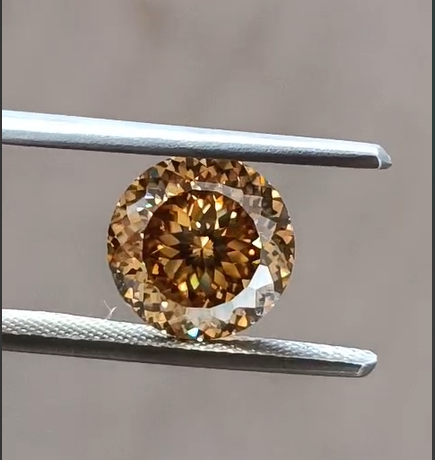
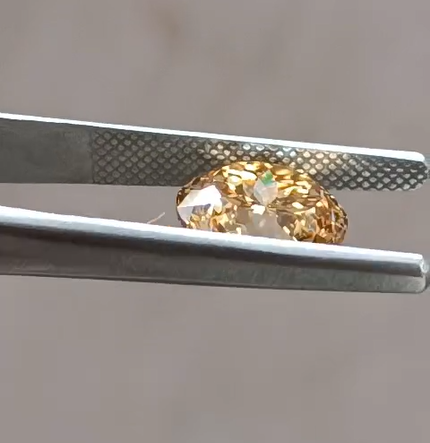
What distinguishes moissanite from diamond and from every other gemstone used in jewelry is its optical profile. Its refractive index of 2.65 exceeds diamond's 2.42, producing higher brilliance in optical terms. Its dispersion — the property that creates fire, the spectral colored flashes visible when the stone moves in direct light — is 0.104, more than double diamond's 0.044. These numbers are not marketing claims. They are measured physical properties that translate directly into how the stone performs in every lighting condition it encounters.
Why 2 Carats Is the Right Size for Moissanite Specifically
Every gemstone has a carat weight at which its defining optical properties become most fully apparent, and for moissanite, 2 carats is a particularly rewarding threshold.
At smaller carat weights — below 1 carat — moissanite's exceptional fire and brilliance are present but require proximity and favorable lighting to fully register. The stone is beautiful, but its defining qualities — particularly the rainbow fire that distinguishes moissanite from diamond to a trained eye — need surface area to develop. At 1 carat, the display is clearly apparent. At 2 carats, it is genuinely spectacular.
A 2 carat moissanite stone in a round brilliant cut measures approximately 8.1mm in diameter — equivalent to the face-up dimensions of a 2 carat diamond. Its face-up presence on the hand is immediately commanding, and the additional surface area gives its optical properties room to perform at their maximum. The fire flashes that are characteristic of moissanite are broader and more colorful at this scale; the brilliance is richer and more multidirectional; the overall visual impact justifies the casual attention it receives from people who do not know what they are looking at but know that it is extraordinary.
The financial dimension is equally compelling. A 2 carat lab grown moissanite stone costs dramatically less than a 2 carat lab grown diamond of comparable quality, and exponentially less than a 2 carat mined diamond. The price differential at this carat weight is not incidental — it is the difference between a purchase that strains any normal budget and a purchase that feels genuinely accessible. For buyers who want real visual impact at 2 carats without the financial commitment that diamonds at this weight require, moissanite is the most complete answer available.
The Optical Profile of a 2 Carat Moissanite: Fire, Brilliance, and the Difference Between Them
The terms fire and brilliance appear together so frequently in gemstone marketing that they have blurred into a general sense of "sparkle" for many buyers. They describe specific and distinct optical phenomena, and understanding the difference helps buyers evaluate moissanite's optical advantages accurately rather than in vague superlatives.
Brilliance is the return of white light to the viewer's eye from the interior of the stone. A stone with high brilliance appears bright — it seems to generate light rather than simply reflect it. Brilliance is primarily governed by the stone's refractive index — the degree to which the material bends light as it enters and exits — and by the cut's ability to direct that bent light back toward the viewer rather than allowing it to escape through the pavilion. Moissanite's refractive index of 2.65 produces higher brilliance than diamond's 2.42 in optical measurement. In practice, this means a well-cut 2 carat moissanite stone appears brighter than a well-cut 2 carat diamond of comparable cut quality in most lighting conditions.
Fire is the dispersion of white light into its spectral components — the colored flashes of red, orange, yellow, green, and blue that appear when the stone or the light source moves. Fire is governed by the stone's dispersion value — the degree to which the material separates light by wavelength. Moissanite's dispersion of 0.104 is more than twice diamond's 0.044, which is why moissanite produces significantly more rainbow fire than diamond under equivalent conditions. This is the characteristic most visible to an experienced observer and the one that most clearly distinguishes moissanite from diamond when both are examined in direct light.
The practical significance at 2 carats: At this stone size, both properties are fully developed and apparent in real-world conditions — not just under gemological lighting or in controlled photography, but in office lighting, restaurant ambiance, and outdoor natural light. A 2 carat moissanite in the right setting, worn in a normally lit environment, produces an optical display that most observers find genuinely beautiful regardless of whether they can identify what they are seeing. The fire and brilliance combine into an overall impression that exceeds most comparable diamond alternatives at this price point by a meaningful margin.
Cut Options for a 2 Carat Moissanite Stone
The cut of a 2 carat moissanite stone determines how completely its optical properties develop and how its visual character presents in the finished piece.
Round Brilliant
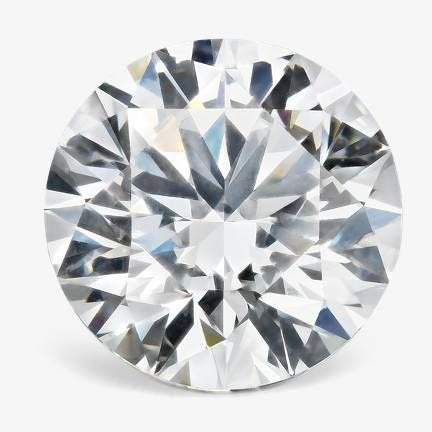
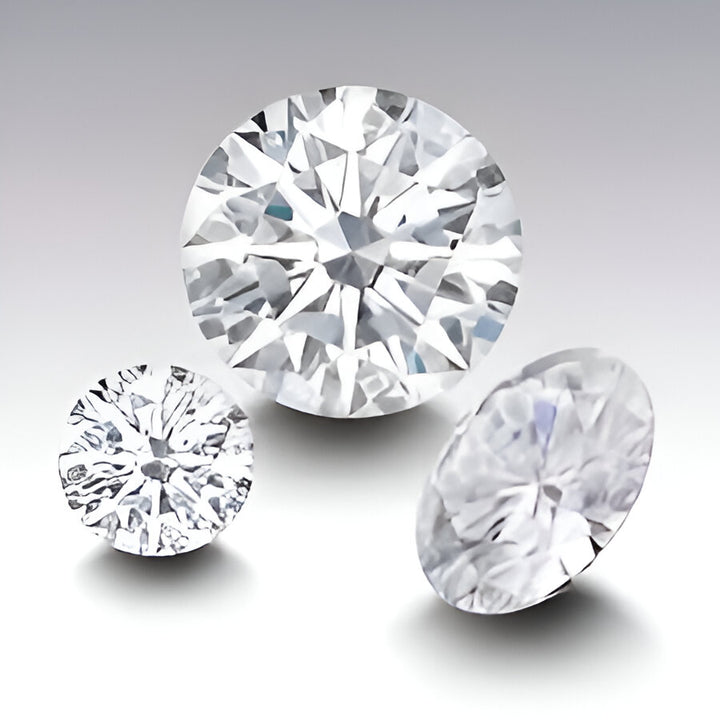
The round brilliant cut is the most optically efficient configuration for moissanite's specific properties. Its 58 facets, angled to maximize light return and spectral dispersion simultaneously, allow both moissanite's elevated brilliance and its elevated fire to perform at their fullest expression. A 2 carat round moissanite ring is the combination that produces the most spectacular overall optical display available in this gemstone — and the combination that most clearly demonstrates the difference between moissanite and diamond to an observer who compares them directly. This is the cut for buyers who specifically chose moissanite for its optical properties and want those properties displayed as completely as possible.
Oval Moissanite
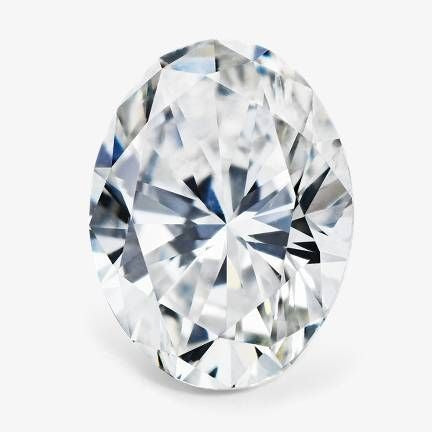
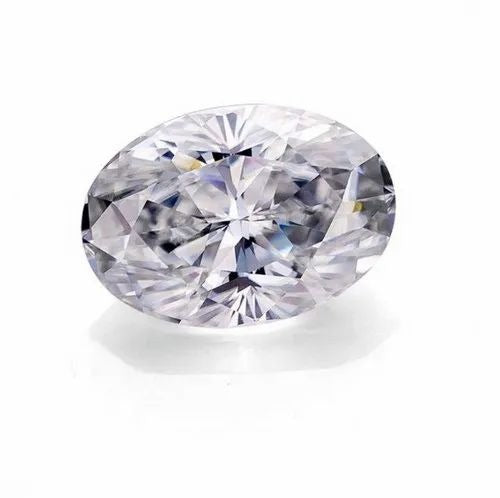
A 2 carat oval moissanite stone faces up noticeably larger than a round of equivalent weight — the elongated form covers more finger surface area, creating a visual presence closer to a 2.5 carat round. Oval moissanite rings have become one of the most requested configurations in our collection, driven by buyers who want the flattering finger-lengthening effect of the oval combined with moissanite's fire and brilliance. The oval cut also manages moissanite's elevated fire particularly well — the elongated facet arrangement distributes fire flashes across a wider surface, creating a broader rainbow display than the round's more concentrated pattern. For buyers considering oval lab grown moissanite rings specifically, our oval moissanite collection presents the full range of settings available in this shape.
Cushion Cut Moissanite
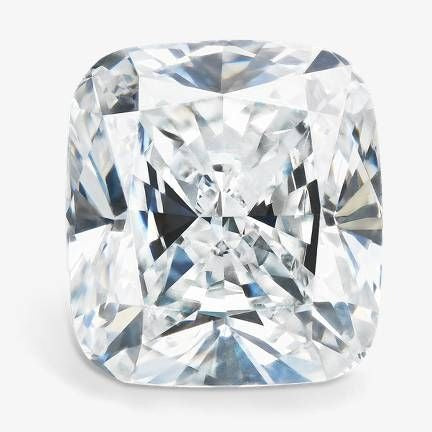
A cushion cut 2 carat moissanite stone delivers moissanite's fire in a soft, romantic form — the rounded corners and warm, generous sparkle pattern creating a stone whose character reads as antique-influenced rather than contemporary-precise. Cushion moissanite rings suit buyers who want warmth and romance in their stone's visual character alongside the optical performance advantages that the gemstone provides. At 2 carats, the cushion's larger facets amplify moissanite's fire effectively, producing broader individual fire flashes than the brilliant cuts' tighter facet arrangement creates.
Elongated Cushion
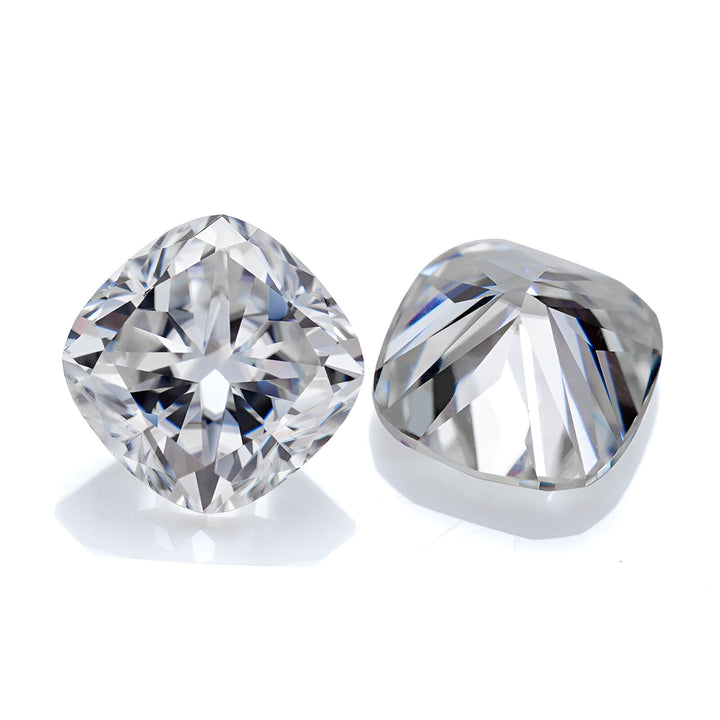
The elongated cushion — a cushion cut with a length-to-width ratio above 1.10 — combines the cushion's soft corner geometry with a directional, elongating form that creates a ring presence partway between an oval and a square cushion. It is a less conventional choice that suits buyers who want something more individual than the standard cushion while retaining the cut's optical warmth. At 2 carats, the elongated cushion's larger facets display moissanite's fire particularly generously.
Radiant Cut
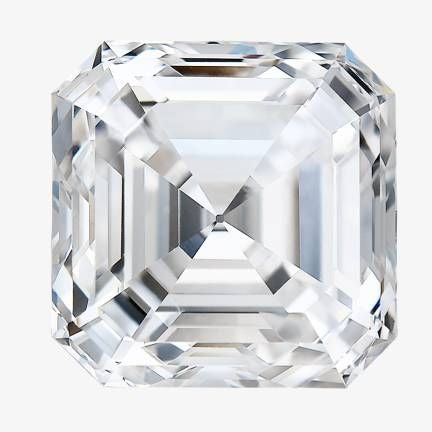
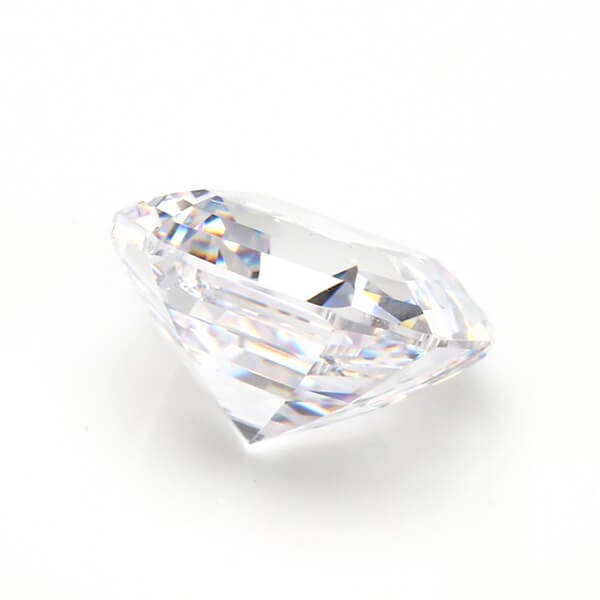
A radiant cut 2 carat moissanite stone combines the cropped-corner profile of the Asscher and emerald cuts with a brilliant facet structure beneath — producing maximum brilliance and fire in a form that has the step cut's silhouette without its optical restraint. Radiant cut moissanite rings suit buyers who want the square or rectangular outline's geometric character delivered with the full optical intensity of a brilliant cut. The radiant's multiple small facets distribute both brilliance and fire evenly across the stone's face, creating an exceptionally active optical display.
Pear Shape
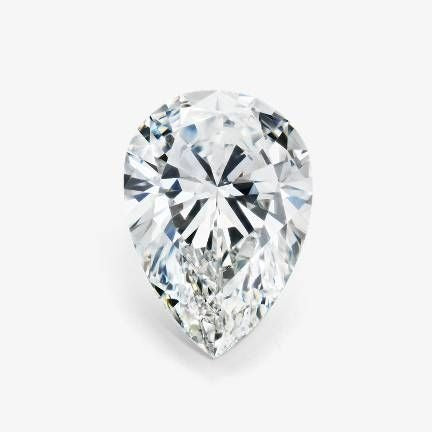
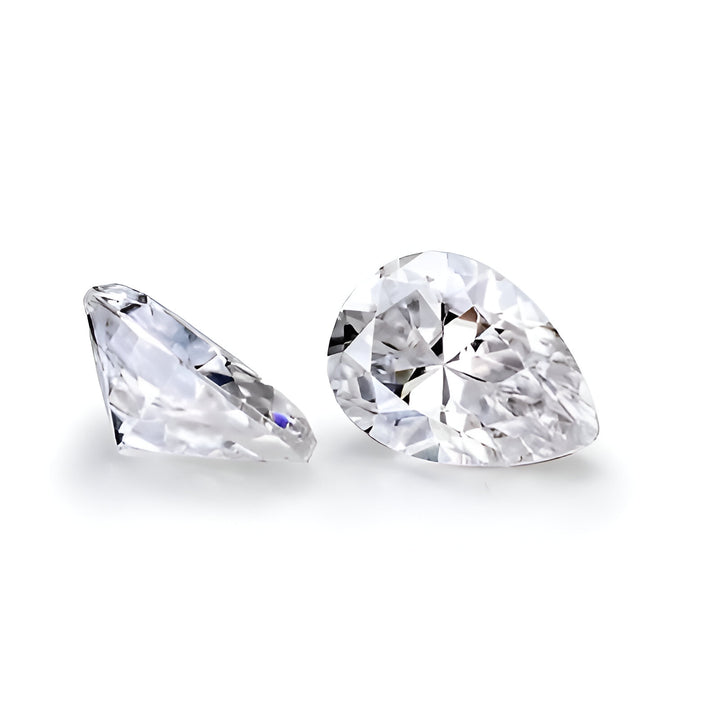
A 2 carat pear shaped moissanite stone creates a directional, elongated form with a pointed end and a rounded shoulder — flattering to the hand when oriented with the point toward the fingertip and creating an alternative finger-lengthening effect to the oval. Pear moissanite rings have a specific visual drama — the pointed form creates a stone silhouette that reads as distinctly different from round or cushion shapes without the geometric precision of princess or radiant cuts. At 2 carats, the pear's extended form gives moissanite's fire a long axis along which to develop its display.
Understanding Moissanite Grading: What the Specifications Mean
Moissanite is graded across several quality dimensions, and understanding what each means for a 2 carat stone helps buyers select specifications that serve the finished ring rather than an abstract quality ranking.
Color Grade
Moissanite color is graded on a scale that roughly parallels the diamond color scale: colorless (equivalent to D-E-F in diamonds), near-colorless (equivalent to G-H-I), and faint color (equivalent to J-K and below). The color designation describes the degree of warmth or tint visible in the stone when viewed face-up in a neutral lighting environment.
Colorless moissanite presents as the clearest, most icy appearance — the stone reads as entirely without color tint in face-up position in most lighting conditions. Near-colorless moissanite shows subtle warmth that is typically invisible in normal wear in most settings, particularly in yellow or rose gold settings where the metal's warmth absorbs any stone tint. For 2 carat moissanite rings in white metal settings — platinum or white gold — colorless grade is the appropriate specification for a stone that reads as genuinely colorless. In yellow or rose gold, near-colorless performs equally well and costs less.
Clarity
Moissanite in the colorless and near-colorless grades is virtually always eye-clean — inclusions visible at the clarity grades that moissanite is sold in are extremely rare, and the vast majority of moissanite stones in the quality ranges appropriate for fine jewelry are free of inclusions visible to the naked eye. Clarity is not the primary grade concern for moissanite in the way it is for diamonds; buyers can focus their evaluation on color, cut, and the specific optical character of the stone rather than on inclusion mapping.
Cut Quality
Cut quality in moissanite governs the same optical outcomes it does in diamonds — how completely the stone's facets develop its brilliance and fire, how symmetrically the optical pattern presents, and how evenly the stone performs across its face. Premium cut moissanite, which is what we specify in every stone we sell, is cut to proportions optimized for moissanite's specific refractive index rather than simply adapted from diamond cutting proportions. This distinction matters because moissanite's higher refractive index means the optimal cutting angles differ from those used for diamond — a moissanite cut to diamond proportions will underperform a moissanite cut to its own optimal angles.
Setting Styles for a 2 Carat Moissanite Ring
Thin Pavé Solitaire
A plain or micro-pavé band in a slim profile paired with a 2 carat moissanite center creates a ring that is entirely about the stone. At this carat weight, the stone itself provides all the visual presence the ring needs — the setting's role is to hold and elevate rather than to contribute additional complexity. A thin pavé band adds brilliance at the finger level without visual competition with the center stone, framing the moissanite's optical display against a field of smaller diamonds rather than plain metal. This setting suits buyers who want the ring to read as clean and focused while still providing some diamond presence in the overall composition.
Cathedral Solitaire
Elevating a 2 carat moissanite center stone on arched cathedral supports creates a ring profile that maximizes the stone's visibility from the side — the full depth of the stone is apparent in profile, and the arched metal supports frame the stone's base in a way that emphasizes its height above the finger. Cathedral settings also admit more light from the sides than low-profile settings, which benefits moissanite's elevated fire by providing additional lateral light angles for spectral dispersion.
Double Halo
Two concentric rings of accent diamonds surrounding a 2 carat moissanite center create a ring of extraordinary face-up impact — the center stone appears substantially larger than its actual dimensions, and the double halo's outer and inner rows of accent diamonds frame the moissanite's fire display in a border of brilliant light. This setting is deliberately glamorous and suits buyers who want their ring to read as a statement from every distance. The double halo configuration also reduces the visual prominence of moissanite's fire relative to a plain solitaire — the surrounding diamond brilliance creates a context in which the moissanite's elevated fire is one element of a larger composition rather than the distinguishing characteristic of the piece.
East-West Setting
Orienting a 2 carat oval, cushion, or elongated shape moissanite east-west — perpendicular to the band rather than parallel — creates a contemporary ring that reads as deliberately designed. The east-west orientation changes how the stone interacts with the finger, creating a wider rather than longer visual footprint, and suits buyers who want their ring to communicate aesthetic intentionality rather than conventional elegance.
Vintage Milgrain Setting
A solitaire or three-stone setting with milgrain edge detailing — tiny beaded metal texture along the band and gallery edges — creates a period-referencing aesthetic that suits moissanite's warm fire particularly well. The milgrain's handcrafted quality creates visual consistency with the organic richness of moissanite's spectral display, producing a ring that feels genuinely crafted rather than manufactured. For buyers who are drawn to estate and antique jewelry aesthetics, a milgrain setting around a 2 carat moissanite stone produces a ring that reads as both historically resonant and individually chosen.
Moissanite vs Lab Grown Diamond at 2 Carats: An Honest Comparison
This comparison matters because many buyers considering a 2 carat moissanite stone are simultaneously evaluating 2 carat lab grown diamonds, and the choice between them is genuinely consequential rather than a matter of preference alone.
Visual similarity to diamond: Lab grown diamonds are chemically identical to mined diamonds and visually indistinguishable from them without specialized equipment. Moissanite, at 2 carats, is distinguishable from diamond by an experienced observer in direct light — the elevated fire produces a rainbow display that exceeds what diamond creates under equivalent conditions. To an inexperienced observer, a 2 carat moissanite looks like a very large, very brilliant stone. Whether its optical character reads specifically as diamond depends on the observer's familiarity with both materials. Buyers who specifically want a stone that reads as diamond to all observers should choose lab grown diamond. Buyers who are comfortable with moissanite's distinct optical identity — and many find it more beautiful than diamond precisely because of it — have no reason to choose otherwise.
Price: A 2 carat moissanite stone costs significantly less than a 2 carat lab grown diamond of comparable cut quality. The price difference at this carat weight is meaningful — enough to fund a more elaborate setting, additional jewelry pieces, or simply represent a more comfortable overall purchase. For buyers for whom the price differential at 2 carats is a real consideration, moissanite provides a clear financial advantage without meaningful compromise in beauty or durability.
Optical performance: Moissanite produces more fire and comparable or slightly higher brilliance than diamond. Whether this optical difference is a preference or a drawback is personal — some buyers specifically prefer the additional fire; others find it visually different from the diamond appearance they were specifically seeking. Neither stone is optically inferior; they are optically different in ways that reflect genuinely different aesthetic priorities.
Durability: Both moissanite (9.25 Mohs) and lab grown diamond (10 Mohs) are appropriate for daily wear in a ring that will be worn continuously for decades. The practical durability difference between them under normal daily wear conditions is negligible — both are significantly harder than the materials they will encounter in everyday life.
Why Grown Leo for a 2 Carat Moissanite Purchase
We approach the moissanite category with the same standards we apply to our lab grown diamond collection — because buyers investing in a 2 carat center stone, whatever the material, deserve the same level of product documentation, photography accuracy, and purchase support that any significant fine jewelry purchase requires.
Every 2 carat moissanite stone in our collection is premium cut, premium color (colorless or near-colorless as specified per listing), and photographed individually in both natural and studio light. We do not represent moissanite stones with generic gemstone photography — you see the specific stone or setting you are purchasing, in conditions that represent how it will actually perform in daily wear rather than how it performs under optimal photography conditions.
Settings are fabricated in solid 14k or 18k gold or platinum with documented metal specifications. We do not plate base metals and represent them as precious metal. Every ring ships insured and tracked with a certificate of moissanite specification, a lifetime craftsmanship warranty on the setting, a 30-day return window for unmodified pieces, and a complimentary first-year resize.
Our team is available to discuss specific stones — their optical character, their cut proportions, their behavior in specific lighting conditions — before your purchase is placed. For a 2 carat stone that will be worn daily for decades, that conversation is worth having.
Caring for a 2 Carat Moissanite Ring
Moissanite's hardness and chemical stability make it one of the most forgiving gemstones to care for, and its maintenance requirements are minimal relative to its visual rewards.
Cleaning: Warm water and a drop of dish soap, applied with a soft brush and rinsed thoroughly, removes the skin oils, hand creams, and environmental deposits that accumulate on any gemstone surface. Moissanite is chemically inert — it is not damaged by water, soap, or the mild acidic compounds in skin oils. Clean it weekly and the stone maintains its full optical performance continuously. Ultrasonic cleaners are safe for moissanite in solid metal settings without fracture-filled inclusions — a standard caveat that applies to all gemstones in ultrasonic cleaning.
What moissanite resists: At 9.25 on the Mohs scale, moissanite is not scratched by the materials it encounters in ordinary daily wear — metal surfaces, glass, ceramic, plastics, and the surfaces of most everyday objects. It will not develop the surface haze that softer gemstones acquire over years of wear. Its optical properties are permanent — the fire and brilliance present at purchase are present decades later without change.
What requires attention: The setting, not the stone, is the primary maintenance concern for any fine jewelry ring. Prong integrity should be assessed annually by a qualified jeweler — prong wear that leaves the stone inadequately held is the most common cause of stone loss in any prong-set ring regardless of gemstone type. At 2 carats, the center stone's value — both financial and sentimental — makes this annual precaution worth prioritizing consistently.
Storage: Moissanite's hardness means it will scratch other gemstones and most metal surfaces it contacts. Store the ring in its own compartment or pouch rather than loose with other jewelry — protecting both the moissanite from contact scratches on its metal setting and other pieces from the stone's surface-scratching potential.