
Total: $0.00
Taxes and shipping calculated at checkout
We will send you an email to reset your password.
One carat sits at an interesting intersection in fine jewelry. It is the weight that carries cultural significance — the number most people name when asked what size engagement ring they want — while also being the size at which a gemstone's optical properties first fully reveal themselves in daily wear. For a 1 carat moissanite stone, that intersection produces something specific: a stone large enough to display its exceptional brilliance and fire completely, significant enough to read as a genuine statement on the hand, and priced in a way that makes the quality investment that 1 carat deserves genuinely accessible.
Moissanite at 1 carat is not a compromise toward a diamond. It is a choice in its own right — made by buyers who understand the material, appreciate its specific optical character, and value what lab grown ethical sourcing represents in the context of a piece worn for a lifetime. At Grown Leo, our 1 carat moissanite collection reflects that understanding: premium cut stones, documented specifications, and settings built for the weight they carry. The right 1 carat moissanite ring is here. Read on to find it.

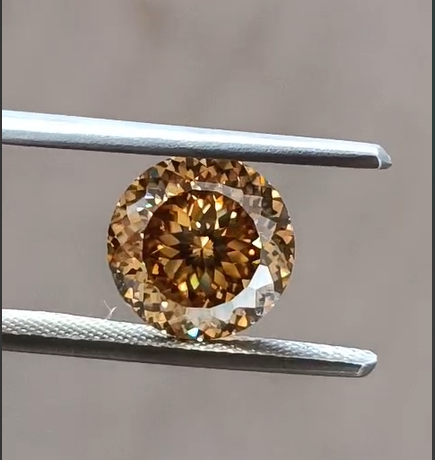
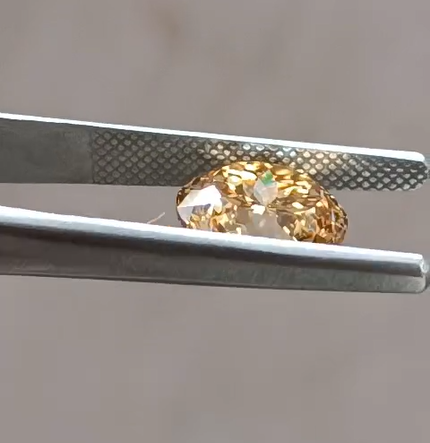
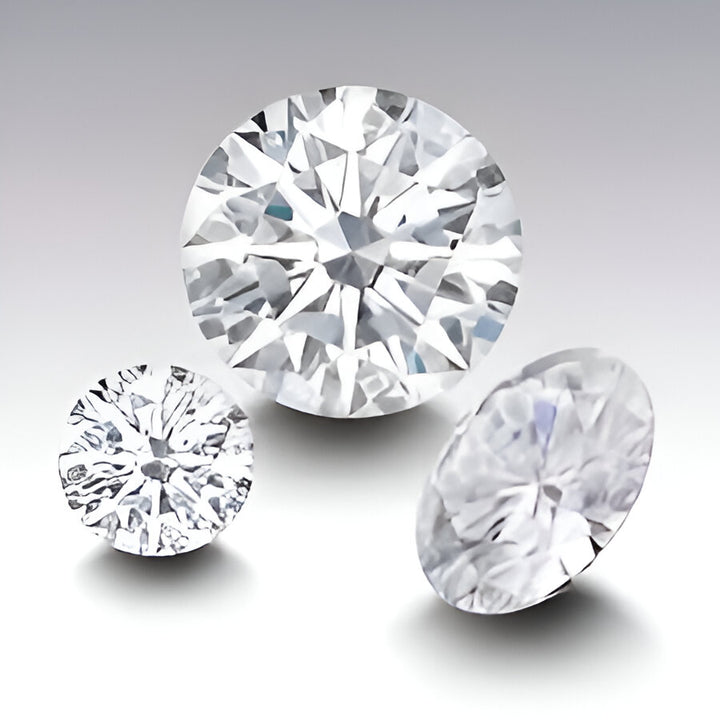
There is a version of the 1 carat milestone that is purely cultural — a number that carries weight because it is the number most associated with a meaningful engagement ring purchase, regardless of what that weight actually looks like on a finger. That version is real and worth acknowledging: the 1 carat designation communicates intention in a way that 0.9 carats does not, even when the physical difference between them is imperceptible without a gemological scale.
But there is another version of the 1 carat threshold that is optical rather than cultural, and it is equally valid. At approximately 6.5mm in diameter for a round stone, 1 carat produces a face-up surface area large enough for a gemstone's defining optical properties to be fully visible from a normal social distance — not just under gemological lighting or in close-up photography, but in the lighting conditions of an ordinary day. Below this threshold, the finest optical properties of any gemstone are present but require proximity to fully appreciate. At and above it, the stone performs publicly rather than privately.
For moissanite specifically, this threshold matters more than it does for many gemstones. Moissanite's elevated fire — its dispersion value of 0.104, more than double diamond's — requires surface area to develop its characteristic rainbow display. At 0.5 carats, the fire is present but subtle. At 1 carat, it is fully apparent in normal lighting. At the 1 carat threshold, moissanite's most distinctive and celebrated quality becomes visible to anyone who sees the ring in motion.
One of the most useful things a buyer can do before purchasing a 1 carat moissanite stone is arrive at accurate expectations for what the stone will and will not do — formed from an honest understanding of the material rather than from marketing language or from comparisons with unrealistically positioned alternatives.
What a 1 carat moissanite stone will do:
It will provide outstanding optical performance — more fire than a diamond of equivalent size and comparable or superior brilliance. It will wear daily for decades without scratching, clouding, or losing its surface character. It will read as a clearly substantial stone from a social distance, producing the face-up presence that the 1 carat designation implies. It will do all of this with complete ethical transparency — every moissanite stone is lab grown with traceable origin, free from the environmental and human rights concerns of gemstone mining.
What requires accurate calibration:
A 1 carat moissanite is not identical to a 1 carat diamond in how it reads to a gemologically experienced observer in direct light. The elevated fire — the rainbow flashes — will be apparent to anyone familiar with both materials under direct lighting. This is a characteristic of the material, not a quality deficiency. Buyers who specifically want a stone that is optically indistinguishable from diamond should choose a lab grown diamond. Buyers who appreciate moissanite's distinct optical identity — and many find it more visually compelling than diamond — are making an informed choice rather than a compromise.
On the question of everyday identification:
In normal indoor lighting and at social distances, the vast majority of people who see a well-set 1 carat moissanite ring will not identify it as anything other than a large, brilliant, clearly exceptional stone. The material identification question applies to experienced observers in direct light conditions — not to the casual observer in an office corridor or at a dinner table.
The optical properties of moissanite that distinguish it from other gemstones — including diamond — are not marketing claims. They are measured physical properties with direct implications for how the stone performs in every lighting condition it encounters.
Refractive Index and Brilliance
The refractive index describes how strongly a material bends light as it passes through, which determines how efficiently a cut stone redirects entering light back toward the viewer's eye. Moissanite's refractive index of 2.65 is higher than diamond's 2.42 and higher than every other commonly used gemstone. In a well-cut 1 carat moissanite stone, this elevated refractive index produces light return that meets or exceeds what a diamond of comparable quality achieves. The stone appears bright — genuinely, actively bright — in conditions where lower refractive index stones appear merely attractive.
Dispersion and Fire
Dispersion describes how strongly a material separates white light into its spectral components — producing the rainbow flashes that jewelry descriptions call fire. Moissanite's dispersion value of 0.104 is 2.4 times higher than diamond's 0.044. In practical terms, this means a 1 carat moissanite stone produces significantly more colorful fire than a 1 carat diamond under equivalent direct lighting conditions. The fire is the characteristic that most clearly distinguishes moissanite's optical identity from diamond's — not a subtle difference but a clearly observable one in the right conditions.
Scintillation Pattern
The pattern of light and dark that moves across a stone as it, the viewer, or the light source moves — scintillation — is governed by the relationship between facet size, facet arrangement, and the stone's overall proportions. A well-cut 1 carat moissanite produces active, multidirectional scintillation that maintains visual interest across a wide range of viewing angles and lighting conditions. The scintillation pattern at 1 carat is fully developed — large enough to read clearly without requiring close examination.
The combined effect in daily wear
These three optical properties — brilliance, fire, and scintillation — do not operate independently. They combine into the overall impression of a stone that is simultaneously bright, colorful in motion, and dynamically interesting at rest. In daily wear across a variety of lighting conditions, a premium cut 1 carat moissanite ring produces an optical display that consistently draws positive attention from people who know nothing about gemstone grading but respond instinctively to exceptional visual performance.
The shape of a 1 carat moissanite stone governs its face-up appearance, its finger interaction, and how its optical properties express themselves in the finished ring.
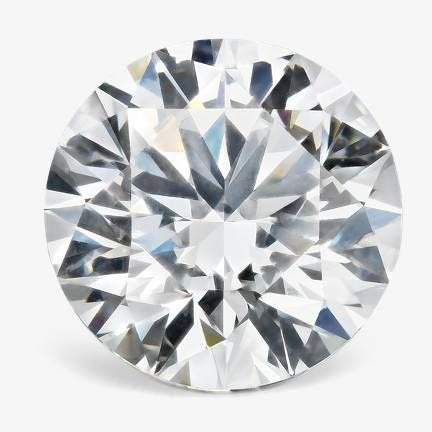
The round brilliant cut is the most optically optimized configuration for moissanite's specific refractive and dispersive properties. At 1 carat, a round moissanite measures approximately 6.5mm in diameter — a face-up size that is equivalent to a 1 carat diamond round and that reads clearly as a substantial stone from a normal distance. The 58-facet round brilliant configuration allows both brilliance and fire to develop completely, producing the full range of moissanite's optical character simultaneously. For buyers who want maximum optical performance in the most universally flattering shape, the round brilliant 1 carat moissanite ring is the definitive choice.
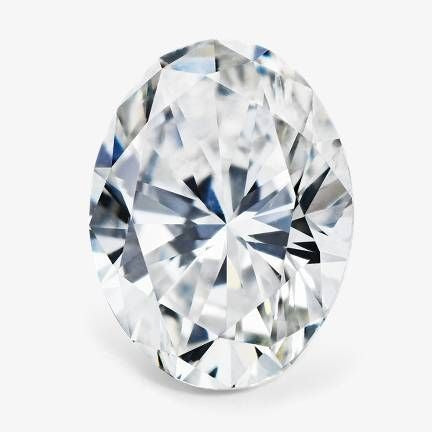
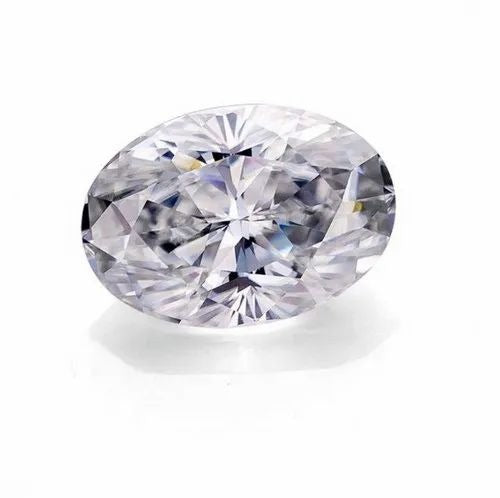
An oval 1 carat moissanite stone faces up noticeably larger than a round of the same weight — the elongated form covers more finger surface area, creating a visual impression closer to a 1.2 or 1.3 carat round. This apparent size advantage makes the oval a particularly intelligent choice at the 1 carat weight — buyers who want the visual impact of a larger stone without the cost of additional carat weight achieve it through shape selection rather than weight increase. Oval moissanite engagement rings have become increasingly popular as buyers recognize this advantage, and the shape's finger-lengthening effect adds a practical flattery dimension beyond the size illusion.
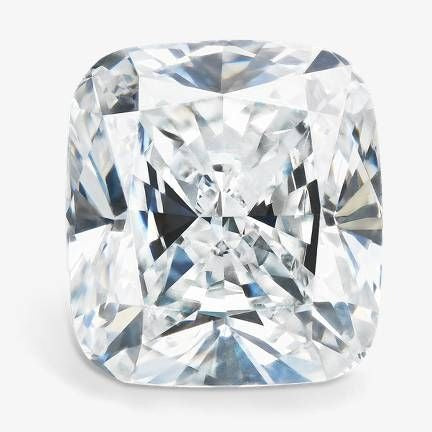
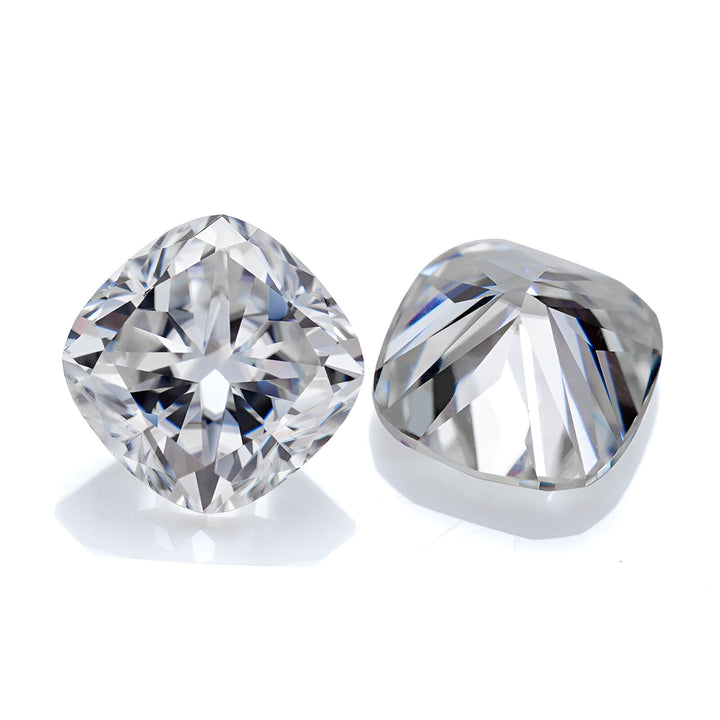
A cushion cut 1 carat moissanite stone delivers a warm, romantic optical character — the soft, rounded corners and larger facets of the cushion creating a fire display that is broader and more diffuse than the round brilliant's tighter pattern. Cushion moissanite rings suit buyers who want the stone's fire to read as warmth and richness rather than crisp colorful flashes — a distinction that is subtle but genuinely present when comparing the two cuts side by side. The cushion's antique-influenced silhouette also creates a ring with period character that appeals to buyers whose aesthetic references include estate and vintage jewelry.
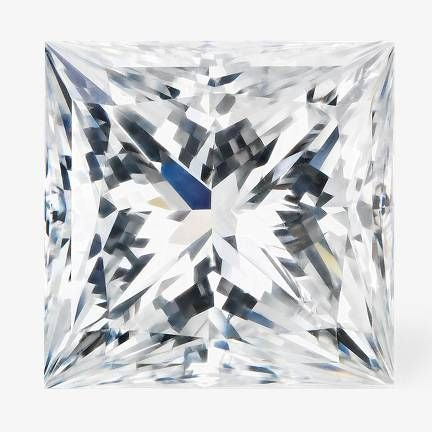
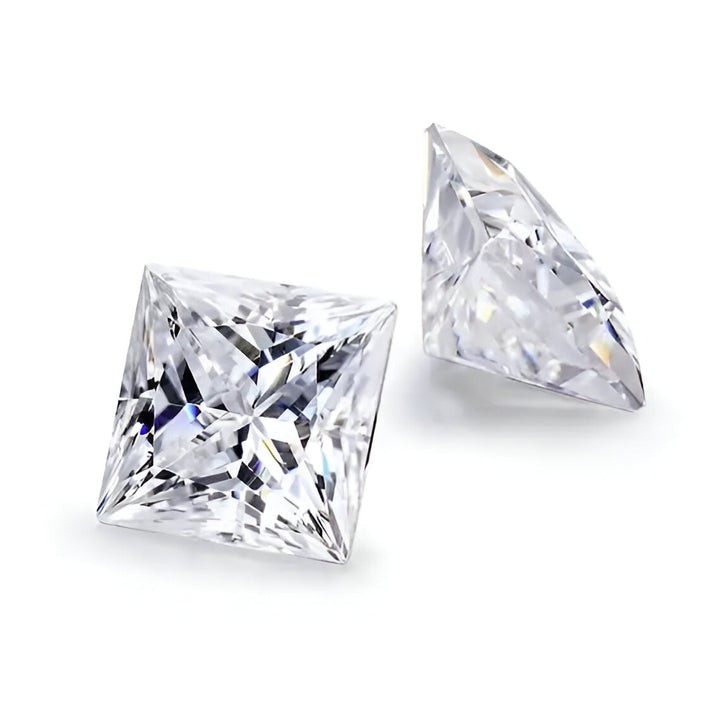
A princess cut 1 carat moissanite stone brings geometric precision to the finger — four sharp corners defining a square outline above the band. The princess cut's brilliant facet structure delivers strong light performance in a form that has architectural character rather than the organic curves of rounds and cushions. Princess cut moissanite rings suit buyers whose personal aesthetic runs toward precision and modernity. The corner geometry requires careful setting to protect the tips — a specification that every princess cut setting in our collection addresses as a baseline requirement.
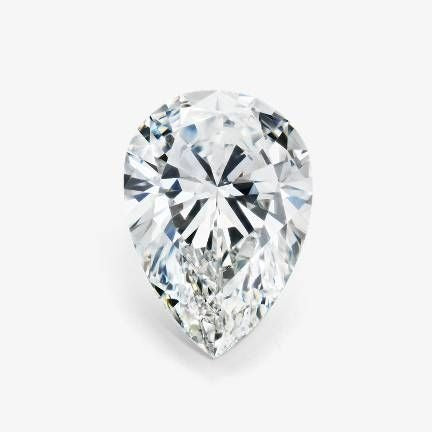
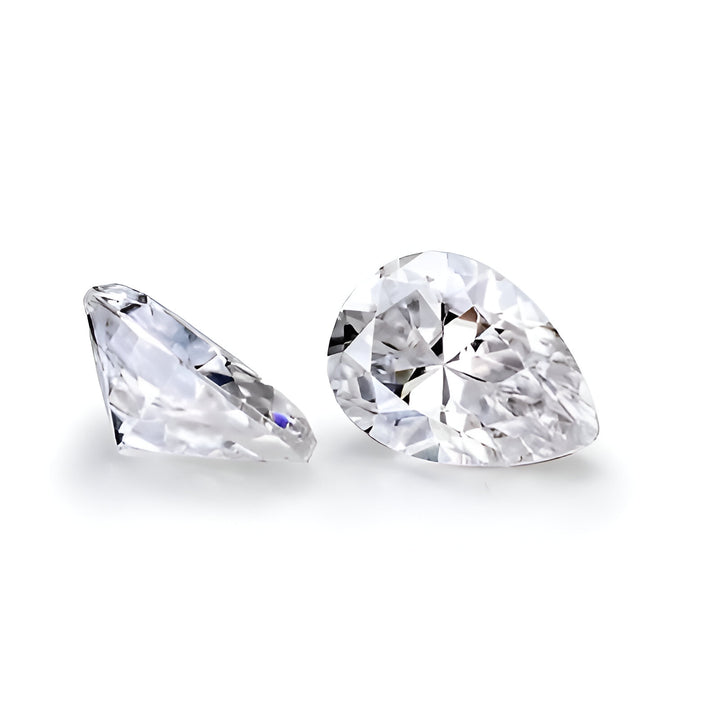
The pear's combination of a rounded shoulder and a pointed tip creates a directional stone silhouette that relates to the hand differently than any symmetrical shape. At 1 carat, a pear moissanite stone produces significant face-up length — the elongated form makes the stone appear larger than a round of equivalent weight while the pointed tip creates an upward visual gesture when worn traditionally. Pear moissanite engagement rings suit buyers who want a ring with distinctive visual drama without the full commitment of a marquise's extreme elongation.
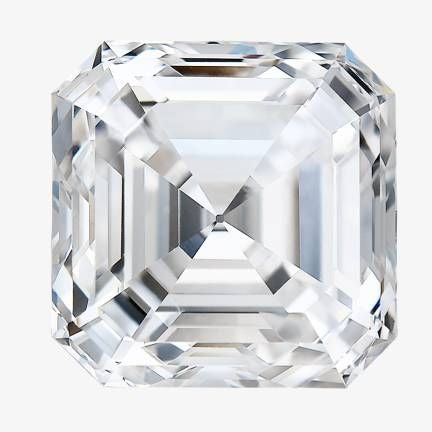
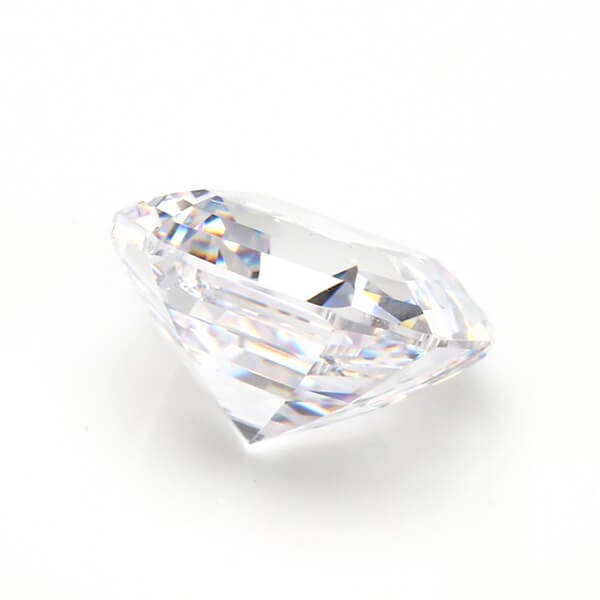
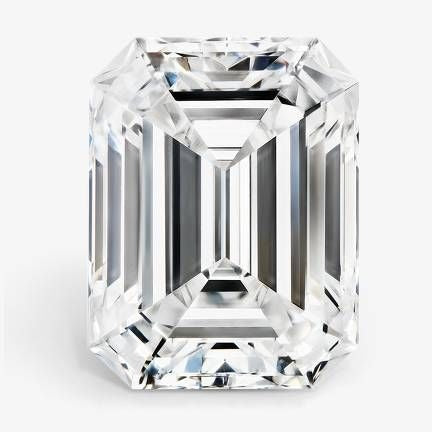
An emerald cut 1 carat moissanite stone delivers the step cut's characteristic optical depth — the hall-of-mirrors effect of parallel facets reflecting each other — in a stone whose overall optical character differs fundamentally from brilliant cuts. Emerald cut moissanite rings are a specific aesthetic choice for buyers who prefer interior depth to surface sparkle. The open facets of the emerald cut make color grade more visible than in brilliant cuts — colorless grade moissanite is recommended for emerald cuts in white metal settings to ensure the stone reads as genuinely colorless in its large, transparent facets.
A heart shaped 1 carat moissanite stone is the most emotionally resonant shape available — a gemstone cut explicitly into the symbol most associated with the sentiment an engagement ring is meant to express. At 1 carat, the heart shape has enough face-up surface to read clearly as a heart from a normal distance, with the cleft and two lobes well-defined by the cutting. Heart moissanite rings are a specific choice for buyers for whom the symbolic dimension of the ring's shape matters — who want the physical object itself to communicate its meaning without relying on the context of the proposal.
Moissanite color grading uses a scale that parallels diamond color grading — colorless (equivalent to diamond D-F), near-colorless (equivalent to G-I), and faint color. Understanding how these grades present in a 1 carat stone helps buyers select the specification that serves the finished ring.
Colorless Moissanite at 1 Carat
Colorless grade moissanite presents as completely without color tint in face-up position under most lighting conditions. The stone reads as clear and icy — the color quality most associated with premium diamond appearance. For 1 carat moissanite rings in white metal settings — platinum or white gold — colorless grade is the specification that produces the cleanest, most colorless face-up appearance. It is also the specification that best suits step-cut shapes, whose large open facets make color more visible than brilliant cuts.
In white metal at 1 carat, colorless grade moissanite is the appropriate default recommendation. The premium over near-colorless is modest at this carat weight and is justified by the visible difference in how the stone reads in cool lighting and against white metal.
Near-Colorless Moissanite at 1 Carat
Near-colorless grade moissanite shows subtle warmth that is typically invisible in face-up position during normal wear in most lighting conditions. In yellow or rose gold settings, the warm metal absorbs any stone tint and the near-colorless grade performs identically to colorless in the finished ring. For buyers choosing yellow or rose gold settings specifically, near-colorless moissanite delivers the same visual result as colorless at a lower price point — the savings can be redirected toward a more elaborate setting, a larger stone, or additional jewelry pieces.
In white metal settings at 1 carat, near-colorless moissanite can perform acceptably depending on the specific stone and the lighting environment, but colorless provides a more reliable outcome for buyers who want the stone to read as definitively without color tint.
A solitaire setting with a knife-edge band — the shank tapered to a pointed ridge along its top edge — creates a ring that appears almost to vanish beneath the center stone, concentrating all visual weight at the stone itself. The knife-edge's slender profile makes the 1 carat moissanite center appear larger by comparison — the band's narrowness emphasizes the stone's width. This setting suits buyers who want the most uncompromising visual focus on the center stone and whose aesthetic preferences run toward precision rather than ornamentation.
A band that incorporates a gentle twist along its length, set with small accent diamonds in pavé configuration, creates a setting with movement and texture that complements moissanite's dynamic fire particularly well. The band's twist creates varying light capture angles along its length, contributing sparkle that changes character as the hand moves. Paired with a 1 carat moissanite center, the twisted pavé band creates a complete ring composition whose multiple light-active elements reinforce each other.
Setting a 1 carat oval moissanite east-west — the stone's length running perpendicular to the band rather than parallel — creates a contemporary ring with a wide visual footprint. The east-west orientation changes how the oval's size advantage presents on the finger: rather than elongating along the finger's length, the stone spans its width, creating a broad, bold presence that reads as decisively modern. This orientation has grown substantially in popularity as buyers seek setting configurations that read as deliberately designed.
A band that divides into two strands approaching the center stone from both sides frames a 1 carat moissanite between two metal rails, creating a visual frame that emphasizes the stone's position at the ring's center. The split shank adds visual width at the setting's base without adding stones, making the center stone appear more prominently mounted than it would in a plain solitaire band. The open space between the two strands also admits additional light from below, which benefits moissanite's fire by providing additional lateral light angles for spectral dispersion.
A three-stone ring with a 1 carat moissanite center and two smaller moissanite side stones creates a ring of consistent optical character throughout — all three stones sharing the same elevated fire and brilliance, the total display more substantial than any single stone produces alone. For buyers who love the three-stone format's symbolic resonance but want the composition built entirely from moissanite, this all-moissanite trilogy is a coherent and visually compelling choice. Our moissanite trilogy rings include several configurations with round and fancy shape side stone options.
A hidden halo beneath a 1 carat moissanite center — small accent stones set in a recessed gallery beneath the stone's girdle — creates additional brilliance visible from the side without changing the ring's face-up solitaire appearance. At 1 carat, the hidden halo's size-enhancement effect is particularly noticeable — the secondary light source at the girdle level blurs the stone's perimeter outward, making the center appear slightly larger than its actual dimensions. For buyers who want a 1 carat stone to read with more presence than an unenhanced solitaire provides, the hidden halo is the most subtle and effective mechanism for achieving that outcome.
The comparison between moissanite and lab grown diamond at 1 carat is the one buyers most frequently make, and it deserves a clear, direct treatment rather than vague positioning language.
At 1 carat, both materials produce stones that are clearly visible and optically active in daily wear. Both are lab grown, both have documented origins, and both are significantly more affordable than mined diamond equivalents of comparable quality. The meaningful differences between them at this size are optical character, price, and what each communicates about the buyer's priorities.
Optical character: A 1 carat lab grown diamond certified Excellent cut at G color and VS2 clarity will look like a diamond — because it is one. Its fire will be at diamond levels, its brilliance at diamond levels, and an experienced observer will identify it as such. A 1 carat premium cut colorless moissanite will look like moissanite — a distinct and beautiful gemstone with more fire than diamond and comparable brilliance. In normal social lighting, both look exceptional. In direct light comparison, the moissanite's elevated fire is the differentiating characteristic.
Price: Premium cut, colorless 1 carat moissanite is significantly less expensive than 1 carat Excellent cut, G color, VS2 lab grown diamond. The difference at this carat weight is meaningful — enough to fund a more elaborate setting or represent a more comfortable overall purchase.
What the choice communicates: Lab grown diamond buyers at 1 carat typically prioritize having a stone that reads as a diamond to all observers. Moissanite buyers at 1 carat typically prioritize the stone's specific optical beauty, its ethical origin, or the financial efficiency it provides — and are comfortable with its distinct material identity. Neither priority is superior; they reflect genuinely different values and aesthetic preferences.
For buyers who are undecided, our 1 carat lab grown diamond collection presents the diamond alternative with equivalent product documentation so both options can be evaluated with accurate information before a decision is made.
Start with shape. The shape decision has more impact on the finished ring's character than any other specification, and it should be made before considering settings or grades. Round brilliant for maximum optical performance and universal flattery; oval for apparent size advantage and finger-lengthening elegance; cushion for warmth and period character; princess for geometric precision; pear for directional drama. Clarity about shape preference simplifies every subsequent decision.
Choose color grade based on setting metal. Colorless moissanite in white metal; near-colorless acceptable in yellow or rose gold. This is the single most important grade decision for how the stone presents in the finished ring, and it is directly linked to the metal choice rather than independent of it.
Prioritize cut quality. Premium cut moissanite, optimized for moissanite's specific optical properties, outperforms standard cut stones in every observable way. This is not a luxury specification — it is the quality dimension that most directly determines whether the stone's optical potential is fully realized in the finished ring.
Consider the setting's relationship to the stone's fire. High-set settings that admit more lateral light amplify moissanite's fire by providing more light angles for spectral dispersion. Low-profile bezel settings moderate the fire display and create a more contemporary aesthetic. The setting choice affects not just the ring's appearance but the stone's optical behavior within it.
Think about daily wear. A 1 carat moissanite ring worn every day needs a setting that survives daily wear, a metal that maintains its appearance across the expected wear period, and a backing type — for earrings — that provides appropriate security for the activity level. Matching the ring's practical specifications to the wearer's actual daily life is as important as matching its aesthetic specifications to her taste.
We apply the same product standards to our moissanite collection that we apply to our lab grown diamond collection, because buyers investing in a 1 carat center stone — whatever the material — deserve accurate product documentation, individual photography, and the purchase support that a significant fine jewelry decision requires.
Every 1 carat moissanite stone in our collection is premium cut to moissanite-specific proportions, premium color grade as specified per listing, and photographed individually in both natural and studio light conditions. Natural light photography is particularly important for moissanite because it shows the stone's fire behavior in the lighting conditions closest to daily wear — more accurately than studio photography under direct artificial light, which can make any stone look exceptional.
Settings are fabricated in solid 14k or 18k gold or platinum with documented alloy specifications. Every ring ships insured and tracked with a specification certificate, a lifetime setting warranty, a 30-day return window for unmodified pieces, and a complimentary first-year resize. Our team answers specific questions about specific stones — their optical character in different lighting, their behavior in the setting configurations you are considering, their comparison to specific alternatives — before your purchase is placed.
Moissanite's combination of exceptional hardness (9.25 Mohs) and chemical stability makes it one of the most practical gemstones for daily wear in fine jewelry. Its maintenance requirements are straightforward and its tolerance for normal daily conditions is high.
Routine cleaning is the most impactful maintenance habit. Warm water and a small amount of mild dish soap, applied with a soft toothbrush and rinsed thoroughly, removes the skin oils, cosmetics, and environmental deposits that accumulate on any gemstone surface and reduce its optical performance. Clean the ring weekly — it takes three minutes and restores the stone's full brilliance and fire after the previous week's accumulation. Pay particular attention to the underside of the setting where residue concentrates between the prongs.
What to avoid: Moissanite itself is chemically resistant to virtually all substances encountered in daily life. The setting metal is the component with meaningful chemical sensitivities — gold alloys, particularly yellow and rose gold, are susceptible to gradual degradation from prolonged chlorine exposure. Remove the ring before swimming in chlorinated pools or using bleach-based cleaning products. Brief incidental contact with these substances is not harmful; prolonged or repeated exposure over years causes cumulative alloy degradation.
Annual setting inspection is the most consequential maintenance action for long-term stone security. Prong wear is the primary mechanism of stone loss in any prong-set ring, and catching worn prong tips before they fail to hold the stone costs far less than resetting a lost center stone. Schedule this inspection annually alongside any existing jewelry maintenance.
Surface scratch resistance: Moissanite at 9.25 Mohs is not scratched by the materials it encounters in ordinary daily wear — kitchen surfaces, office equipment, fabric, and the surfaces of most everyday objects are all softer than the stone. Unlike some gemstones that gradually develop surface haze from accumulated microscopic scratches, moissanite maintains its original surface character through decades of wear. The optical properties you see at purchase are the optical properties you will see indefinitely.
A 1 carat round moissanite measures approximately 6.5mm in diameter, about the size of a standard pencil eraser. On an average ring size (US 6–6.5), it appears clearly substantial and easily recognizable from normal social distance. On smaller hands it appears more prominent, while on larger hands it reads slightly more modest. Oval shapes at 1 carat typically measure around 8 x 5.5mm and appear larger because of their elongated face-up shape.
No. Moissanite does not cloud or lose its brilliance over time. Its hardness and chemical stability prevent the microscopic surface wear that causes haze in softer gemstones. The optical properties that create its brilliance and fire are part of its crystal structure and remain unchanged throughout the life of the stone.
White metals such as platinum and white gold typically provide the most complementary pairing for colorless moissanite because their cool tone enhances the stone's colorless appearance and brilliance. Yellow and rose gold also pair beautifully, creating a warmer overall look. The best choice ultimately depends on personal style and the wearer's existing jewelry preferences.
Traditional thermal diamond testers often identify moissanite as diamond because the two materials have similar thermal conductivity. However, advanced multi-testers that measure both thermal and electrical conductivity can accurately distinguish moissanite from diamond. Professional gemological testing can always identify the difference.
Yes. With a hardness of about 9.25 on the Mohs scale, moissanite is durable enough for everyday wear, even in professions involving frequent hand use. The ring setting plays a larger role in durability than the stone itself. Protective settings such as bezels or low-profile prongs are often recommended for active lifestyles.
In direct sunlight, moissanite's fire is very noticeable with vibrant rainbow flashes. In indoor office lighting, the fire is usually more subtle and the stone appears primarily bright and brilliant rather than colorful. In warm lighting such as candlelight, the fire appears softer and warmer. The appearance changes with lighting conditions rather than remaining constant.
Grown Leo offers a 30-day return window for rings that remain in original, unmodified condition. Returns are issued as full refunds to the original payment method with no restocking fee. Additionally, every ring includes one complimentary resize within the first year of purchase to accommodate size adjustments if needed.
© 2026 - Grown Leo. All rights reserved.