Why the Wrist Is Different From Every Other Jewelry Position
Jewelry design tends to treat all placements as variations of the same challenge: hold a gemstone, make it sparkle, keep it secure. Bracelets operate under fundamentally different conditions than rings, earrings, or pendants — and understanding those conditions explains why moissanite is uniquely suited to the position.
The wrist is the most kinetically active jewelry zone on the body. The hand moves constantly — gesturing, typing, lifting, reaching — and every movement transmits directly to the bracelet. This perpetual motion means a bracelet's stones are never static. They cycle through ambient light sources from continuously shifting angles, which produces more frequent and more varied light interactions per hour than any ring or pendant experiences.
Moissanite's higher refractive index and superior light dispersion turn this constant motion into a performance advantage. Each angular change produces a new flash of brilliance or spectral fire — and because moissanite disperses more light per interaction than diamond, the bracelet generates a denser stream of visual events during the same range of motion. The wrist's kinetic nature and moissanite's optical hyperactivity are a pairing that amplifies both.
The wrist also encounters more physical contact than other jewelry positions. A ring sits on a finger that the wearer can maneuver away from surfaces. A bracelet rides on a limb that leads the hand toward everything the hand touches. Desk edges, countertops, car doors, bag straps — the bracelet absorbs incidental contact that other jewelry avoids. Moissanite's 9.25 Mohs hardness handles this contact without the scratching, chipping, or surface degradation that softer gemstones suffer on the wrist.
Popular Moissanite Bracelet Styles
Tennis Bracelet
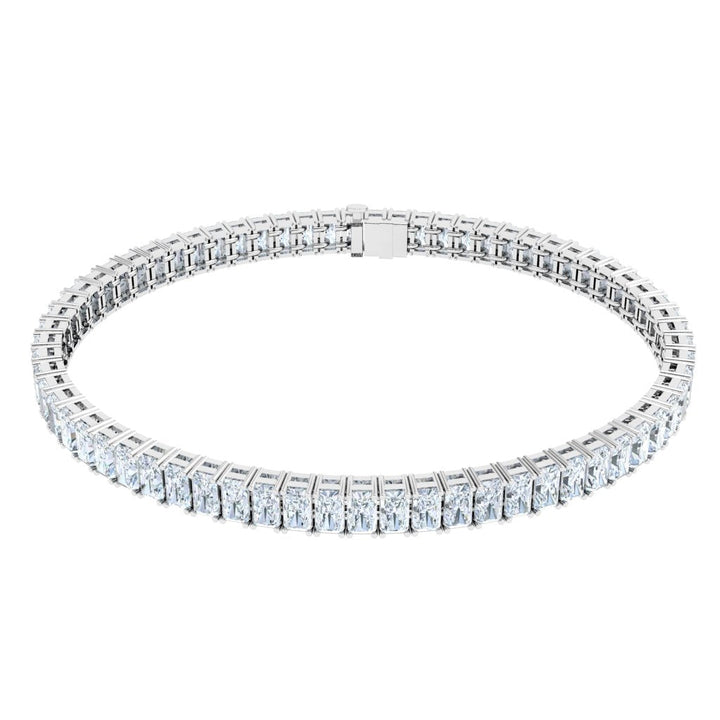
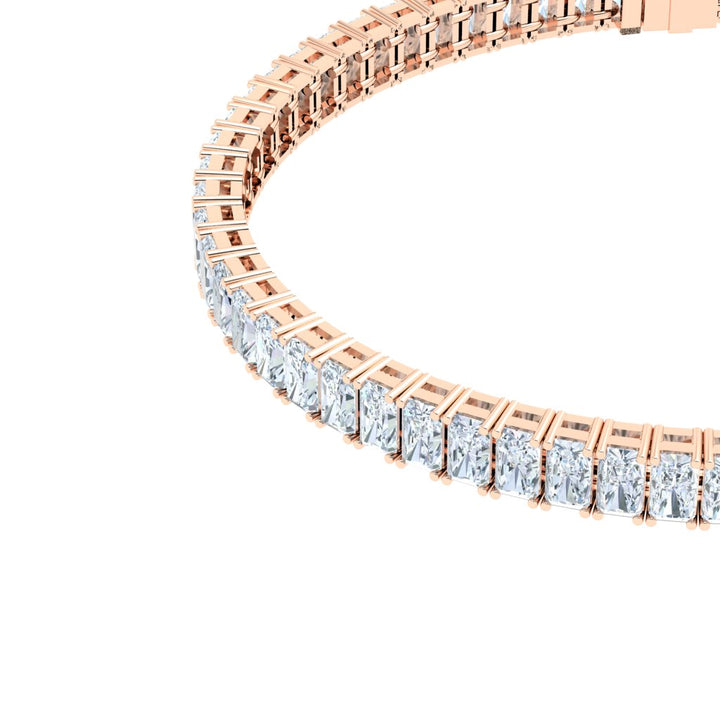
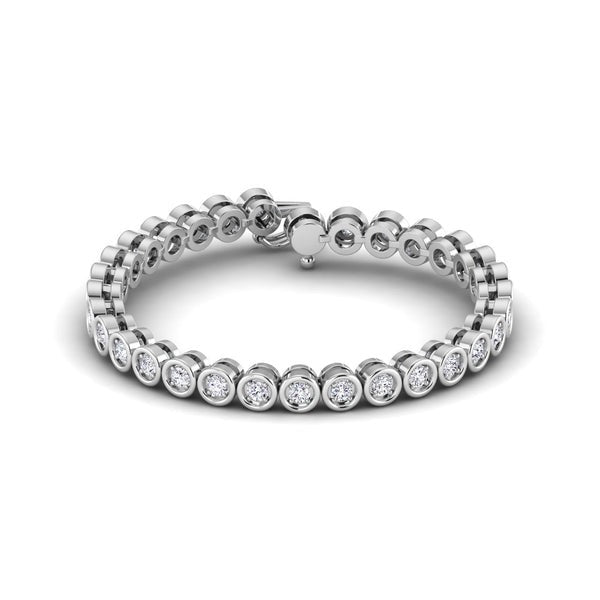
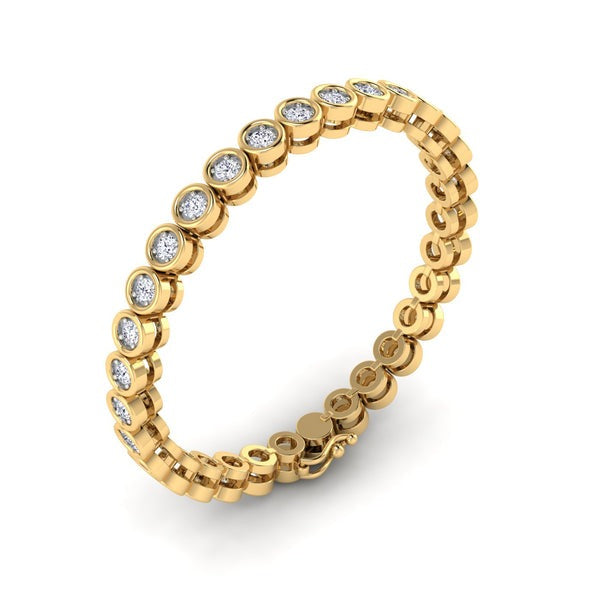
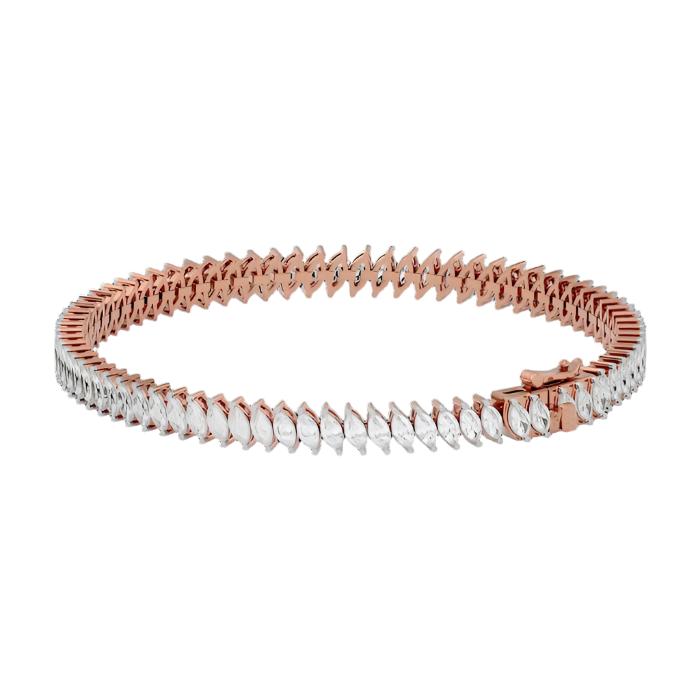
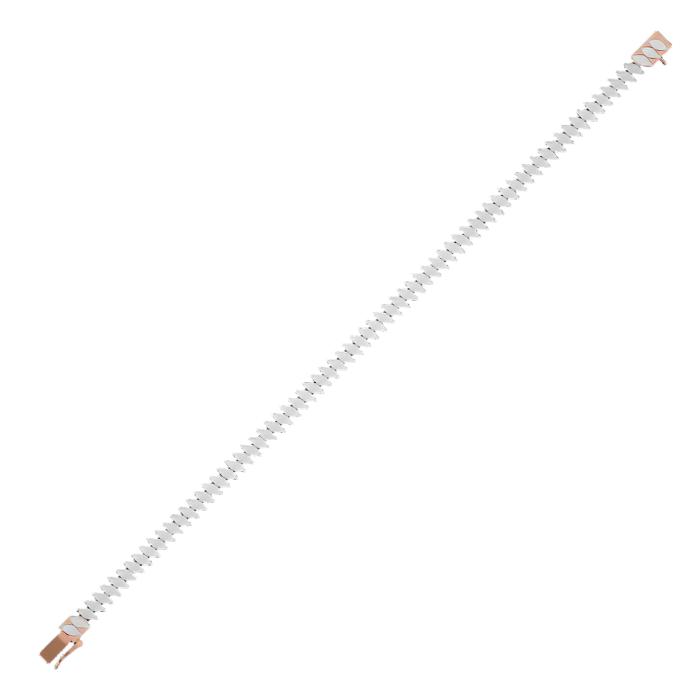
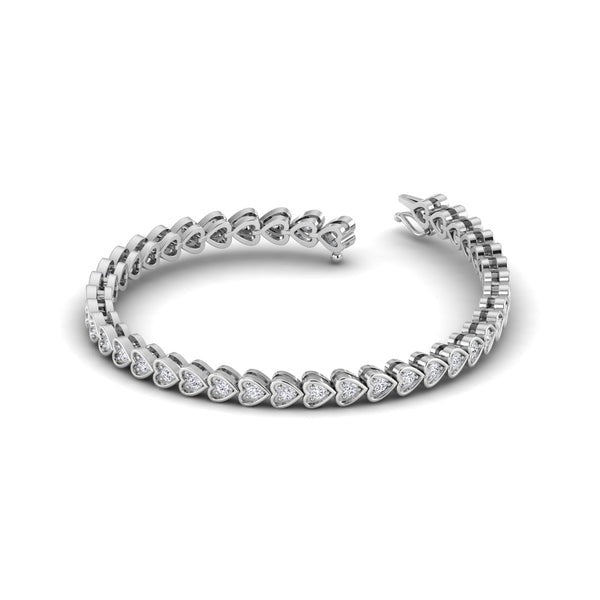
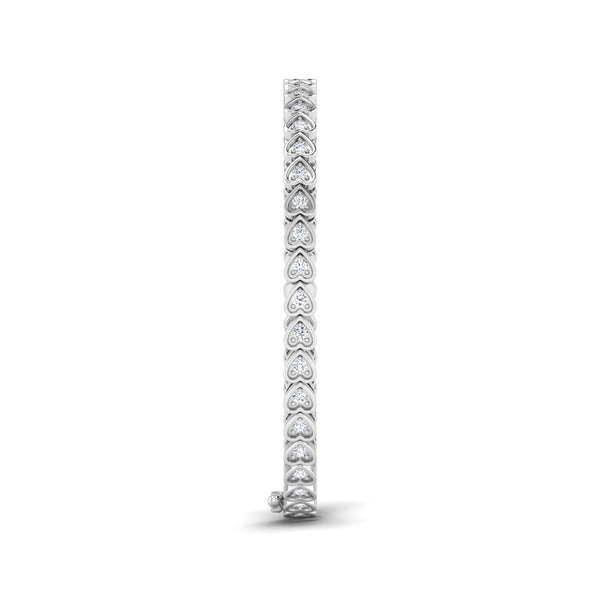
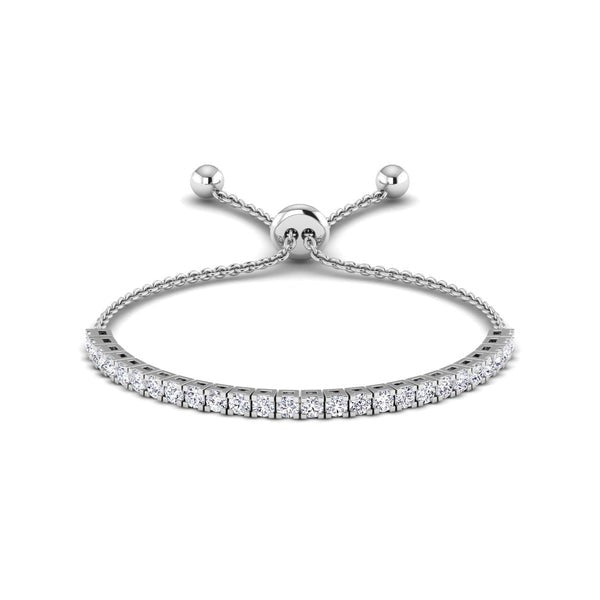
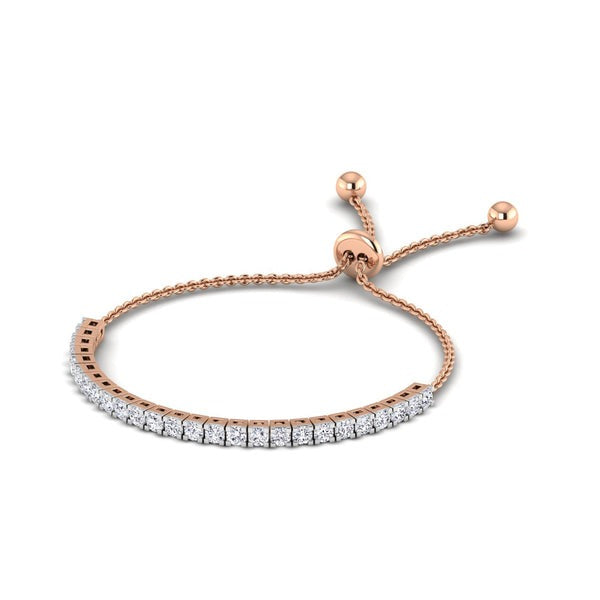
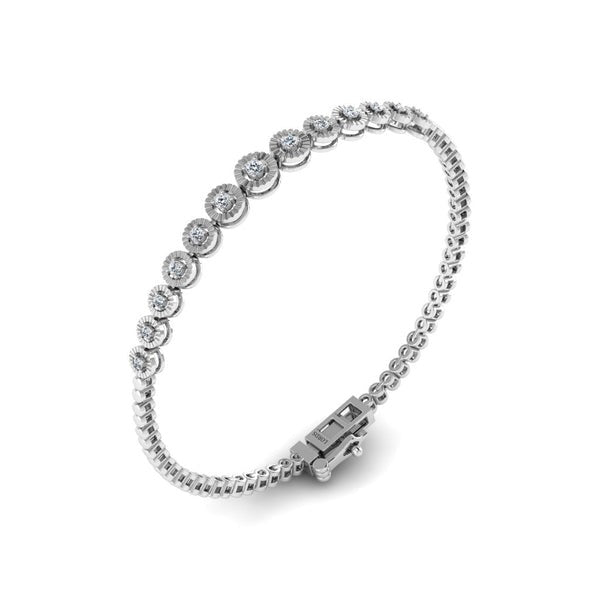
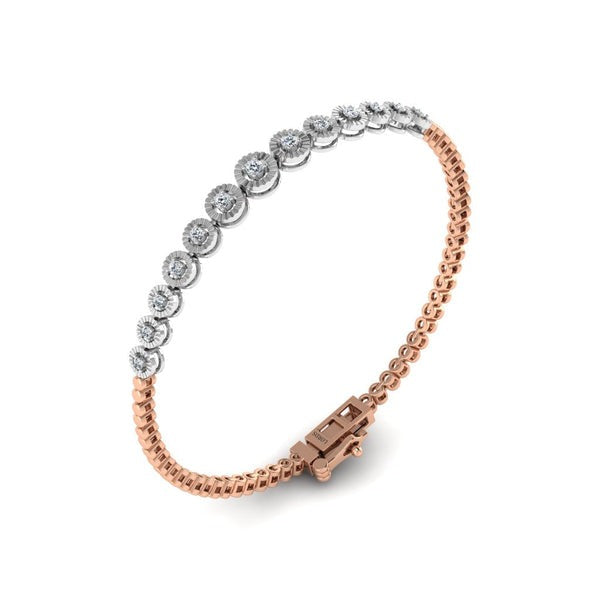
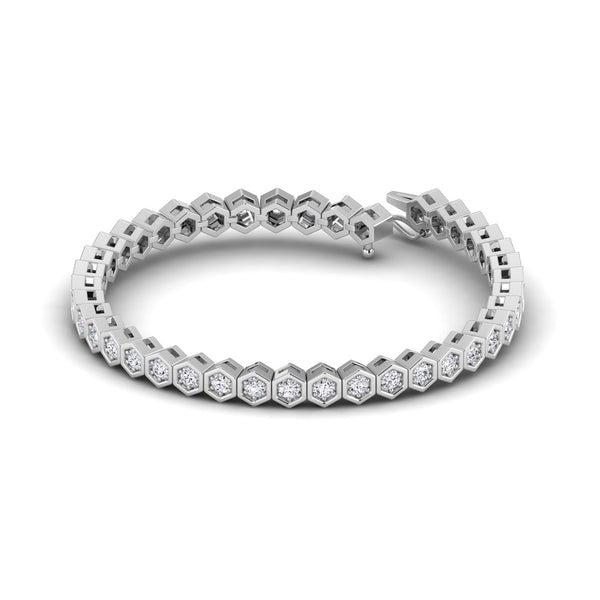
The tennis bracelet — a continuous line of individually set stones circling the full wrist — is the format that defines moissanite bracelet jewelry. Each stone is mounted in its own articulated link, which allows the bracelet to flex smoothly around the wrist's contour while keeping every gem independently mobile to catch light from its own angle.
In moissanite, the tennis bracelet produces a visual effect that is distinct from its diamond equivalent. Moissanite's higher fire generates more rainbow spectral flashes from each stone — multiply that enhanced fire by twenty, thirty, or forty stones in a full circuit, and the bracelet produces a continuous ribbon of polychromatic light that wraps the wrist in color no diamond tennis bracelet can replicate at the same stone count.
Total carat weight in moissanite tennis bracelets is dramatically more accessible than in diamond. A three-carat-total or five-carat-total tennis bracelet that would carry a serious price tag in diamond becomes achievable in moissanite at a fraction of the cost — which means the buyer can invest in a higher stone count, a more generous individual stone size, or a heavier metal construction without the total exceeding what a diamond version would charge for fewer, smaller stones in lighter metalwork.
Bangle
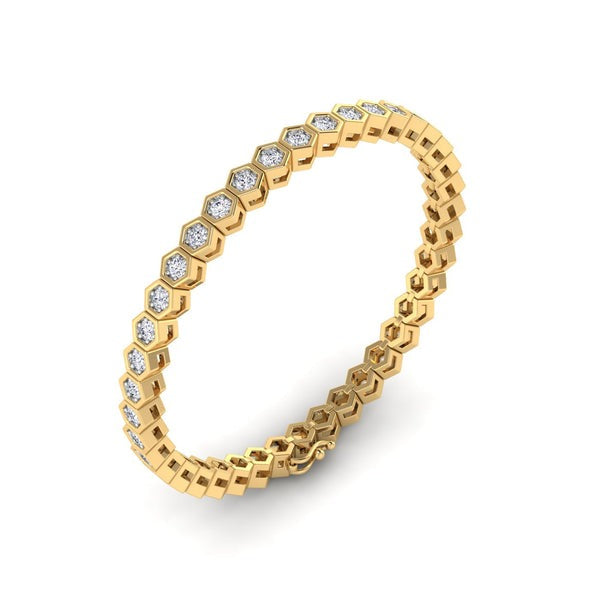
A rigid bangle set with moissanite along a portion or the full circumference of its surface creates a bracelet with structural permanence that flexible designs do not possess. The bangle does not drape or flex — it holds its form, and the stones set into that form sparkle from fixed positions as the arm moves.
Half-set bangles — stones along the upper face, solid metal on the inner wrist — are the most popular configuration, placing the sparkle where it is most visible while keeping the inner surface smooth and comfortable against the skin. Full-set bangles maximize stone coverage and produce the most visually dramatic result, though they carry a higher price and a marginally less smooth wearing profile.
Station Bracelet
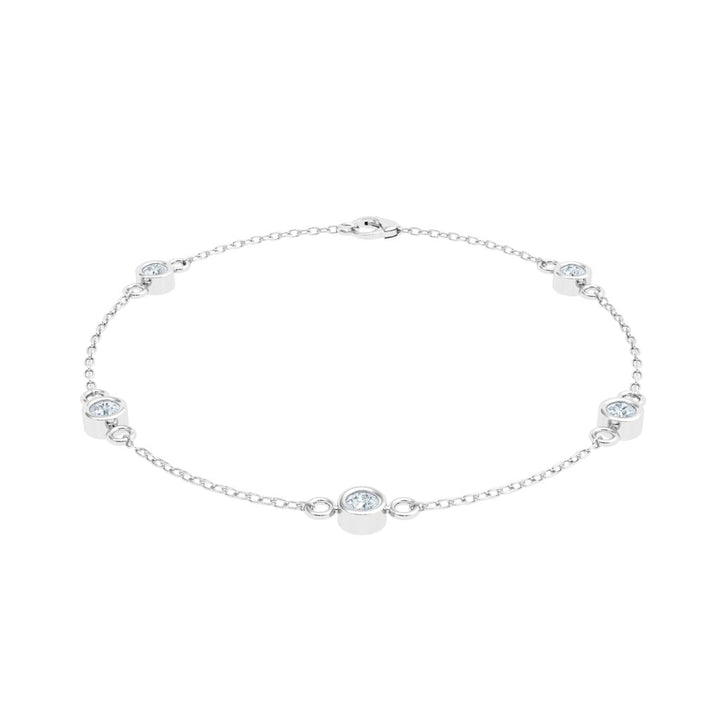
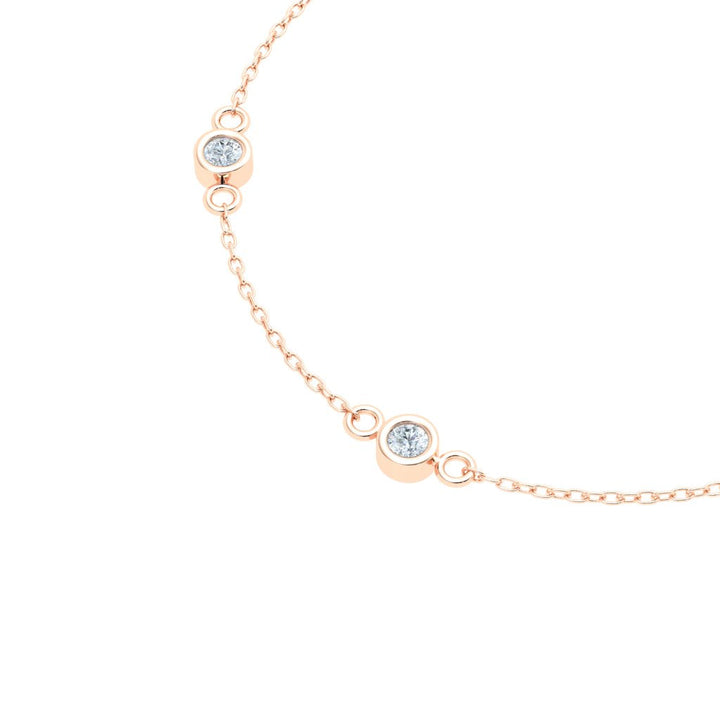
A station bracelet spaces individual moissanite stones at regular intervals along a chain — typically five to seven stones separated by segments of bare precious metal chain. The format introduces breathing room between the stones, which gives each gem its own visual territory and creates a rhythm of sparkle-and-metal that the eye finds pleasing in a way that continuous coverage does not always achieve.
Station bracelets are the most delicate option in the collection — ideal for everyday wear, layering with other bracelets, or gifting to someone who prefers understated jewelry that still carries genuine gemstone quality.
Cuff
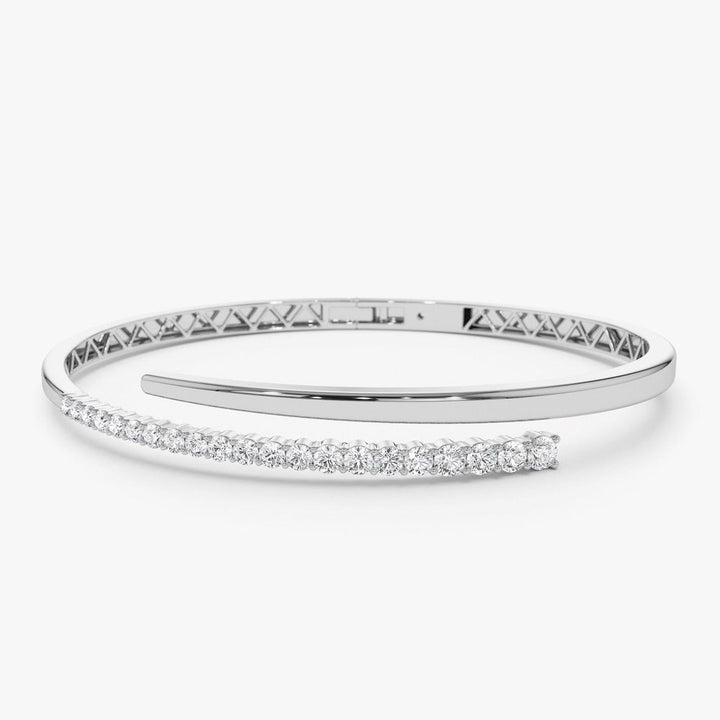
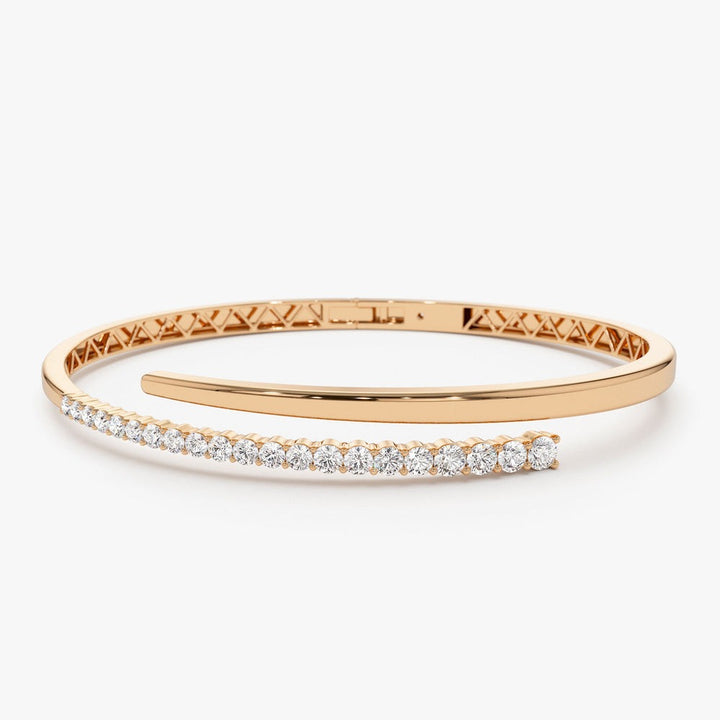
An open-ended cuff bracelet set with moissanite combines the rigidity of a bangle with the adjustability of an open design. Cuffs can be narrow (a single row of stones) or wide (multiple rows creating a substantial wrist piece). The open ends allow the bracelet to fit a range of wrist sizes without requiring clasps, and the rigid form provides a stable platform for stone settings that flexible chains cannot match.
Moissanite cuffs occupy the statement end of the bracelet spectrum — bold, visible, and unambiguously fine jewelry.
Moissanite vs Diamond for Bracelet Jewelry
The comparison between moissanite and diamond acquires a specific dimension in bracelets that does not apply to rings or earrings — because bracelets multiply whatever advantage each gemstone possesses across a higher total stone count.
A tennis bracelet might contain thirty or more stones. Any per-stone optical advantage moissanite holds over diamond — the additional fire, the extra rainbow dispersion — compounds thirty-fold. The cumulative visual impact of thirty moissanite stones producing enhanced fire simultaneously is substantially more perceptible than the same advantage observed in a single center stone on a ring.
The cost compounding works in the same direction. A per-stone savings of even a modest percentage multiplies across thirty or forty stones into an absolute savings that redefines what the buyer can afford. This is why moissanite has gained traction in the bracelet category faster than in almost any other jewelry format — the economics of multi-stone pieces amplify moissanite's value proposition in direct proportion to the stone count.
Durability parity completes the comparison. Moissanite at 9.25 Mohs handles the wrist's demanding contact environment without meaningful compromise relative to diamond's 10. Both materials survive decades of daily bracelet wear without visible degradation. The practical difference between 9.25 and 10 on the wrist is negligible.
For buyers exploring how moissanite performs in ring formats, our oval moissanite rings demonstrate the same gemstone's optical characteristics in a different jewelry context.
Metal and Construction Considerations
Bracelet construction demands more from its metalwork than ring construction does — because the bracelet bends, flexes, and wraps around a moving limb rather than sitting statically on a finger.
Solid gold and platinum are non-negotiable for bracelet longevity. Plated bracelets expose their base metal at the exact contact points where the wrist meets surfaces most frequently — the top of the wrist, the underside near the clasp, and the hinge points where the bracelet flexes. Within months, the plating wears through, and the bracelet visibly degrades. Solid precious metal avoids this failure mode entirely. Every Grown Leo moissanite bracelet is solid gold or platinum throughout.
Clasp engineering determines daily-wear security. Box clasps with safety latches provide the most reliable closure for tennis bracelets and chain formats. Lobster clasps offer quicker operation with adequate security for lighter station bracelets. Toggle clasps sacrifice some security for decorative value. Every clasp in our collection is matched to the bracelet's weight and wearing demands — because a lost bracelet is a failure that no amount of stone quality can compensate for.
Articulation quality in tennis bracelets governs how the bracelet drapes on the wrist. Each link must flex independently while maintaining alignment with its neighbors — a construction requirement that cheap tennis bracelets fail at regularly, producing a bracelet that bunches, twists, or hangs unevenly. Grown Leo's tennis bracelet links are individually articulated with consistent flex across the full circuit.
Metal weight contributes to how a bracelet feels on the wrist. Heavier construction feels more substantial and signals quality to the wearer and observer. Lighter construction feels more comfortable for extended daily wear. The right weight depends on the buyer's preference — and every bracelet in our collection is solid enough that both the weight and the quality are genuine.
Sizing and Fit
Bracelet sizing operates differently from ring sizing — and getting it right affects both comfort and security.
Standard wrist sizing uses a measurement taken at the wrist bone plus approximately 0.5 to 1.0 inch of additional length for comfortable movement. A bracelet that fits snugly against the skin looks elegant but restricts wrist flexion. A bracelet with more slack moves freely and catches light more dynamically but risks sliding toward the hand during certain movements.
Tennis bracelets should drape with enough slack to slide approximately one finger-width along the wrist without sliding over the hand. This balance point produces the optimal combination of security and visual movement — the bracelet circulates around the wrist as the arm moves, continuously presenting different stones to the light.
Bangles require inside-diameter sizing rather than length. The bangle must pass over the widest point of the hand to reach the wrist, which means the inside diameter must exceed the hand's closed width by a comfortable margin. Bangles that are too tight will not go on. Bangles that are too loose slide excessively and risk slipping off entirely.
Our team can advise on bracelet sizing based on your wrist measurement and preferred fit style. We also offer adjustment service for chain-based formats.
Why Grown Leo for Moissanite Bracelets
The bracelet market is saturated with pieces that look like fine jewelry in photographs and perform like costume jewelry on the wrist. Plated metals that tarnish within seasons. Glued-in stones that loosen from flex stress. Clasps that fail under the weight they are supposed to secure. We built our bracelet collection as the direct opposite of that experience.
Every moissanite bracelet at Grown Leo uses solid gold or platinum metalwork, hand-set stones in individually secured mountings, and clasp mechanisms rated for the bracelet's actual weight. The stones are the same precision-cut moissanite that goes into our engagement rings. The metalwork meets the same craftsmanship standard. The finishing reflects the same quality expectation.
We back every bracelet with a lifetime craftsmanship warranty and a halo-level attention to detail that extends beyond our ring collection into every jewelry category we produce. If it carries the Grown Leo name, it carries the Grown Leo standard.
For those interested in building a complete moissanite collection beyond bracelets, our loose moissanite stones offer individual gems for custom projects across rings, pendants, earrings, and wrist pieces.
Bracelet Care and Maintenance
Bracelets encounter more environmental exposure than any other jewelry format — which makes a simple care routine proportionally more impactful.
Clean every one to two weeks by soaking in warm water with mild dish soap, then gently brushing along each stone and between each link or setting with a soft-bristled brush. Tennis bracelets benefit from brushing on both the stone-facing surface and the reverse side where skin oils accumulate against the metalwork. Rinse thoroughly and dry with a lint-free cloth.
Remove before swimming in chlorinated or saltwater, exercising with equipment that contacts the wrist (barbells, pull-up bars, kettlebells), and sustained exposure to cleaning chemicals. The moissanite is impervious. The metalwork and the clasp mechanisms benefit from protection against these specific stressors.
Store flat — not hanging — in a soft-lined compartment or pouch. Tennis bracelets and chains should be laid in a straight line to prevent the links from tangling or stressing at kink points. Bangles and cuffs can be stored upright in a dedicated holder.
Inspect clasps periodically for secure closure and have a jeweler evaluate the bracelet's articulation and stone settings annually — particularly for tennis bracelets, where the large number of individual settings creates more points that benefit from professional verification.