The Stone-First Buying Philosophy
Most jewelry purchases follow a setting-first path: the buyer selects a ring design, then a stone fills the designated slot. The loose-stone buyer reverses this sequence — choosing the gem on its own merits before any metalwork enters the conversation. This inversion changes the purchase fundamentally.
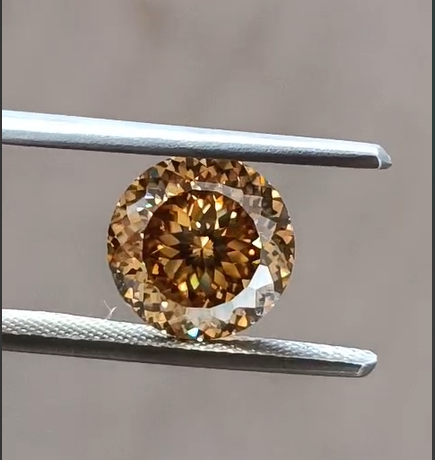
When you buy a loose 3 carat moissanite stone, you are evaluating the gem as an independent object. Its cut quality is not softened by a flattering setting. Its proportions are not disguised by a halo border. Its color face-up is not influenced by the metal beneath it. You see the stone naked — and the stone must justify itself without assistance.
This transparency benefits the buyer in two ways. First, it produces better stone selection — because nothing obscures the gem's actual performance, the buyer makes decisions based on what the stone genuinely delivers rather than what the jewelry design around it suggests. Second, it preserves total creative freedom — the chosen stone can become a solitaire ring, a pendant, an earring, a custom piece, or even remain loose as a collectible gem. No design decision has been locked. Every path remains available.
The stone-first buyer tends to be someone who has purchased jewelry before and learned that the setting shapes perception but the stone determines satisfaction. At three carats, this lesson matters more — because the investment is meaningful enough that building the final piece around a verified gem is simply the more intelligent sequence.
What Three Carats Means in Moissanite
Carat weight in moissanite measures the same physical property as in diamond — mass — but because moissanite has a slightly lower density than diamond (3.21 g/cm³ versus 3.52 g/cm³), a 3 carat moissanite is physically larger than a 3 carat diamond at the same proportions. The moissanite delivers more millimeters per carat.
In a round brilliant, a 3 carat moissanite measures approximately 9.5mm in diameter — compared to approximately 9.3mm for a 3 carat diamond. In an oval, the difference stretches further along the elongated axis. In a cushion, the extra volume distributes across both width and length.
This density advantage is modest in percentage terms but perceptible on the hand or at pendant height. The 3 carat moissanite faces up slightly larger than a 3 carat diamond in every shape — a physical reality that the price differential does not require but that the buyer receives as a structural bonus.
At this weight, moissanite's optical properties achieve an expressive range that smaller stones reference but cannot fully deliver. The refractive index of 2.65 — higher than diamond's 2.42 — means more light bends through the stone and more of that light exits as visible spectral fire. At three carats, the surface area is sufficient for these fire events to be individually distinguishable: discrete rainbow flashes moving across the stone's face as the viewing angle shifts, rather than merging into a collective brightness. The stone does not merely sparkle. It performs a light show with individually trackable components.
Available Shapes at 3 Carats
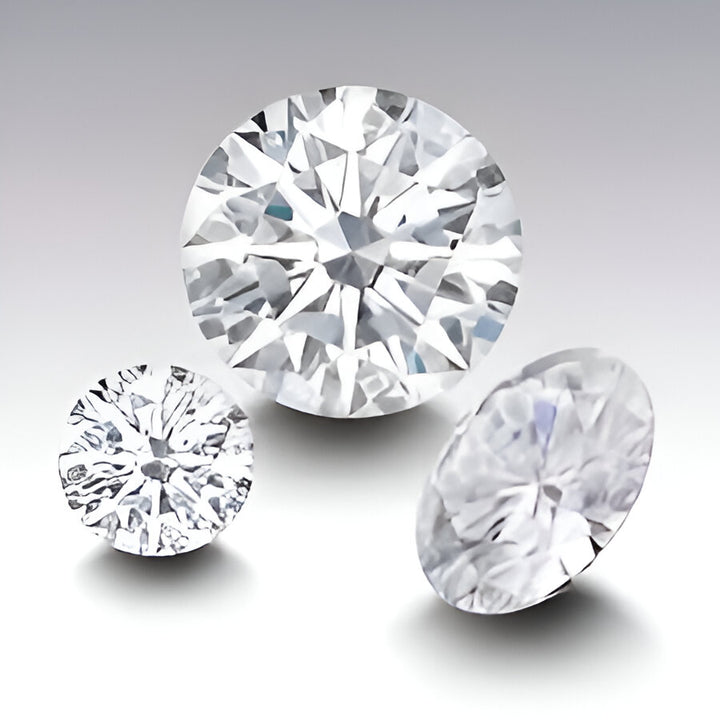
A loose 3 carat moissanite stone at Grown Leo is available across the full range of precision-cut shapes — each producing a distinct visual personality at this weight.
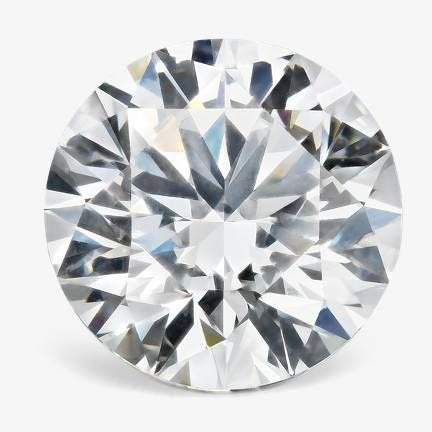
Round Brilliant. The benchmark. Fifty-eight facets optimized for maximum light return. At 9.5mm, the 3 carat round moissanite produces a sparkle density that competitors cannot match — every facet firing at peak efficiency across a face large enough for the fire to breathe. This is the shape that most buyers picture when they imagine a 3 carat gem, and moissanite's enhanced optical output makes the reality exceed the imagination.
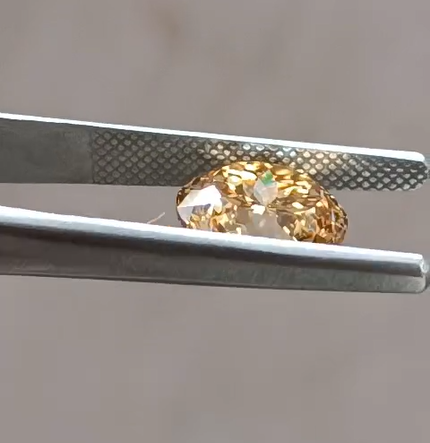
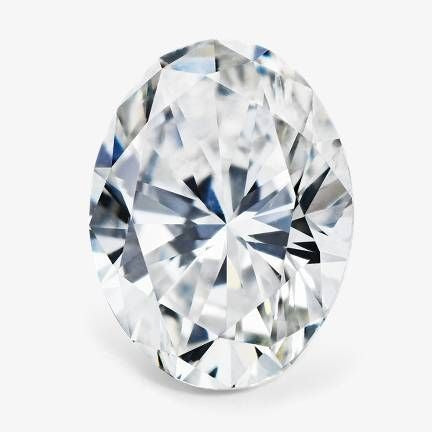
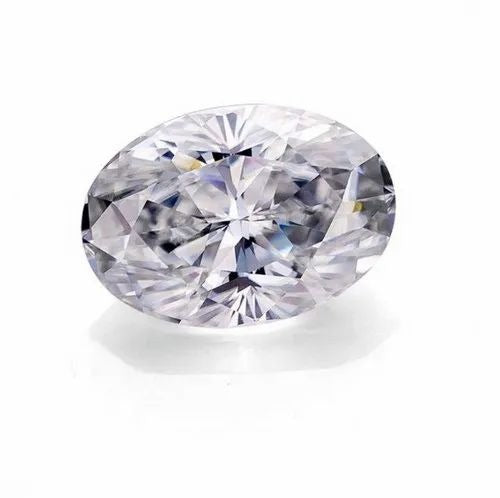
Oval. Elongated brilliance across approximately 11mm x 8mm. The oval distributes three carats across a wider, longer footprint than any other brilliant cut, producing a stone that appears even larger than its actual weight suggests. Moissanite's fire traveling the oval's extended axis creates a sparkle corridor that round shapes do not produce.
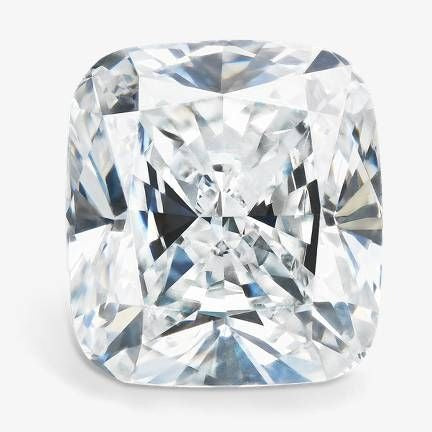
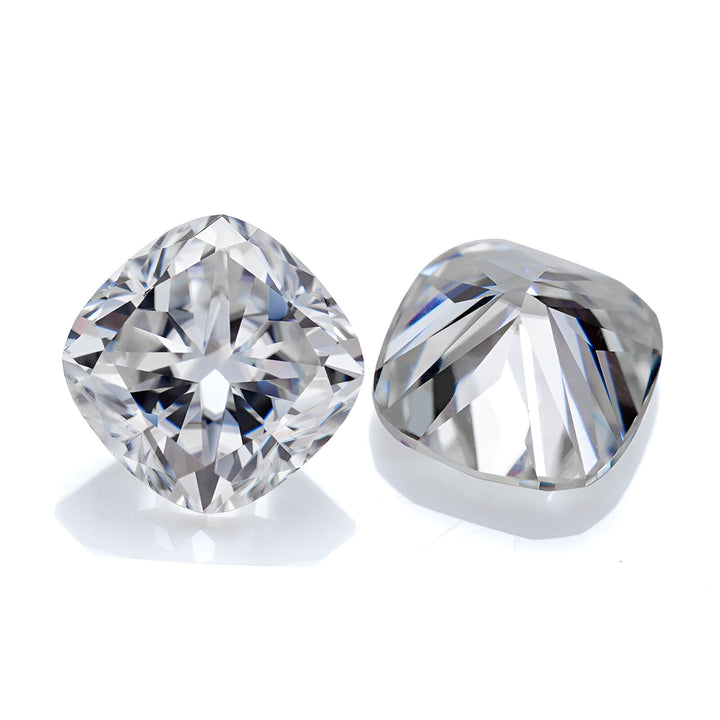
Cushion. Soft corners and broad facets producing warmer, chunkier light flashes with a vintage romantic character. At 3 carats, the cushion's approximately 8.5mm x 8.5mm face generates the broad fire patterns that made this shape a favorite of antique jewelry collectors — amplified by moissanite's superior dispersion.
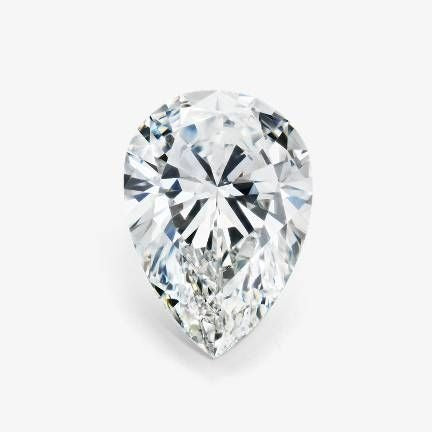
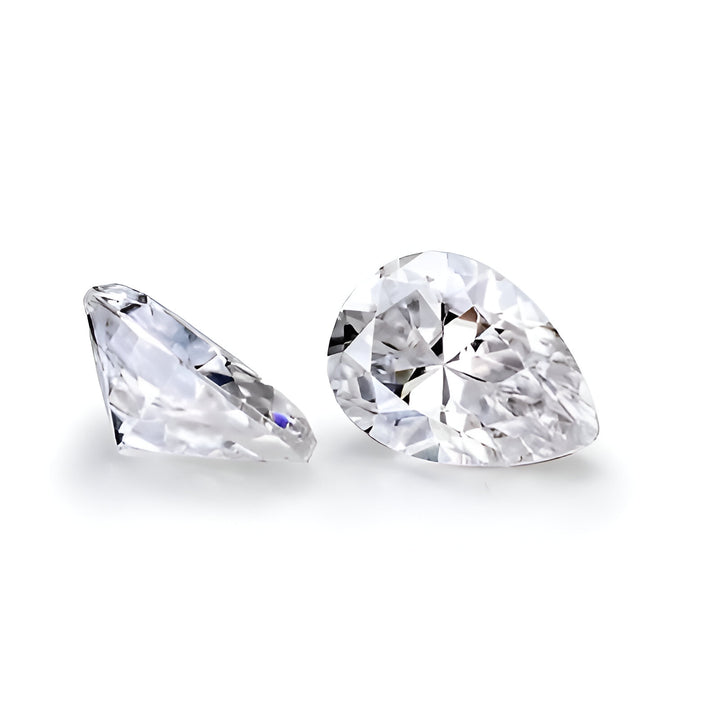
Pear. The teardrop at three carats — approximately 12mm x 8mm — produces a stone with directional drama that works as a pendant, a ring, or a statement earring. The pear's pointed end concentrates flickering scintillation while the rounded end produces broader, slower flashes. Moissanite makes both zones more vivid.
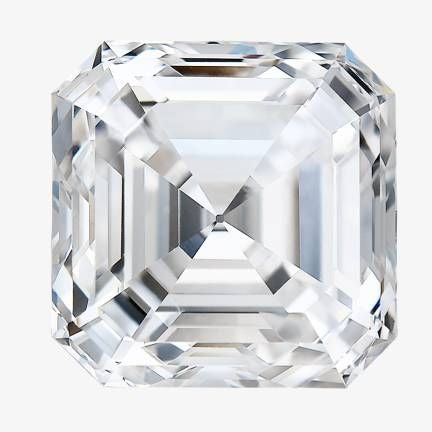
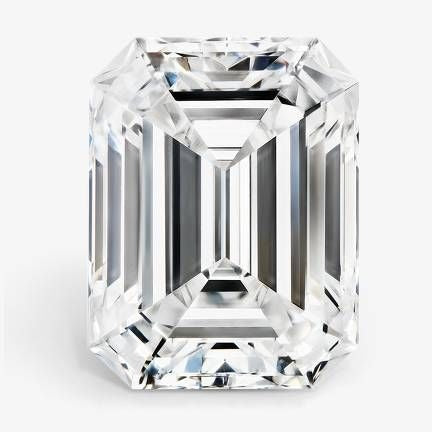
Emerald. Step-cut transparency and geometric composure at approximately 9.5mm x 7mm. Moissanite's higher refractive index gives the emerald cut's mirror-plane reflections slightly more internal brightness than diamond produces through the same geometry — a subtle but genuine optical advantage in the step-cut format.
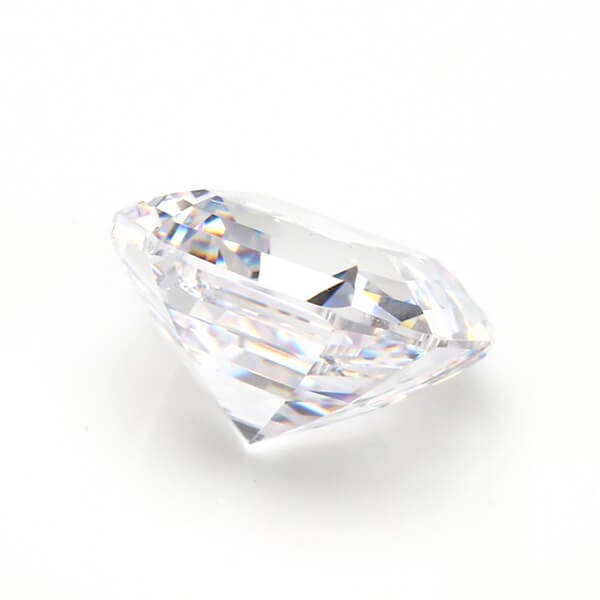
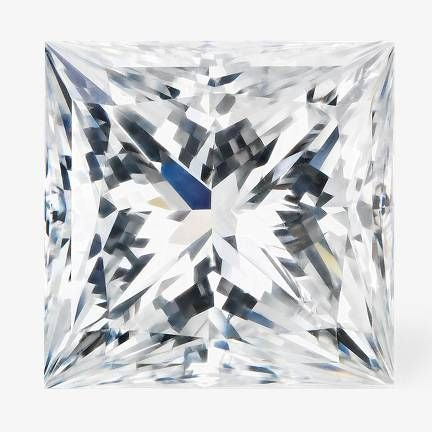
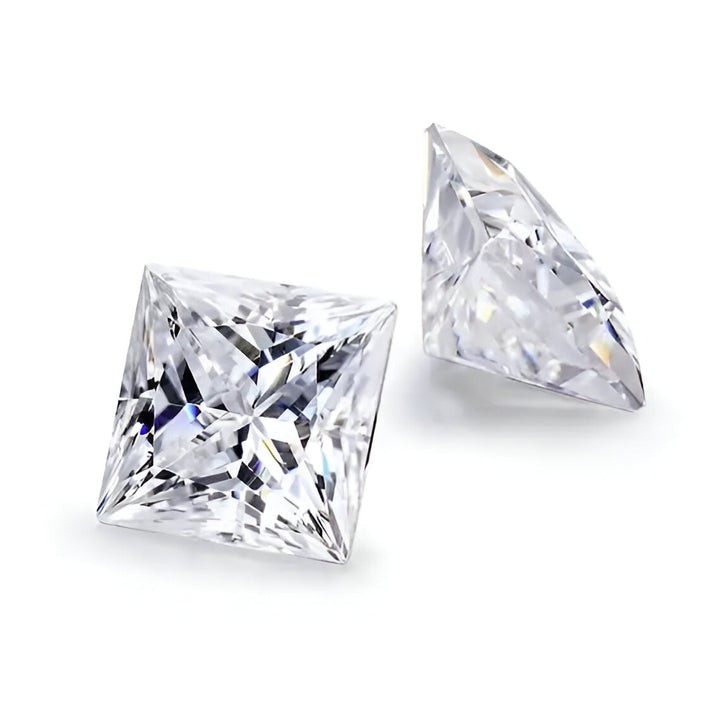
Marquise, Heart, Radiant, Asscher, Princess — all available at 3 carats with the cut precision that Grown Leo screens for across every shape and every weight in our loose stone collection.
Cut Quality in Loose Stones — What to Evaluate
Buying a loose stone places the evaluation burden on the buyer rather than distributing it across a finished ring's overall impression. At three carats, the evaluation produces consequential results — because mistakes are more expensive and more visible at this weight.
Symmetry is the first checkpoint. Hold the stone face-up and evaluate whether the outline looks balanced. In a round, this means circularity. In an oval, bilateral mirror symmetry. In a heart, lobe matching. At three carats, asymmetry the eye would forgive at one carat becomes a feature the eye fixates on — because the larger canvas magnifies every proportional imbalance.
Fire distribution reveals cut quality more honestly than any measurement can. Rotate the stone slowly under a single light source and observe whether spectral flashes appear uniformly across the face or concentrate in certain zones while leaving others dark. A well-cut 3 carat moissanite produces fire from pole to pole, edge to edge, with no dead spots. A poorly cut one produces fire from the center and darkness at the perimeter — or vice versa.
Table-to-depth balance determines whether the three carats are working for you on the surface or hiding beneath it. A stone that faces up generously for its weight is carrying carat mass in its table spread. A stone that seems small for three carats is burying weight in excessive pavilion depth. Compare the stone's millimeter measurements against the benchmarks for its shape at this carat weight — Grown Leo provides these dimensions with every listing.
Window and extinction testing. Hold the stone over printed text. If you can read the text through the stone's center (windowing), the pavilion angles are too shallow. If large portions of the stone go completely dark as you tilt it (extinction), the pavilion angles are too steep. A well-cut moissanite at three carats should show neither — just continuous brilliance with natural light-and-dark contrast as you move through different viewing angles.
What Happens After You Buy a Loose Stone
A loose 3 carat moissanite is a beginning, not an end. The stone's future depends on what the buyer decides to build around it — and Grown Leo supports every downstream path.
Custom ring commission. Our team works with buyers to design and fabricate a ring around their chosen 3 carat stone — selecting the metal, the setting style, the band design, and any accent stones. The ring is built to the stone's exact dimensions rather than the stone being fit into a pre-existing template. This produces a piece where the setting was designed for the gem rather than the other way around.
Custom pendant build. The same collaborative process applied to pendant jewelry — selecting bail style, chain type and length, and whether the stone is mounted in a solitaire, halo, or bezel format. A 3 carat moissanite makes an exceptional pendant center at any of these settings.
Independent jeweler mounting. Buyers who have an existing relationship with a local jeweler can purchase the loose stone from Grown Leo and have it set locally. We provide all specifications the jeweler needs for a secure, proportional mount.
Collection holding. Some buyers purchase loose stones as collectible gems — appreciating the stone's optical performance and craftsmanship as standalone objects rather than as components of future jewelry. A 3 carat moissanite stored properly maintains its properties indefinitely, which means the decision to mount it can happen next month or next decade.
For buyers who want to see how Grown Leo's moissanite performs in finished ring format before purchasing a loose stone, our oval moissanite rings showcase the same gemstone quality in our most popular mounted shape.
Grown Leo's Loose Stone Standards
Loose moissanite sold without a setting has nowhere to hide — and our curation standards reflect that exposure.
Every 3 carat moissanite in this collection is screened for the cut precision, symmetry, and fire distribution that a three-carat gem must demonstrate to justify its weight class. We reject stones where carat weight hides in pavilion depth rather than expressing itself through face-up coverage. We reject stones where fire concentrates in zones rather than distributing across the full face. We reject stones where symmetry deviates enough to register at arm's-length inspection.
Each stone is photographed and measured with the specificity that loose-stone buyers require: millimeter dimensions in all axes, shape-specific proportion metrics, and the visual information needed to evaluate the gem before purchase.
Our halo engagement ring collection demonstrates how our quality standards translate from loose stones into finished jewelry — the same evaluation rigor applied at a different stage of the buyer's journey.
Return protections accompany every loose stone purchase — because evaluating a gem from a screen and evaluating it in hand are different experiences, and the buyer should have the confidence to verify their choice without financial risk.
Caring for a Loose Moissanite Stone
An unmounted stone requires simpler care than a set one — there are no prongs to check, no metal to protect from chemicals, and no bail or clasp to maintain.
Store the stone individually in a soft-lined gem container or a padded gem jar. Moissanite at 9.25 Mohs will scratch most other gemstones and many metals if stored in contact — so isolation protects your other collection pieces more than it protects the moissanite itself.
Clean periodically with warm water and mild soap — a brief soak and gentle wipe with a soft cloth removes any surface oils from handling. The stone's optical properties are permanent and unaffected by anything short of industrial processes, so cleaning is about surface clarity rather than preservation.
Handle by the girdle or the pavilion rather than the table face. Fingerprints on the table are the most common cause of a loose stone appearing dull during evaluation — and they clear instantly with a wipe, but they can mislead during comparison if left unaddressed.