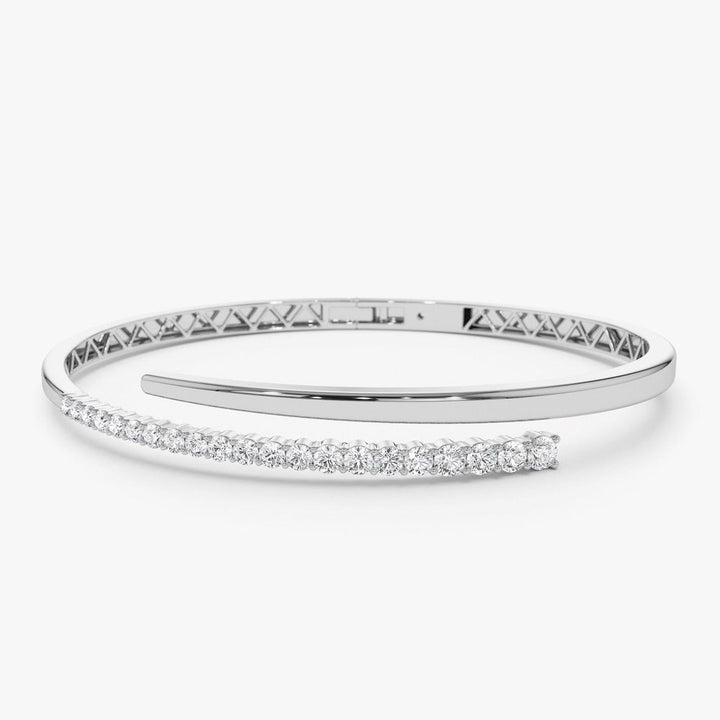
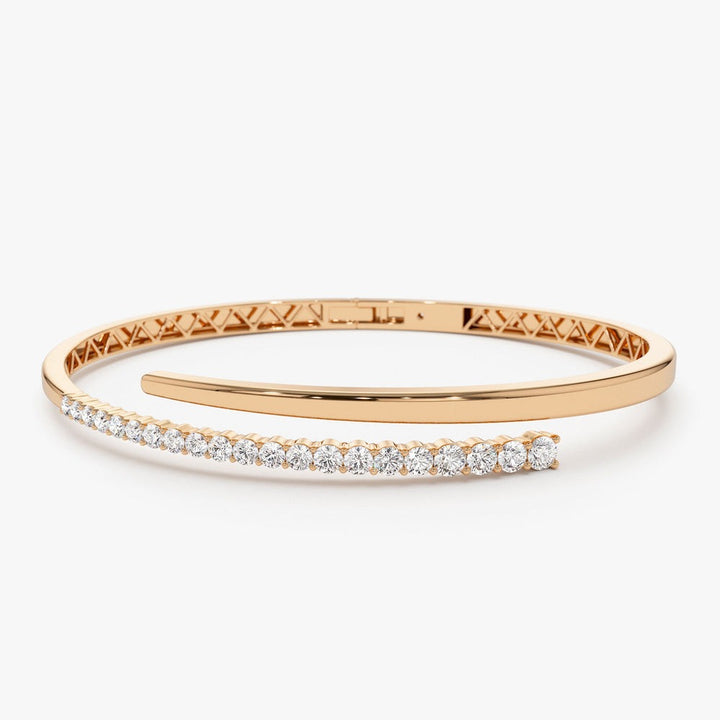
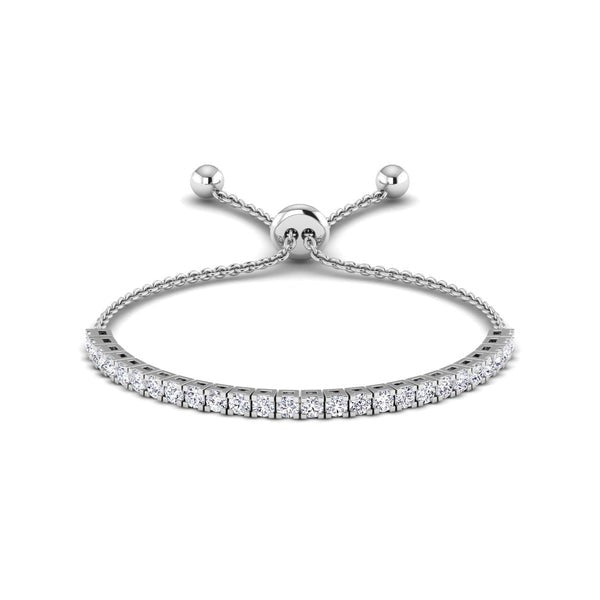
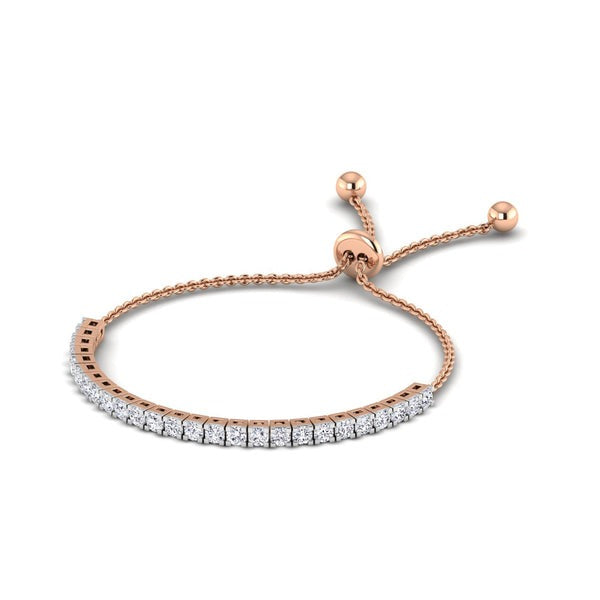
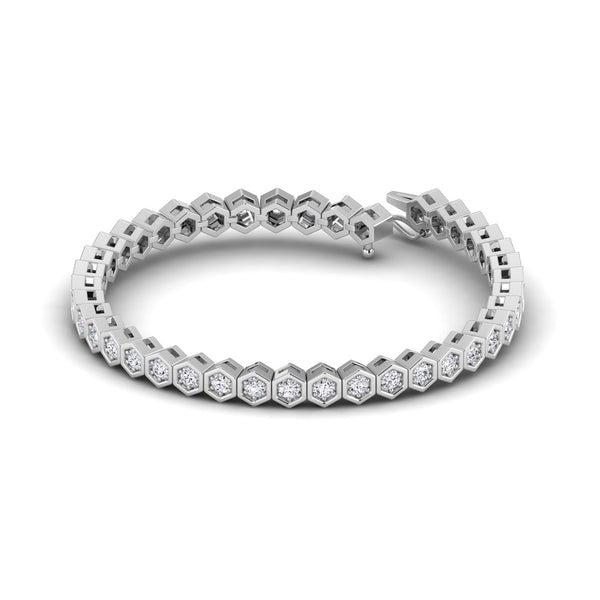
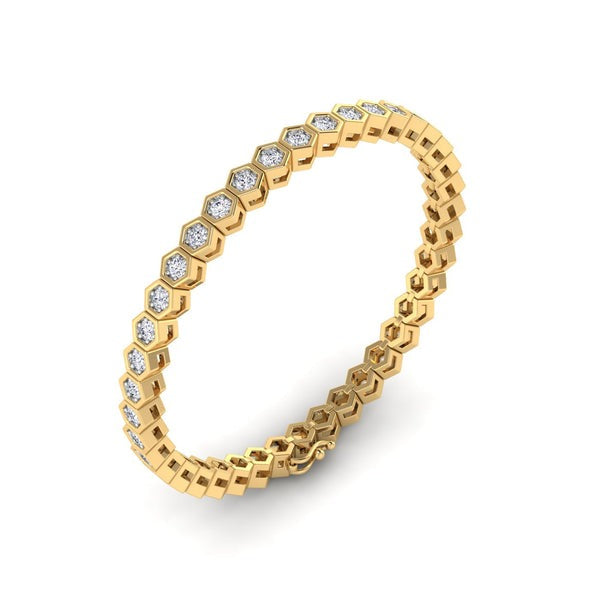
Why Choose a Lab Grown Diamond Tennis Bracelet
A lab grown diamond tennis bracelet is one of the most significant shifts in accessible luxury that the jewelry industry has seen. The tennis bracelet has been an icon of fine jewelry since Chris Evert made it famous during the 1987 US Open — but for most of its history, the price of lining an entire bracelet with matched diamonds kept it firmly in the aspirational category. Lab grown diamonds change that equation entirely.
Because lab grown diamonds are real diamonds — same crystal structure, same hardness, same optical performance — you get the exact same piece of jewelry that has graced the wrists of celebrities and royalty for decades. The only difference is that the stones were grown in a laboratory rather than extracted from the earth, and the price reflects modern production rather than mining markups.
That pricing difference is especially dramatic for tennis bracelets. Unlike a ring or pendant that features one or two stones, a tennis bracelet requires dozens of matched diamonds set end to end. In the mined market, that volume of matched stones adds up to a substantial five-figure investment. With lab grown diamonds, the same bracelet — identical in every visible and measurable way — becomes accessible at a fraction of that cost.
Choosing a lab grown diamond tennis bracelet is not about settling for less. It is about recognizing that the stone's origin should not determine whether you can own one of the most timeless pieces of jewelry ever designed.
Benefits of Lab Grown Diamond Tennis Bracelets
The tennis bracelet's enduring appeal comes from a combination of qualities that no other bracelet style replicates.
Uninterrupted sparkle is the signature characteristic. A continuous line of matched diamonds encircling the wrist creates a 360-degree ribbon of brilliance that catches light from every direction and every movement. There are no gaps, no plain metal sections, and no interruptions — just a seamless flow of diamond fire from clasp to clasp. In lab grown diamonds, that fire is identical to what you would see in a mined bracelet of equivalent quality.
Versatility is what makes the tennis bracelet a wardrobe essential rather than a special-occasion piece. It pairs effortlessly with jeans, business attire, evening wear, and everything in between. It stacks beautifully with watches and other bracelets. It works on every skin tone, every wrist size, and every personal style. Very few pieces of jewelry adapt this seamlessly to every context.
Timeless design ensures your bracelet never feels dated. The tennis bracelet has remained virtually unchanged since it entered the mainstream nearly four decades ago because the design is already perfect — there is nothing to add and nothing to remove. Buying one today means owning a piece that will look just as relevant and elegant thirty years from now.
Value per diamond is where lab grown pricing transforms the proposition. Because a tennis bracelet contains the highest diamond volume of any standard jewelry piece, the 60–80% savings from lab grown diamonds translate into the largest absolute dollar savings in this category. A bracelet that would cost five figures in mined diamonds can be yours for a fraction of that amount — with no compromise in what you see on your wrist.
Popular Tennis Bracelet Styles
Classic Four-Prong
The most traditional and widely recognized tennis bracelet design. Each diamond is held by four individual prongs, maximizing the amount of stone visible from above and allowing light to enter from every side. This setting produces the most sparkle per diamond and gives the bracelet a bright, open appearance. It is the definitive tennis bracelet — and the style most people picture when they hear the name.
Bezel Set
Each diamond is wrapped in a smooth metal border, creating a sleek, modern profile with excellent stone security. The bezel setting gives the bracelet a more contemporary, streamlined look compared to the open sparkle of a prong setting. It is also the most practical option for those who wear their bracelet during physical activity, work with their hands, or want the lowest possible snag risk. Our halo settings share a similar philosophy of balancing beauty with stone protection.
Three-Prong Martini
The three-prong martini setting uses a triangular basket beneath each diamond, giving the bracelet a lighter, more delicate appearance while still providing secure stone retention. This style exposes slightly more of each diamond than a four-prong setting, creating a barely-there look where the diamonds appear to float along the wrist. It is an elegant choice for those who prefer understated refinement.
East-West Emerald Cut
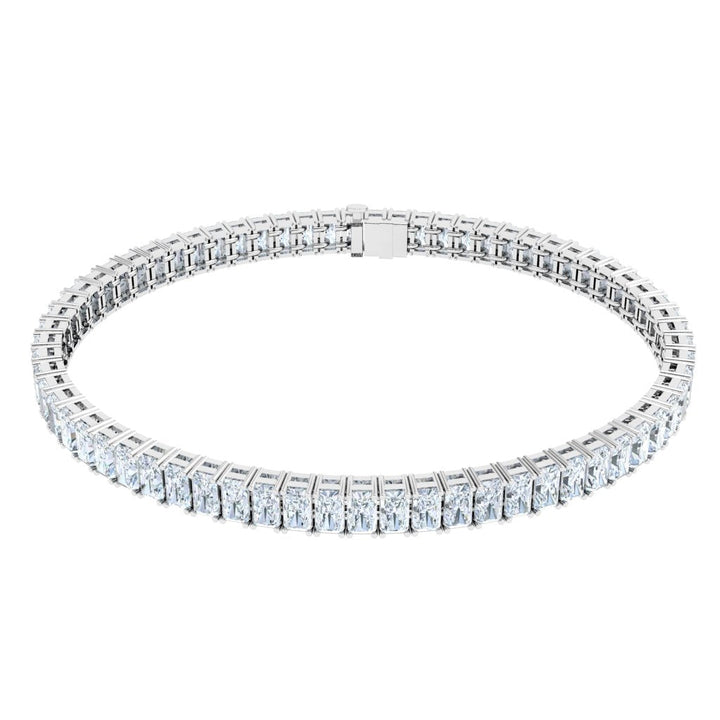
For a tennis bracelet with a distinctly modern edge, east-west set emerald-cut diamonds create a geometric, Art Deco-inspired line along the wrist. The rectangular step-cut stones are oriented horizontally, producing broad, mirror-like flashes that feel architectural rather than traditionally sparkly. This style makes a strong design statement and pairs particularly well with minimalist wardrobes.
How to Choose the Perfect Lab Grown Diamond Tennis Bracelet
Total carat weight determines the overall visual impact. Tennis bracelets typically range from 3 to 15 total carats, with 5 to 7 carats being the most popular sweet spot — substantial enough to make an impression, but proportioned to feel comfortable and wearable every day. Lab grown diamond pricing makes the higher end of that range far more accessible, so consider going larger than you initially planned if presence is a priority.
Individual stone size affects the bracelet's character. Smaller stones — around 0.10 to 0.15 carats each — create a delicate, fine-grained sparkle that reads as understated elegance. Larger stones — 0.25 to 0.50 carats each — produce a bolder, more dramatic effect where each diamond is individually visible and commands attention. Both are beautiful; the right choice depends on whether you want your bracelet to whisper or speak.
Cut quality is the single most important factor for a tennis bracelet. Because every diamond sits side by side with its neighbors, inconsistency in cut quality is immediately obvious. Well-cut stones produce uniform sparkle across the full length of the bracelet; poorly cut stones create dull spots that break the visual flow. At Grown Leo, every diamond in our tennis bracelets is matched for cut performance to ensure consistent brilliance from end to end.
Color and clarity consistency matters more than absolute grade in a tennis bracelet. Because the stones are viewed collectively rather than individually, what matters most is that every diamond matches its neighbors. A bracelet of consistently G-color, VS2-clarity diamonds will look far more impressive than one mixing D-color stones with I-color stones at the same average grade. We match every stone in each bracelet for visual uniformity.
Length should be comfortable without being loose. Standard tennis bracelet lengths range from 6.5 to 7.5 inches, with 7 inches being the most common. The bracelet should drape naturally around the wrist with enough movement to slide slightly but not enough slack to spin or flip over. If you are between sizes, sizing up slightly generally produces a more comfortable fit for all-day wear.
If you enjoy the look of diamonds on the wrist and want to explore similar sparkle in ring form, our oval moissanite rings showcase a comparable level of brilliance in our most popular engagement ring shape.
Lab Grown Diamonds vs Mined Diamonds – What's the Difference?
In the diamonds themselves, nothing. Lab grown and mined diamonds share the same carbon crystal lattice, the same 10/10 Mohs hardness, the same refractive index, and the same thermal properties. They are graded by the same independent gemological laboratories on the same 4Cs scale. No one — including professional jewelers — can distinguish between them without specialized equipment.
The differences are origin and cost. Lab grown diamonds are created using CVD or HPHT technology in controlled environments with full traceability, no mining impact, and no conflict risk.
For tennis bracelets specifically, the cost difference is the most meaningful it will ever be. A tennis bracelet contains more total diamond weight than virtually any other standard jewelry piece. When each of those diamonds costs 60–80% less than its mined equivalent, the cumulative savings are substantial — often thousands of dollars on a single piece. That is not a minor discount on a minor purchase. It is a fundamental change in what a diamond tennis bracelet can cost.
If you are exploring other gemstone options, our loose moissanite stones offer an alternative with even more accessible pricing and exceptional brilliance.
Why Buy from Grown Leo
A tennis bracelet demands a level of precision that most jewelry categories do not. Every diamond must be matched for size, color, and cut quality. Every setting must be identical in height and alignment. The clasp must be secure enough for daily wear but smooth enough to operate with one hand. And the overall drape must be fluid and comfortable across a full day on the wrist.
At Grown Leo, we take those details seriously. Every tennis bracelet in our collection is assembled stone by stone, with each diamond inspected for visual consistency before it is set. We use solid gold or platinum throughout — including the clasp mechanism — and our bracelets feature safety latches for added security during active wear.
We also understand that a tennis bracelet is often the kind of purchase people think about for a while before committing. Our team is available to answer questions, provide recommendations on carat weight and sizing, and help you choose with confidence. There is no pressure and no rush — just honest guidance from a team that wants you to love what arrives.
Every purchase includes a lifetime craftsmanship warranty, a hassle-free return policy, and responsive customer support. If the bracelet does not meet your expectations, we make it right.
When you choose Grown Leo, you are choosing a jeweler that treats every link, every stone, and every clasp with the precision this iconic piece deserves.
Care and Maintenance Tips
A lab grown diamond tennis bracelet is built for regular wear, but a few simple habits keep it sparkling and functioning at its best.
Clean your bracelet every two to three weeks with warm water, mild dish soap, and a soft-bristled brush. Work gently along the full length of the bracelet, paying attention to the spaces between and beneath each diamond where oils, lotions, and daily debris accumulate. Because a tennis bracelet has dozens of settings in close proximity, buildup between stones is more common than in simpler jewelry. Rinse thoroughly and dry with a lint-free cloth.
Remove your bracelet before swimming in chlorinated or saltwater, applying lotions or perfumes to the wrist area, and during heavy physical activities where impact could stress the settings or clasp. While the diamonds themselves are indestructible, the metal prongs and clasp mechanism benefit from reasonable care.
Store your tennis bracelet flat in a soft pouch or a dedicated bracelet compartment. Avoid coiling it tightly or hanging it from a hook, as this can stress the links over time and cause the bracelet to lose its fluid drape. Flat storage keeps every link aligned and the clasp mechanism in optimal condition.
Test the clasp and safety latch periodically to ensure they engage and release smoothly. If either feels stiff or loose, have a jeweler adjust it before wearing the bracelet to prevent accidental loss.
Have a jeweler inspect the prong or bezel settings once a year. With dozens of diamonds in a single piece, an annual check ensures every stone remains secure — catching any loosening early before a diamond is lost.
With simple, consistent care, your lab grown diamond tennis bracelet from Grown Leo will maintain its seamless sparkle and fluid elegance for a lifetime.