What Rose Gold Actually Is
The romance of rose gold's name suggests something precious and rare. The reality is both more practical and more interesting. Rose gold is an alloy — a mixture of pure gold with copper and, typically, a small amount of silver to stabilize the color. The copper content is what produces the characteristic blush tone: more copper relative to gold produces a deeper, redder rose; less copper produces a softer, lighter pink. The gold content determines the karat designation.
In 14k rose gold, approximately 58.3 percent of the alloy is pure gold, with the remainder split between copper and silver. In 18k rose gold, approximately 75 percent is pure gold, producing a softer, slightly lighter blush with less copper relative to the gold content. Both are genuine precious metal alloys with measurable gold content — not plated, not coated, not treated to achieve their color. The rose tone is intrinsic to the material.
This matters practically for wedding bands because the color is not surface-deep. A white gold band's bright white finish comes from rhodium plating over a yellowish or slightly warm underlying alloy — wear through the plating and the underlying metal shows. A rose gold band has no such layering: the color you see on the surface runs through the entire piece. There is nothing underneath that contradicts what is on top.
The copper content that gives rose gold its color also gives it a specific set of physical properties. Copper hardens gold alloys, which means rose gold is generally harder and slightly more scratch-resistant than comparable yellow gold at the same karat. It is also slightly less malleable, which makes it somewhat more challenging to work with — a factor that skilled bench jewelers accommodate but that influences how certain very delicate designs are executed in rose gold versus other metals.
Why Rose Gold for a Wedding Band Specifically
Wedding bands occupy a different category in the jewelry wardrobe than any other piece. They are not rotated with outfits, not worn for special occasions and stored otherwise, not chosen to complement a specific season's aesthetic. They are worn every day, through every activity, in every light condition, for the rest of the wearer's life. This context changes how metal choice should be made.
Rose gold's specific combination of qualities makes it particularly well-suited to continuous daily wear. Its copper content provides meaningful hardness relative to yellow gold — it holds an edge, maintains a finish longer, and resists the kind of microscopic surface wear that gradually dulls softer alloys. Its color is inherently stable — there is no plating to maintain, no treatment to renew, no underlying alloy waiting to show through as the surface wears.
Rose gold also has a quality that is difficult to quantify but immediately apparent in person: it is flattering to skin. The warm blush tone complements virtually every skin tone in a way that cool metals sometimes do not — the metal seems to work with the hand rather than against it, drawing out warmth in deeper skin tones and adding it to lighter ones. This universally flattering quality is one of the reasons rose gold wedding bands appeal to buyers across a wide range of aesthetic preferences who might otherwise have little in common.
Finally, rose gold ages gracefully. Over years of wear, a rose gold wedding band develops a patina — a slight softening and deepening of the surface's finish — that most wearers find adds character rather than diminishing the band's beauty. High-polish finishes become slightly warmer and more organic; brushed finishes develop an evenness that takes time to achieve. The ring that has been worn every day for ten years looks like a ring that has been worn every day for ten years, and for most people that visible history is exactly what they want from a wedding band.
14k vs 18k Rose Gold — Which Is Right for a Wedding Band
This is the most practical question buyers ask about rose gold, and it deserves a direct answer rather than a qualification-heavy non-answer.
14k rose gold contains 58.3 percent pure gold. The higher copper content makes it harder, more scratch-resistant, and more durable than 18k for the same physical form. It also produces a slightly deeper, warmer rose tone — the copper contribution to the color is proportionally higher. For a wedding band worn daily through physical activity, manual work, or any context involving regular mechanical contact, 14k rose gold provides more durable performance. It is also less expensive than 18k for equivalent weight, which matters for wider bands and heavier profiles.
18k rose gold contains 75 percent pure gold. The higher gold content produces a softer, lighter blush — more delicate and closer to the palest rose gold aesthetic. It is softer than 14k and will show microscopic surface wear slightly faster under equivalent conditions. For buyers who prioritize the higher gold content designation, who prefer the lighter color tone, or whose lifestyle involves less physical wear on their jewelry, 18k is an entirely appropriate choice. Many buyers also prefer the slightly elevated weight that 18k's higher density provides in a wedding band — it gives the ring a more substantial feel on the finger.
The practical recommendation for most buyers: 14k for active wearers, manual workers, athletes, and anyone whose hands are frequently involved in physical tasks. 18k for buyers who prioritize the softer tone aesthetic and whose daily wear is less mechanically demanding on the band.
Both are genuine precious metal alloys. Both will last a lifetime with appropriate care. The choice is one of color tone preference, durability priority, and personal relationship with karat designation — not a meaningful quality distinction.
Band Profiles and What They Mean for Daily Wear
The profile of a wedding band — its cross-sectional shape — affects how the ring feels on the finger throughout daily wear more than almost any other specification. Because a wedding band is worn continuously, the profile's comfort implications compound over time in a way that a ring worn occasionally would not.
Comfort Fit (Domed Interior): The most common profile choice for wedding bands, and with good reason. A comfort fit band has a slightly domed interior rather than a flat inner surface, which means only the band's highest interior point — a narrow ridge rather than a flat face — contacts the finger continuously. This reduces the pressure of prolonged wear significantly and makes the ring noticeably more comfortable over a full day. The exterior of a comfort fit band can be flat, domed, or any other profile — the comfort fit designation refers only to the interior.
Flat Profile: A flat band has parallel interior and exterior surfaces — the same width top and bottom, the same thickness throughout its circumference. It sits differently on the finger than a domed band, presenting more surface area to the skin. Some wearers prefer the more substantial feel of a flat profile; others find it less comfortable for continuous wear. Flat profiles tend to present finishes and textures more graphically than domed profiles.
Half-Round (Court) Profile: A band with a domed exterior and a flat interior — the classic wedding band profile that has been the standard for most of modern jewelry history. The dome creates a satisfying visual weight without the flat band's full contact area. It suits most wearers for continuous wear and complements most engagement ring profiles for stacking.
Knife-Edge Profile: A band that tapers to a pointed ridge along the exterior center — narrowest at the top, wider at the sides. The knife-edge creates a distinctive visual silhouette that reads as refined and contemporary. It requires slightly more care in wear than a rounded profile because the edge can be susceptible to bending with forceful lateral impact, but for most wearers in typical daily conditions, it performs reliably.
Finish Options and How They Age
The surface finish of a rose gold wedding band is the characteristic most affected by daily wear, and choosing a finish means choosing how you want the ring to change over time.
High Polish is the brightest, most reflective finish available. A newly polished rose gold band reflects clearly, its surface acting almost like a warm mirror. With daily wear, the high polish surface gradually develops fine scratches — not structural damage, but microscopic surface marks from incidental contact — that gradually soften the reflection toward a more organic luster. Most wearers find this transition natural and appealing; the band looks lived-in rather than brand new. A jeweler can restore the original high polish at any time through professional polishing.
Brushed (Satin) Finish applies a directional texture to the metal surface using fine abrasive tools, creating a matte, silk-like appearance that scatters light rather than reflecting it. Brushed finishes are popular because they show fewer fingerprints and surface marks than high polish — incidental contact adds to rather than detracting from the textured surface. Over time, however, high-wear areas of a brushed band — typically the inner edges and the highest points of the exterior — gradually polish down to a naturally burnished finish that contrasts with the remaining texture. Many wearers love this evolution; others prefer to have the finish refreshed periodically. Refreshing a brushed finish is a more involved process than restoring a high polish.
Hammered Finish applies an intentional texture through controlled metalwork, creating a surface of irregular facets that catches light in an organic, irregular way. The hammered finish suits rose gold particularly well — the texture and the warm color together create a handcrafted, artisanal aesthetic that reads as both ancient and contemporary. Hammered finishes are among the most maintenance-free options because their intentional irregularity means that incidental wear simply continues the existing texture pattern rather than creating contrast with an undisturbed surface.
Matte Finish is the flattest available option — more uniformly non-reflective than brushed, without the directional texture that brushing creates. Matte finishes show every fingerprint and skin oil mark immediately and clearly, which is either a minor inconvenience or a reason to choose a different finish depending on the wearer's tolerance. Their appeal is in the complete absence of surface dazzle — the rose gold's color reads purely, without reflection competing with the tone.
Setting Configurations Within the Rose Gold Wedding Band Collection
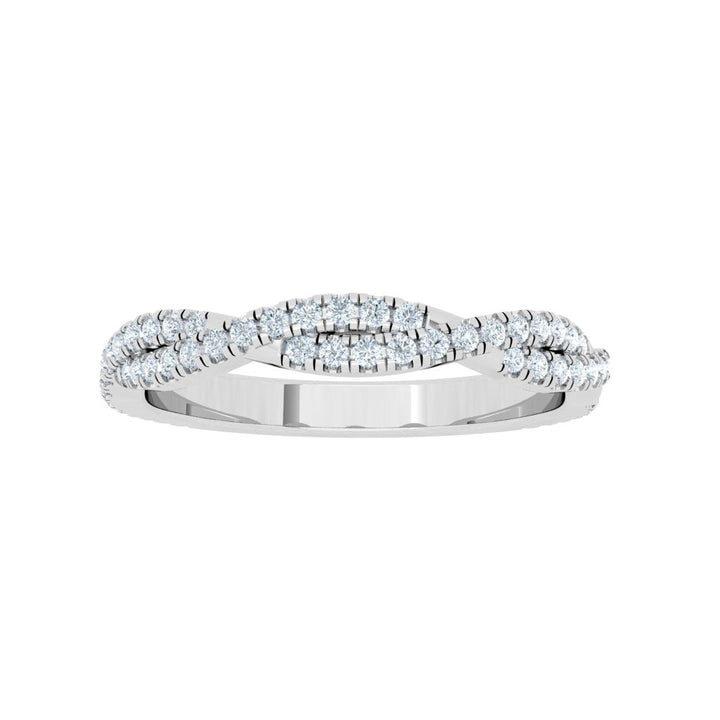
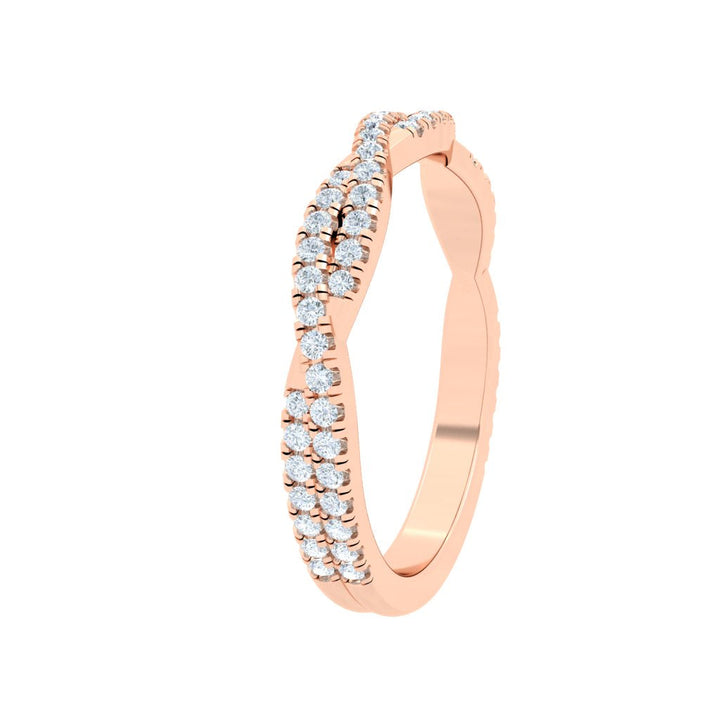
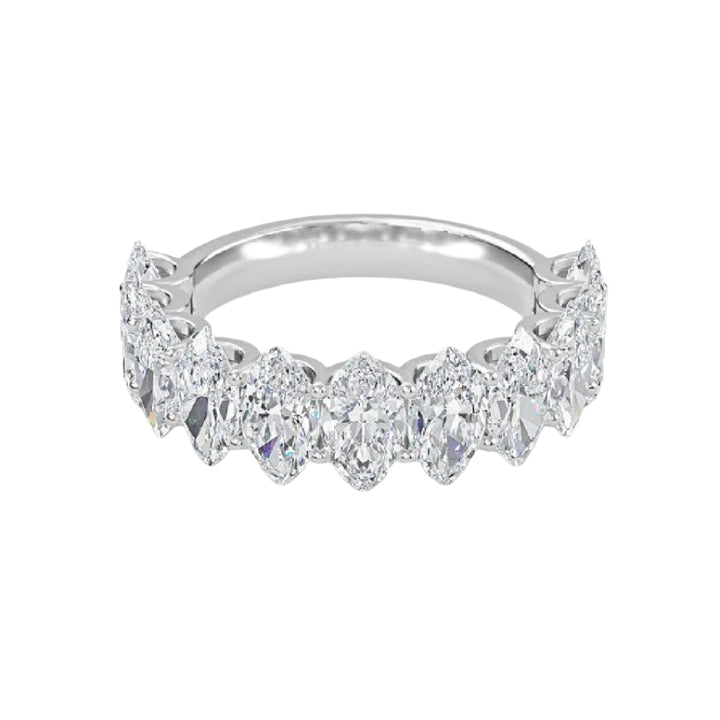
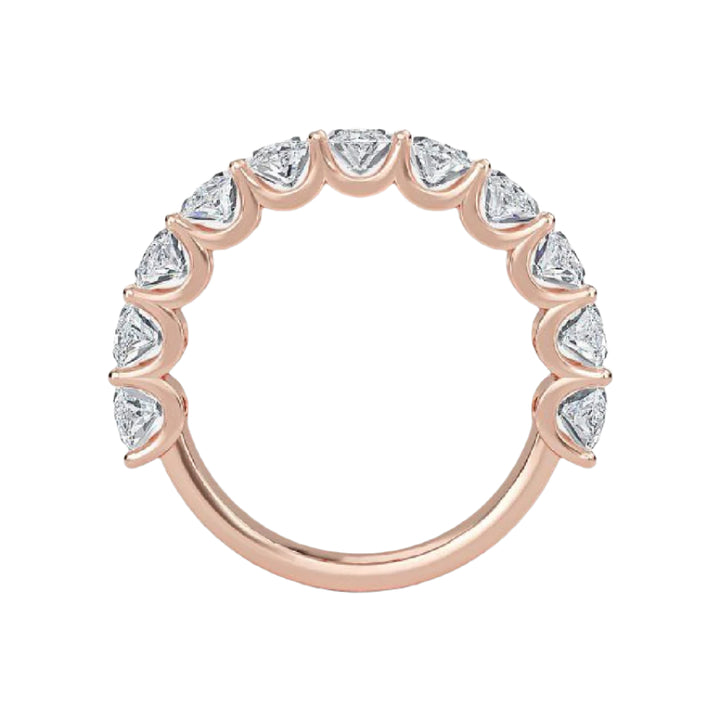
Not all wedding bands are plain metal. Our rose gold wedding band collection includes several stone-set configurations that add brilliance to the band's warmth.
Full Eternity Pavé
A continuous ring of small lab grown diamonds set in pavé configuration around the entire circumference of the band creates a wedding band that contributes brilliant light at the finger level from every angle. The contrast between the rose gold's warm tone and the colorless diamonds' cool brilliance is one of jewelry's most enduringly appealing combinations. A full eternity band in rose gold cannot be resized after purchase — the diamonds run through the band's full circumference — and buyers should confirm their ring size carefully before ordering this configuration.
Half Eternity
Diamonds set along the top half of the band's circumference — the portion visible when the hand is relaxed — provide the visual presence of a diamond-set band without the sizing limitation of a full eternity. The interior half of the band remains plain metal, which is also more comfortable against the palm during gripping motions. Half eternity rose gold bands can typically be resized within one size in either direction depending on the stone setting position relative to the sizing area.
Single Stone Solitaire Band
A single lab grown diamond set at the center of the band — either bezel-set for a clean, modern presentation or prong-set for maximum stone brilliance — creates a wedding band that reads as a standalone piece rather than purely as a complement to an engagement ring. For couples who prefer a single ring to a stacked set, or for wearers who want their wedding band to carry its own presence, the solitaire band in rose gold is a complete and resolved choice.
Plain Band With Milgrain Edge
A plain rose gold band with milgrain detailing — tiny beaded metal texture along one or both edges — is perhaps the most versatile option in the collection. The milgrain adds crafted detail without stones, suits vintage-influenced engagement rings naturally, and is sufficiently subtle to complement modern minimalist settings as well. It is the detail that a plain band lacks without being an addition that competes with any adjacent engagement ring.
For buyers who want to see how these band styles stack against specific engagement ring profiles, our rose gold engagement ring collection includes matching and complementary band recommendations for each ring style.
Stacking a Rose Gold Wedding Band With Your Engagement Ring
The interaction between a wedding band and an engagement ring — both aesthetically and physically — is one of the most practically important considerations in wedding band selection, and it is one that buyers often address too late.
Same metal, same karat: The cleanest stacking result comes from matching the wedding band's metal exactly to the engagement ring's metal. Two 14k rose gold rings worn together create a unified, coherent combination where the bands read as part of the same piece. If the engagement ring is 14k rose gold, a 14k rose gold wedding band is the most resolute choice.
Mixed metal: Rose gold wedding bands pair strikingly with white metal engagement rings — the contrast between the blush band and a platinum or white gold engagement ring creates a deliberate, fashion-forward two-tone combination that many contemporary buyers specifically seek. The combination requires no apology or justification — mixed metal stacking has been an accepted and celebrated approach to ring wearing for decades.
Profile matching: The physical fit between a wedding band and an engagement ring depends on both the engagement ring's setting profile and the wedding band's width and profile. High-set solitaires, halo settings, and cathedral settings all create specific geometry at the base of the setting that a wedding band must navigate — either by sitting flush against the setting's shoulders, fitting beneath it, or contoured to follow its profile. We provide specific compatibility guidance for any engagement ring purchased through Grown Leo and can advise on appropriate band widths for rings purchased elsewhere if you share the setting specifications.
Grown Leo's Approach to Wedding Band Craftsmanship
A wedding band is, by definition, made to last forever. The standards that apply to a piece worn daily for a lifetime are different from those that apply to occasional jewelry, and we build our rose gold wedding bands accordingly.
Every band is fabricated in solid 14k or 18k rose gold — the alloy composition is documented, consistent, and free from base metal substitution. Widths and weights are as specified in each listing, verified before shipping. Stone-set bands are inspected for prong and pavé integrity before the ring leaves our workshop. Every finish is applied by hand and checked for consistency under magnification.
Our rose gold wedding bands ship with a certificate of metal authenticity, insured and tracked, with a 30-day return window for unworn bands in original condition. Sizing is available before shipping when your size is confirmed; our complimentary resize within the first year covers adjustments after delivery if the initial size is not perfect.
We do not apply artificial urgency to wedding band purchases. A wedding band decision made carefully, with time and the right information, produces better outcomes than one made under pressure. If you want to see additional photographs, ask about specific alloy specifications, or discuss custom width or finish options, our team is available and will give you the information you need rather than the answer that advances a sale.
Caring for a Rose Gold Wedding Band Over a Lifetime
The specific care requirements of rose gold differ from white metal in several ways that are worth understanding before making a long-term commitment to the alloy.
Cleaning: Warm water, a small amount of mild soap, and a soft cloth clean rose gold effectively and safely. Avoid ultrasonic cleaners for stone-set rose gold bands — the vibration can loosen small pavé stones over time, and rose gold's alloy composition makes it slightly more susceptible to the stress of prolonged ultrasonic exposure than platinum. A soft brush for reaching around pavé settings is effective and safe.
Chemical exposure: The copper content that gives rose gold its color is more reactive to certain chemicals than pure gold or platinum. Chlorine — found in swimming pools, hot tubs, and some household cleaning products — can cause oxidation and surface discoloration on rose gold over time. Remove rose gold bands before swimming and before using bleach-based cleaning products. Rinse the band under clean water if accidental contact with these substances occurs.
Patina development: Rose gold develops a natural surface patina over years of wear — a slight deepening and softening of the metal's tone that most wearers describe as beautiful rather than problematic. This patina is a natural characteristic of copper-containing alloys and is not a sign of degradation. If the original bright finish is preferred at any point, a jeweler can restore it through professional cleaning and polishing. Note that polishing removes a microscopic layer of metal with each application — done moderately over a lifetime, this is inconsequential; done frequently, it gradually reduces the band's mass and surface definition.
Storage: When not wearing the band — which for most wearers means almost never — store it away from other jewelry to prevent contact scratches on the metal surface. Rose gold at 14k or 18k is softer than steel but harder than most other jewelry materials it might encounter, meaning it will both scratch and be scratched by adjacent pieces depending on their composition.